Rectangular Arch Forming Plier
Written & reviewed by the Equate Technical Team · Updated
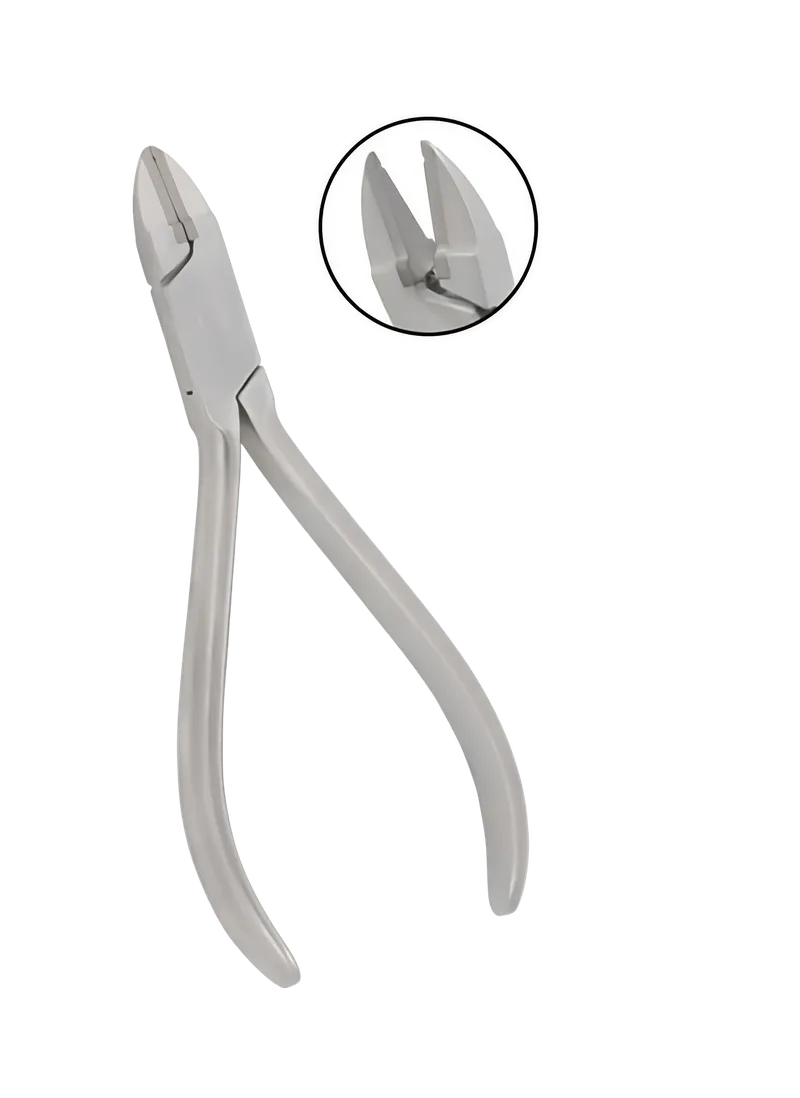
A rectangular arch forming plier is a wire-bending plier whose flat, wide jaw and matching platform support a rectangular archwire across its full cross-section while an arch curve is formed. This lets the clinician or technician shape edgewise wire to the dental arch without rolling or twisting it, which round-beaked pliers cannot guarantee.
Why rectangular wire needs a different plier
Rectangular archwires carry torque (third-order) information as well as arch form, so any twist introduced while bending changes what the wire delivers. Round-beaked pliers contact a rectangular wire along a line and can roll it. A rectangular arch forming plier instead holds the wire flat between a broad platform and a complementary jaw, so the bending force acts in the plane of the arch.
Clinical texts describe first-order bends (in-out), second-order bends (tip) and third-order bends (torque) as the three planes of archwire adjustment. Arch forming handles the first-order curve; torque and step bends use other pliers, such as torquing keys and step bend pliers.
Where it is used
- Forming a stock rectangular wire to a patient-specific arch shape before insertion.
- Reshaping an archwire after bracket repositioning or in finishing and detailing.
- Making smooth, even curves in stainless steel wire in the lab.
- Contouring with hollow-chop style pliers where a channel holds the wire (Equate lists a 0.56 x 0.71 mm / .022 x .028 in pattern).
Equate rectangular forming plier range
| Pattern | Equate example | Notes |
|---|---|---|
| Ribbon/Tweed | Ribbon/Tweed Arch Forming Pliers - Long | Flat jaw plus platform, long handles for leverage |
| Standard | Rectangular Arch Forming Plier - max 0.7 mm (.028 in) wire | Everyday arch shaping |
| Slim blade | Slim Rectangular Arch Forming Pliers, 1.3 mm blade | Access in tighter arches and detailed bends |
| Tungsten carbide | Rectangular Arch Forming Plier TC and Slim TC | TC inserts resist wear on hard wire |
| Contouring | Hollow Chop Contouring Pliers (.022 x .028 in) | Channel supports wire for smooth curves |
| Torque key | Torquing Pliers Key 0.016 x 0.018 in | Third-order torque bends |
| Angle bender | Angle Wire Bending Plier, 12.5 cm, max 0.7 mm | Angled wire work |
Choosing between standard, slim and TC
Standard blades suit most edgewise work. A slim 1.3 mm blade reaches into smaller arches and gives finer control for detail, though it should not be forced beyond its stated wire limit. Tungsten carbide inserts generally wear more slowly than stainless steel, which matters in a lab that forms many wires a day; our comparison of tungsten carbide and stainless steel pliers explains the trade-off.
Check that the plier closes without side play and that the working surfaces are smooth. Burrs transfer to the wire and can become stress points on a wire that will stay in the mouth for weeks.
Limits and care
Stated limits matter: the listed Equate rectangular forming pliers are for wire up to 0.7 mm (.028 in). Exceeding the limit can spread the jaws, leaving the plier unable to give flat, controlled bends. Do not use these pliers for cutting.
Equate rectangular forming pliers are forged stainless steel, passivated, latex free, reusable and supplied non-sterile; clean and sterilise before first use, lubricate the joint, and store open.
The Equate difference
Equate lists 13 rectangular arch forming pliers, including Ribbon/Tweed Long, slim 1.3 mm blade and tungsten carbide (TC) versions rated for wire up to 0.7 mm (.028 in), plus an Angle wire bending plier at 12.5 cm.
Equate Rectangular Arch Forming Plier options
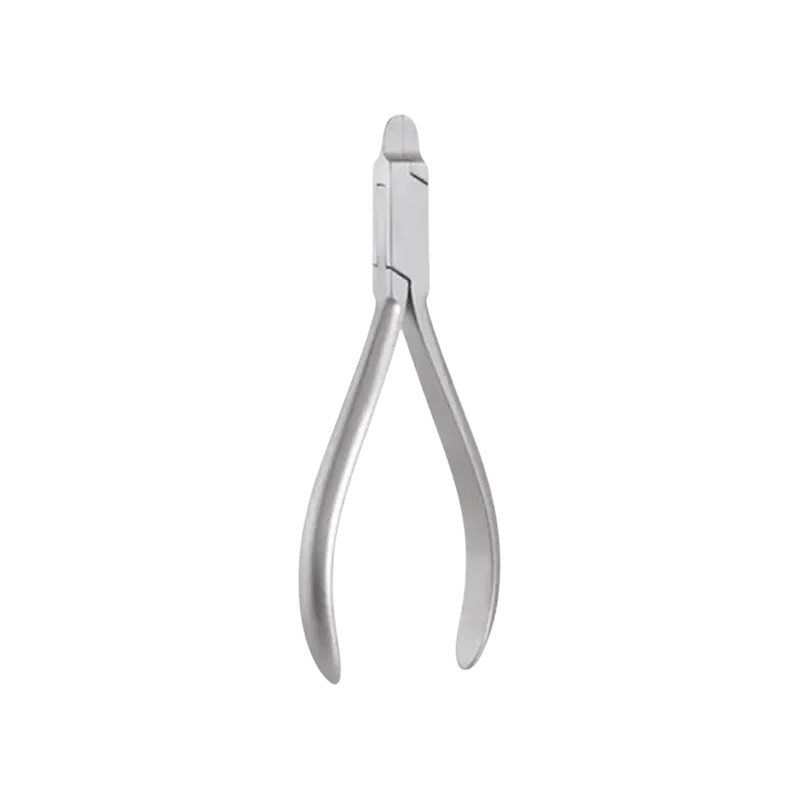
Ribbon/Tweed Arch Forming Pliers - Long
EI-0698
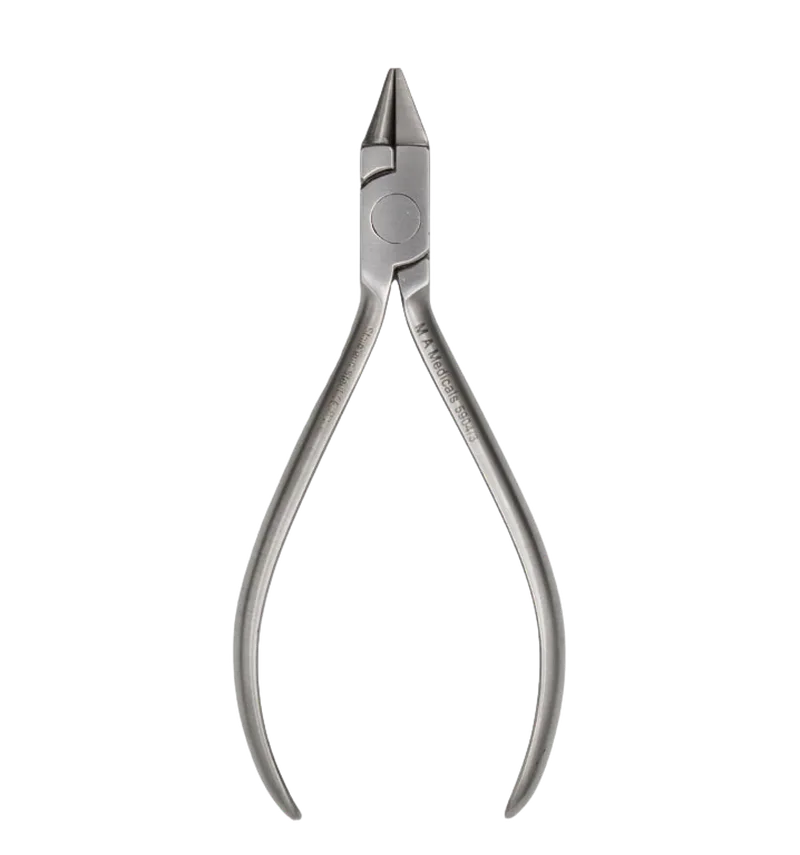
Angle Wire Bending Plier - Max 0.7 mm, 12.5 cm
EI-0795
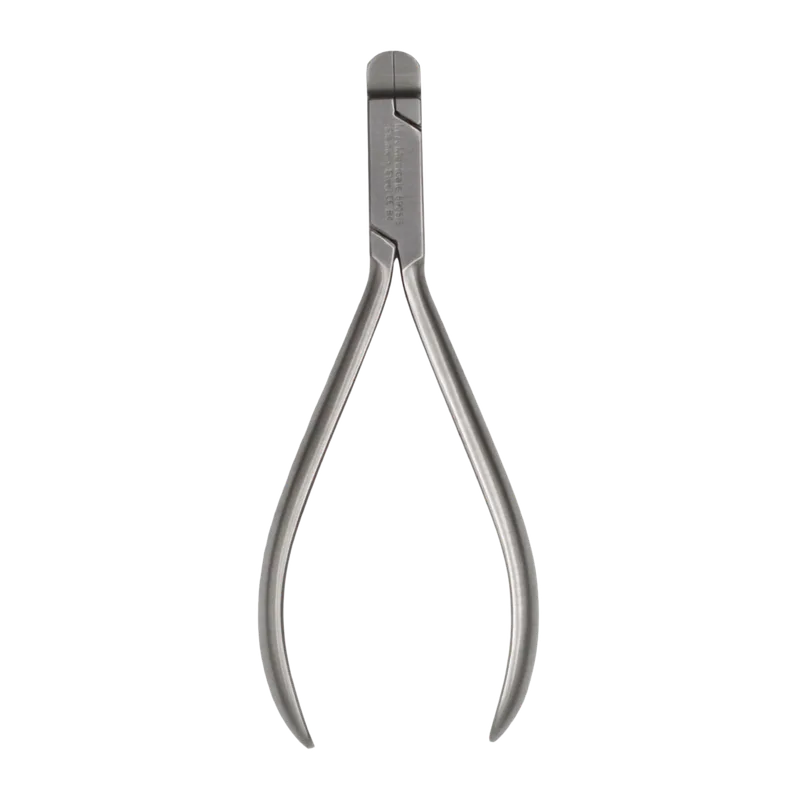
Rectangular Arch Forming Plier - Max 0.7mm (.028") Wire
EI-0797
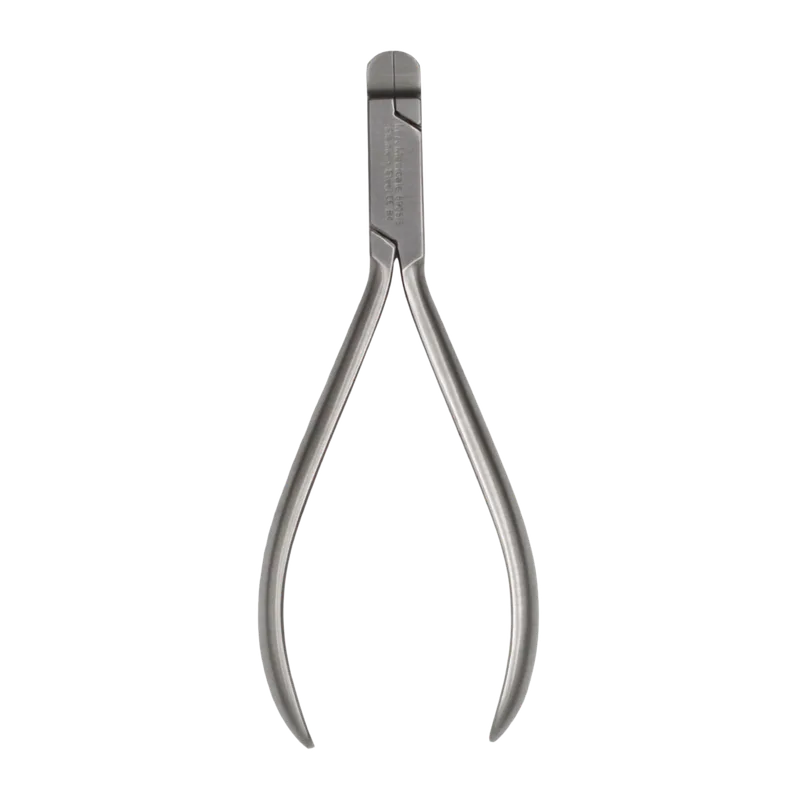
Slim Rectangular Arch Forming Pliers 1.3mm Blade - Max 0.7mm (.028") Wire
EI-0798
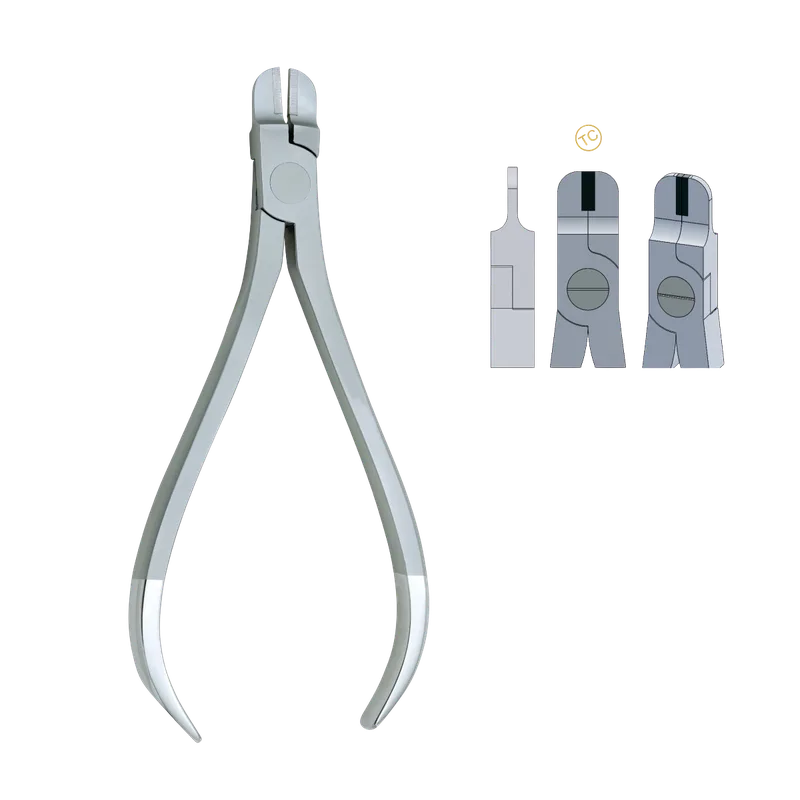
Rectangular Arch Forming Plier TC - Max 0.7mm (.028") Wire
EI-2606
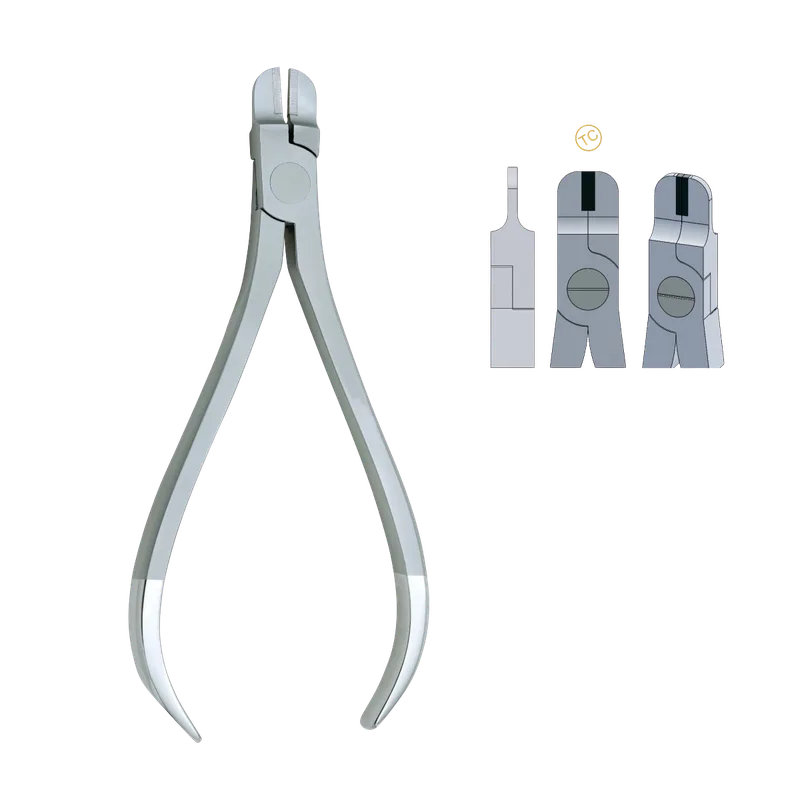
Slim Rectangular Arch Forming Pliers TC 1.3mm Blade - Max 0.7mm (.028") Wire
EI-2607
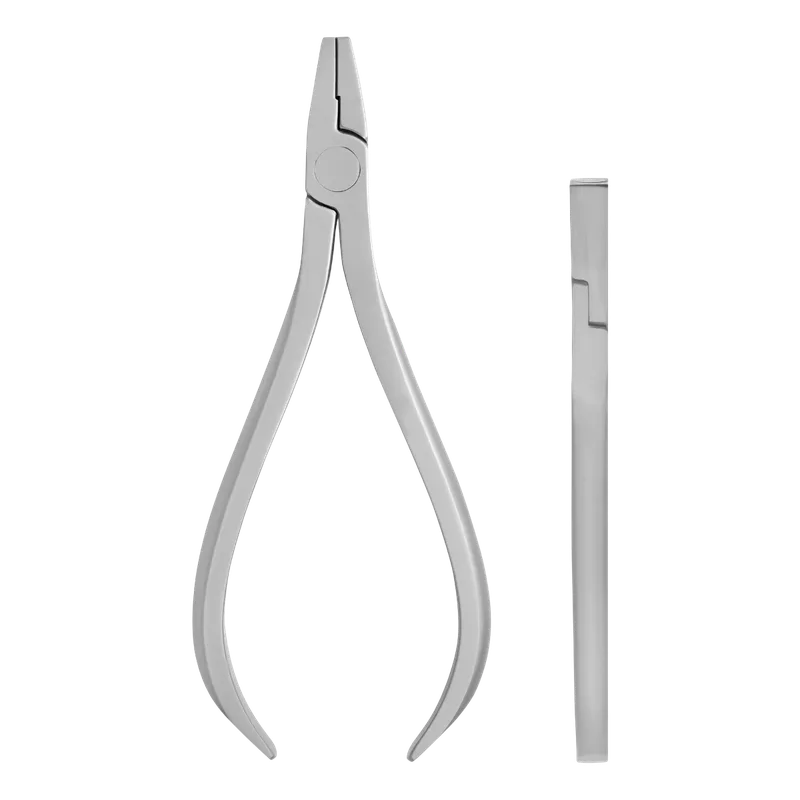
Hollow Chop Contouring Pliers - 0.56 x 0.71 mm (.022 x .028 in) Wire
EI-2613
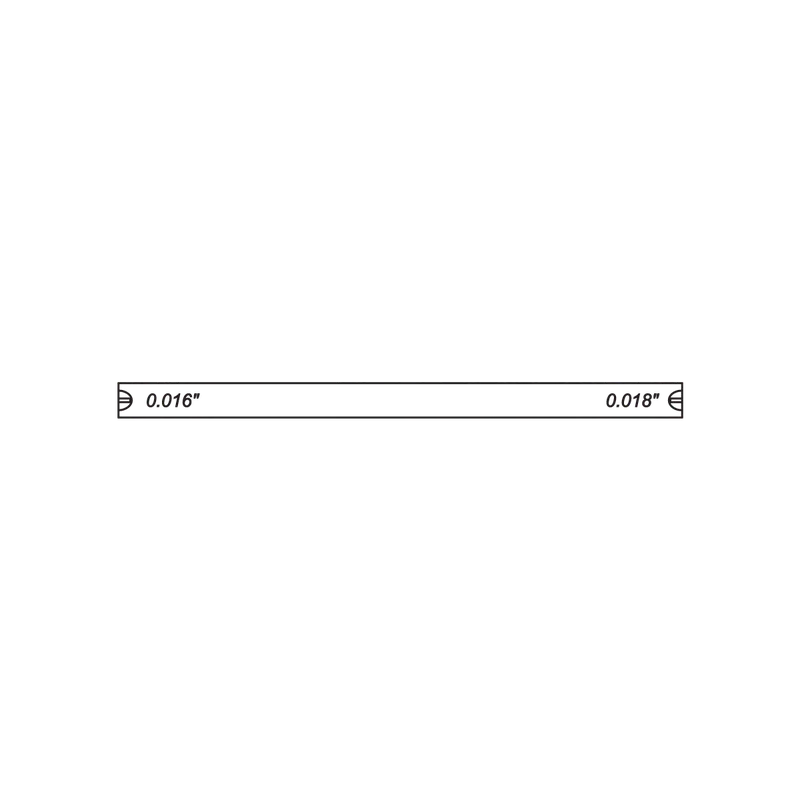
Torquing Pliers Key 0.016 x 0.018 Inch Wire
EI-2614
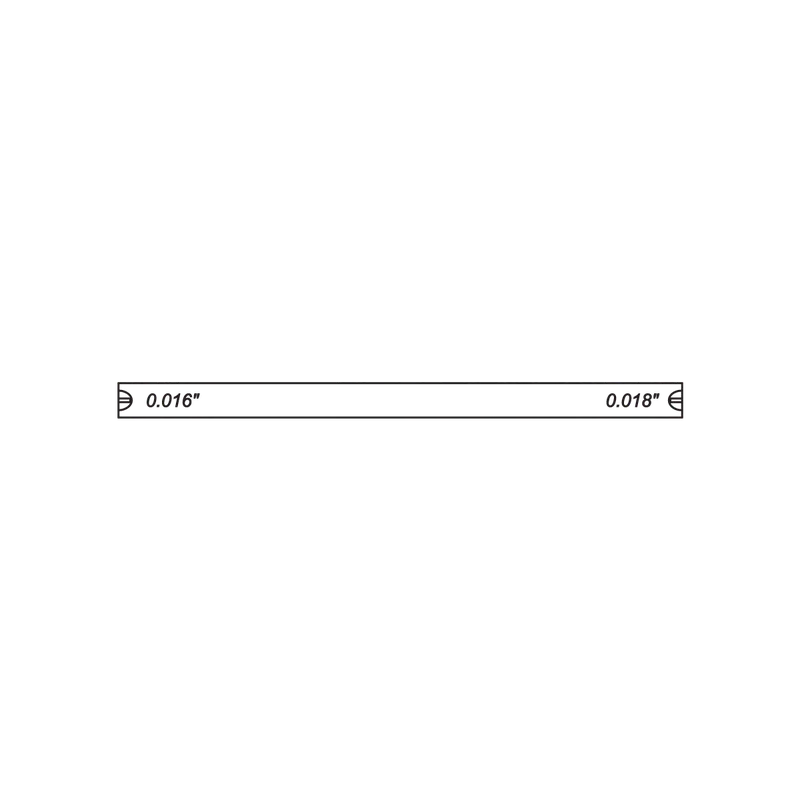
Torquing Pliers Key 0.016 x 0.018 Inch Wire
EI-2615
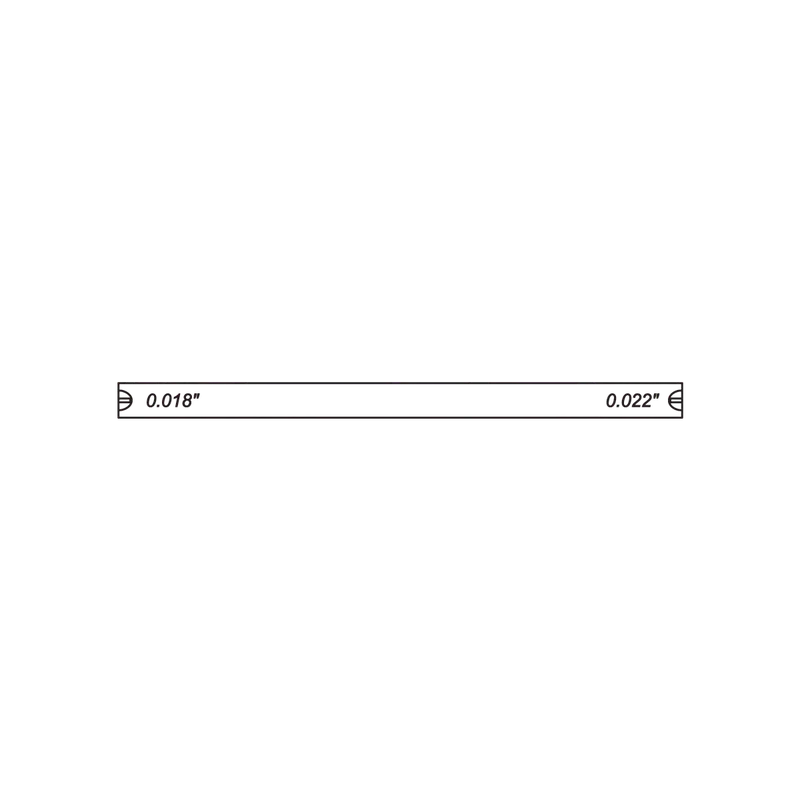
Torquing Pliers Key 0.018 x 0.022 Inch Wire
EI-2616
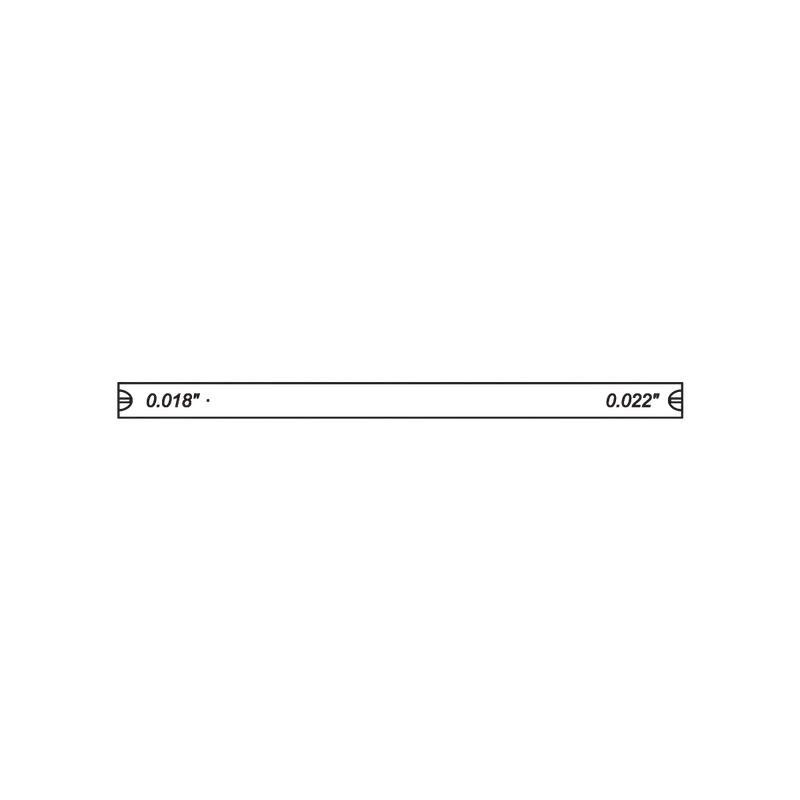
Torquing Pliers Key 0.018 x 0.022 Inch Wire
EI-2617
Wire Bending Pliers - Single Groove with T/C Inserts 12.5 cm
EI-3202
Frequently asked questions
What is a rectangular arch forming plier?
A wire-bending plier with a flat jaw and a matching platform that supports rectangular wire across its width while an arch curve is formed.
What is the difference between Tweed and rectangular arch forming pliers?
Tweed-style (ribbon) arch forming pliers are a rectangular arch forming pattern. The names are often used for the same flat-jaw design, with variants in blade width and handle length.
What wire size can a rectangular arch forming plier bend?
It depends on the model. The Equate standard and slim versions are rated for wire up to 0.7 mm (.028 in); always follow the stated limit.
Can I use a round arch forming plier on rectangular wire?
It is not recommended, because round jaws contact rectangular wire along a line and can roll it, altering torque. Use a flat-jaw rectangular pattern.
Is tungsten carbide worth it on a forming plier?
For high-volume use, usually yes, since carbide inserts resist wear. For occasional use, stainless steel is usually adequate.
What bends are not made with arch forming pliers?
Torque (third-order) and step bends use torquing keys and step bend pliers; arch forming pliers form the curve of the arch.
References
- Rectangular arch bending pliers product information, HuFriedyGroup
- Orthodontic pliers types and characteristics, Dentaltix
- Pliers for forming orthodontic wires, US7967602B2 patent
- ISO 13485:2016 medical devices quality management systems
I am a…