Archwire Bending
Written & reviewed by the Equate Technical Team · Updated
Archwire bending is the chairside or laboratory shaping of orthodontic wire to add first-order (in-out), second-order (tip) and third-order (torque) bends, loops and stops. It uses a bird beak or Tweed loop plier for loops, Tweed arch forming pliers for rectangular bends and torque, a three-prong plier for small bends, and a hard wire cutter to trim.
Step by step
- 1
Plan the bend
Mark the bend position on the wire against the patient's model or bracket positions using a fine marker. Decide the order of bends so earlier bends are not distorted by later ones.
- 2
Coordinate the arch form
Start from a pre-formed or turret-formed arch matching the patient's arch form, and check symmetry against a template.
- 3
Place first-order bends
Use a bird beak or rectangular arch-forming plier to make in-out offsets, such as lateral incisor insets and molar offsets.
- 4
Place second-order bends
Use a step-bend or Tweed arch plier to add tip-back or step bends; hold the wire firmly near the bend point.
- 5
Add torque in rectangular wire
Use two Tweed arch forming pliers or a torquing plier to twist the wire between them and add third-order torque; check for unwanted twist elsewhere.
- 6
Form loops and stops
Use a Tweed loop former or bird beak for vertical, closing and omega loops, and a V-bend stop plier for stops in front of tubes.
- 7
Check and trim
Check the wire passively on the model, adjust as needed, cut to length with a hard wire cutter and trim intraorally with a distal end cutter after insertion.
Instruments used
| Step | Instrument |
|---|---|
| Arch form | Arch-forming turret, round arch-forming plier |
| First-order bends | Bird beak, rectangular arch-forming plier |
| Second-order bends | Step-bend plier, Tweed arch forming plier |
| Third-order torque | Tweed arch forming plier (pair), torquing plier |
| Loops | Tweed loop forming plier, bird beak, optical loop plier |
| Stops | V-bend stop plier, crimpable stops |
| Cutting | Hard wire cutter; distal end cutter intraorally |
Technique notes
Hold the wire with the plier and make the bend with the fingers of the other hand close to the beaks, rather than twisting the plier. This keeps the bend sharp and located exactly where you marked it. Bends in rectangular wire must keep the wire flat in the beaks to avoid introducing unwanted torque. Work from the midline outwards so the arch stays symmetrical, and check against the model or template after every few bends.
Stainless steel and TMA can be bent; superelastic NiTi generally cannot hold a permanent bend without special heat treatment, so it is not used for detailed bending.
Common mistakes
- Bending with worn pliers that mark or nick the wire, creating fracture points.
- Repeated bending at the same point, which work-hardens and weakens the wire.
- Forgetting that a second-order bend changes the arch form; recheck symmetry.
- Using bird beak or loop pliers on heavy rectangular wire beyond their rating.
- Leaving long distal ends that irritate soft tissue.
Wire and plier pairing
Round stainless steel up to about .020 in suits bird beak and loop formers; rectangular wire needs flat parallel beaks. TMA is softer and more forgiving to bend but marks more easily, so smooth, polished beaks matter. When in doubt, check each plier's maximum wire rating in its specification.
The Equate difference
Equate's wire-forming range spans bird beak, Tweed loop and arch formers, three-prong, step-bend, V-bend stop, torquing, round and rectangular arch-forming pliers — over 100 references in passivated stainless steel — at a typical list price about 52% below premium European RRPs.
Equate Archwire Bending options
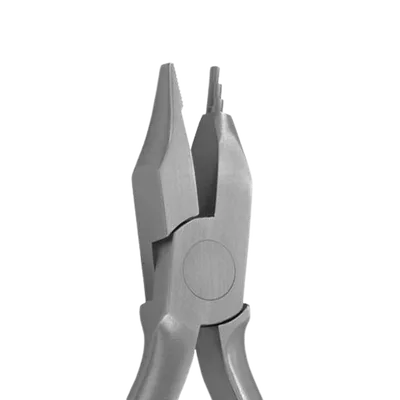
Tweed Loop Forming Pliers 0.55 x 0.64 mm (.021″ x .025″ Wire)
EI-0691
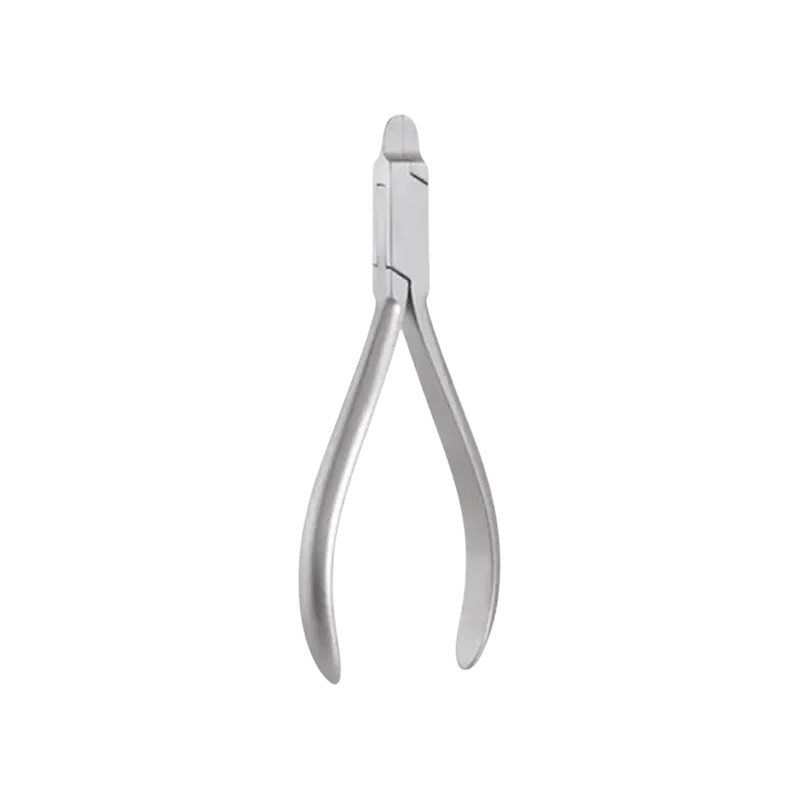
Ribbon/Tweed Arch Forming Pliers - Long
EI-0698
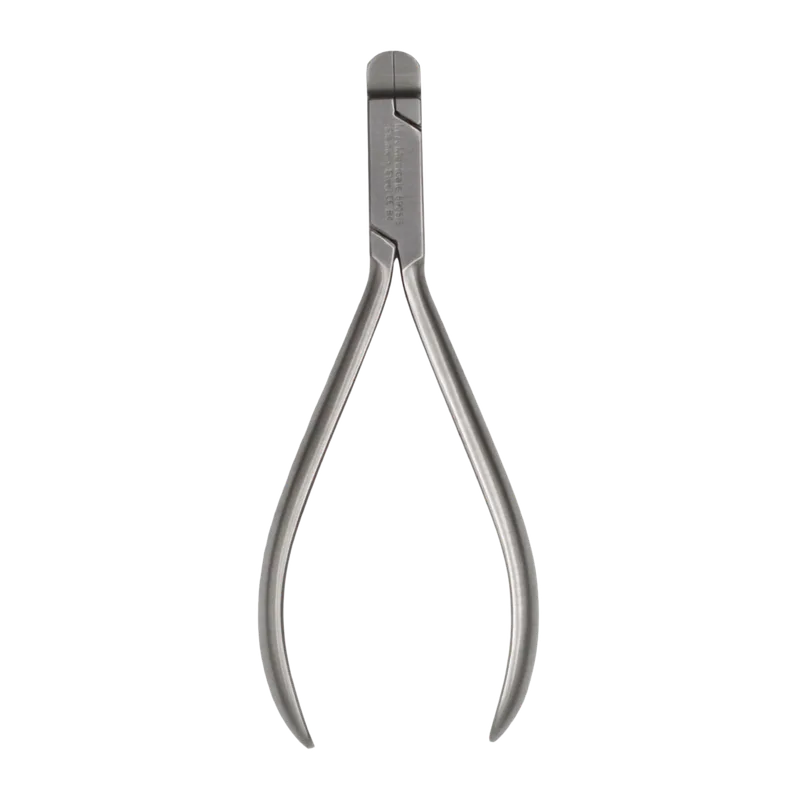
Rectangular Arch Forming Plier - Max 0.7mm (.028") Wire
EI-0797
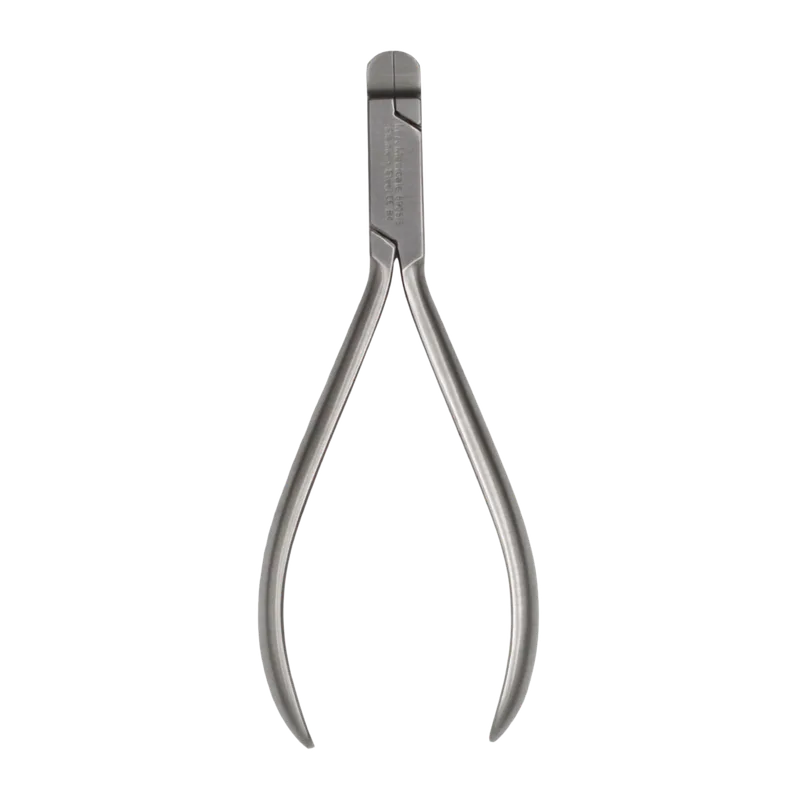
Slim Rectangular Arch Forming Pliers 1.3mm Blade - Max 0.7mm (.028") Wire
EI-0798
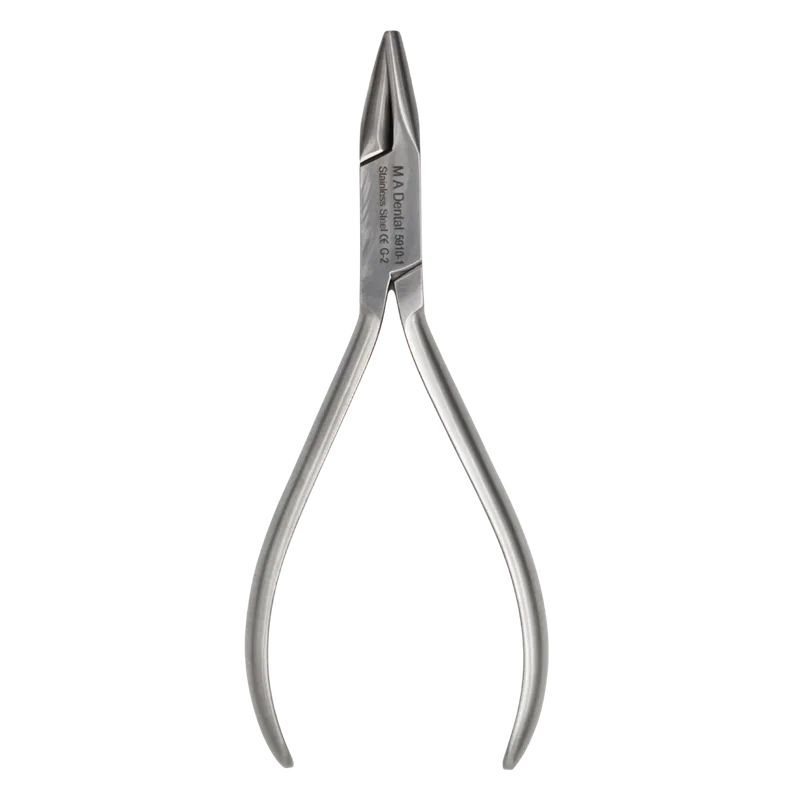
Schwarz Loop Forming Plier - Max 0.51 mm
EI-0803
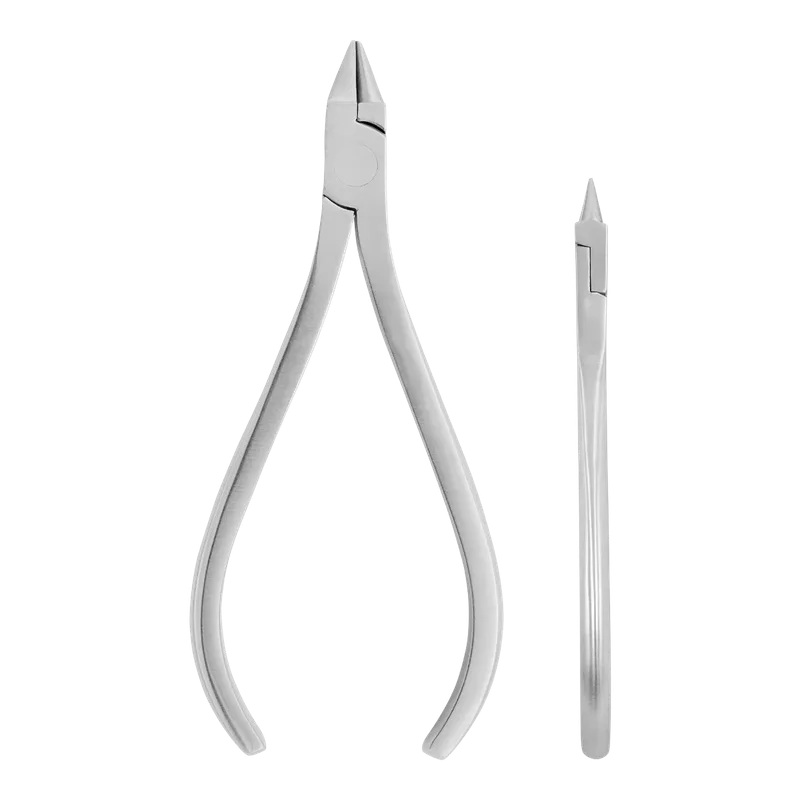
Bird-Beak Plier
EI-2592
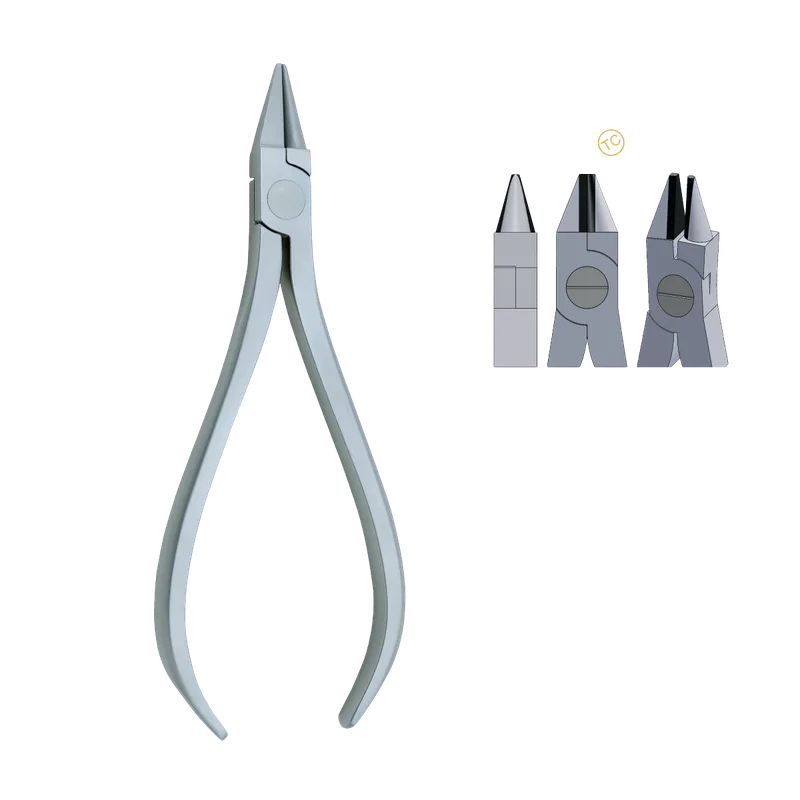
Bird-Beak Plier - Plain Tip, Tungsten Carbide
EI-2593
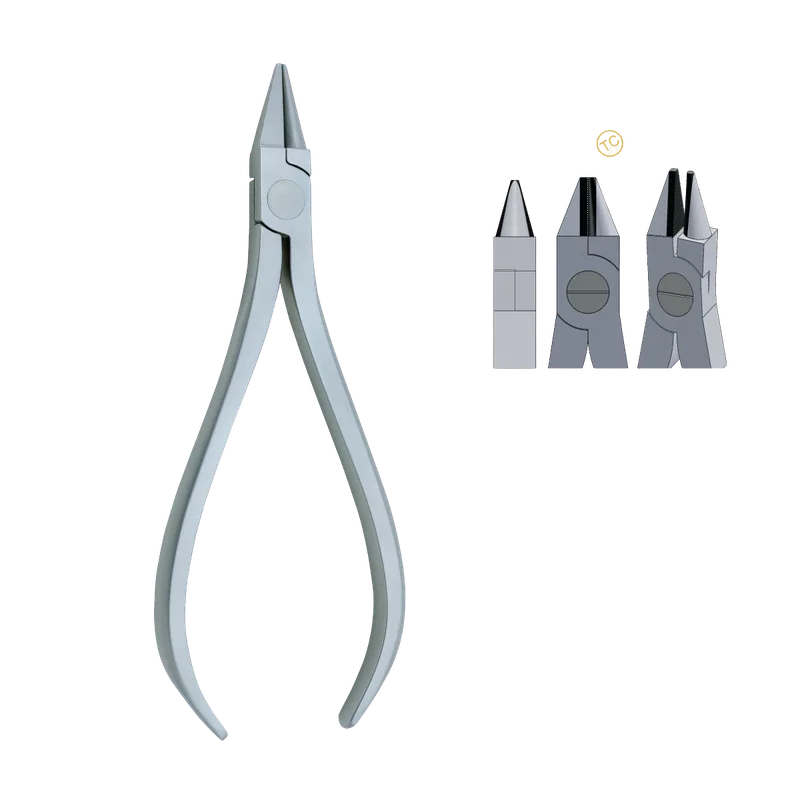
Bird-Beak Plier - Serrated Tip, Tungsten Carbide
EI-2594
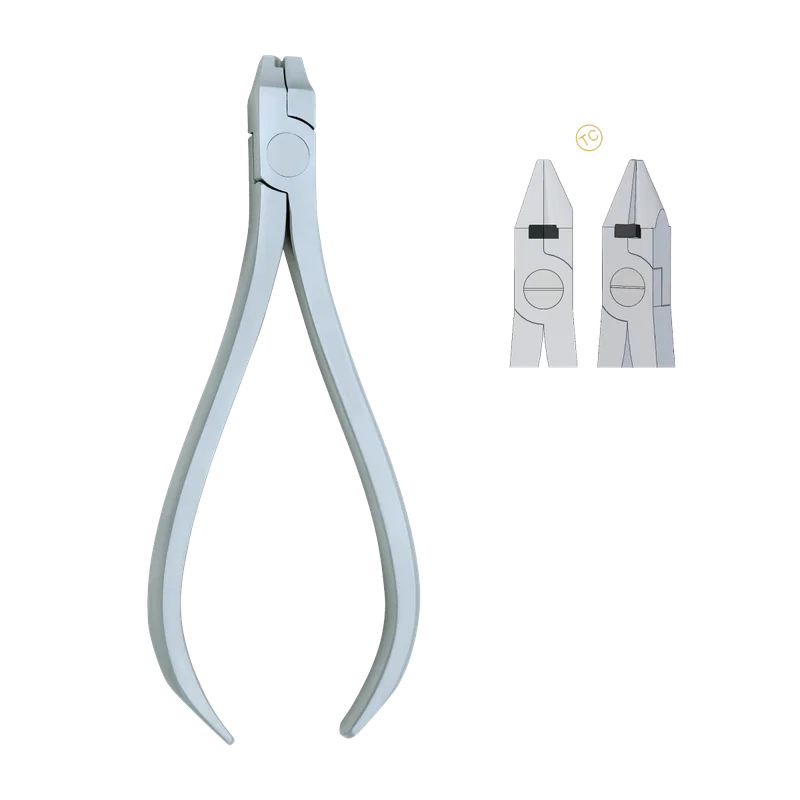
Bird-Beak Plier with Cutter - Tungsten Carbide
EI-2595
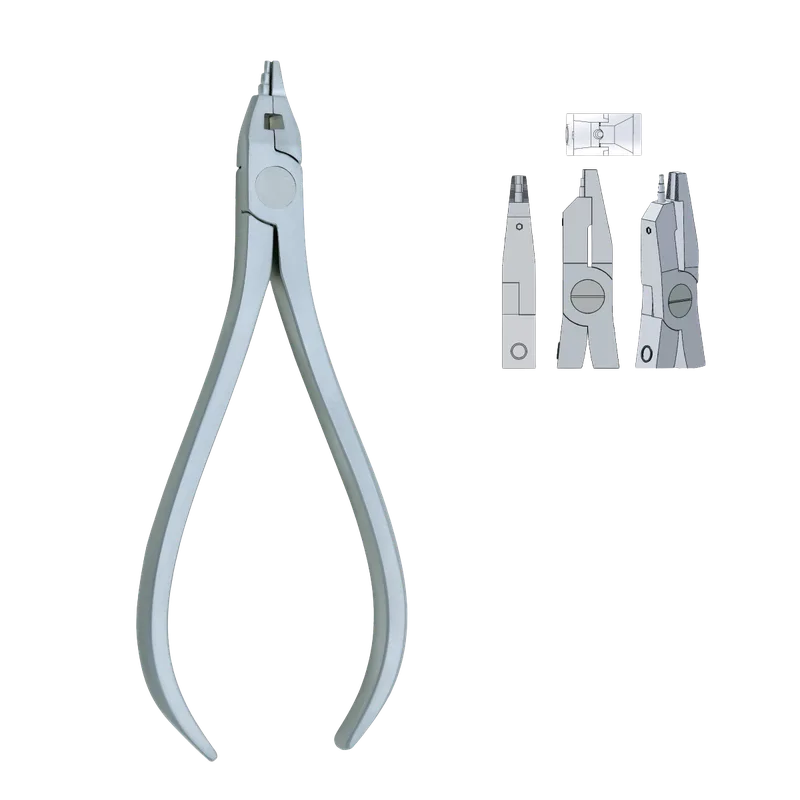
Loop Forming Pliers - Rectangular Wire
EI-2600
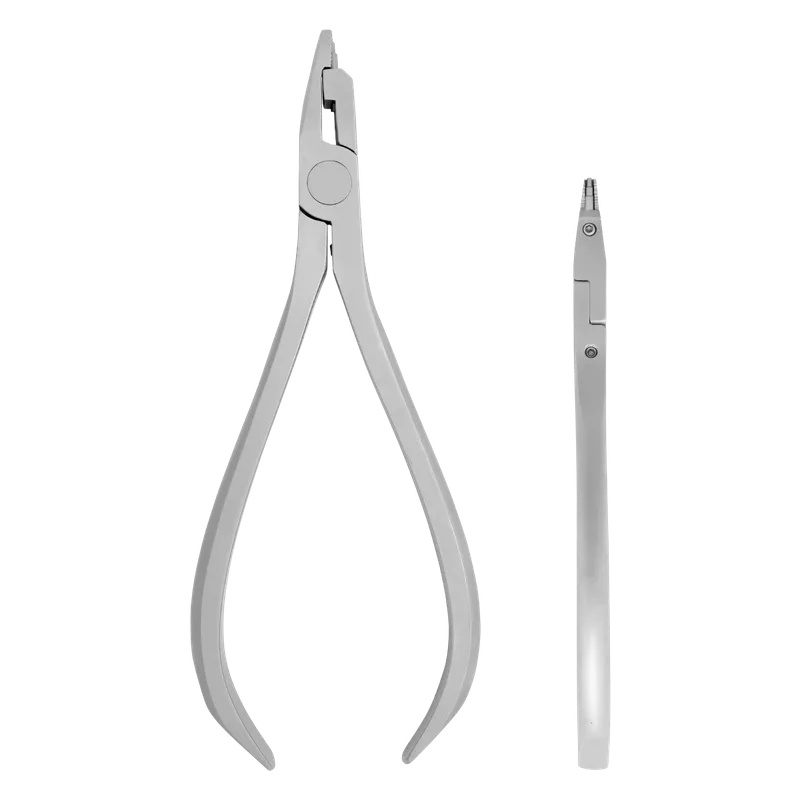
Omega Loop Forming Pliers - Rectangular Wire
EI-2601
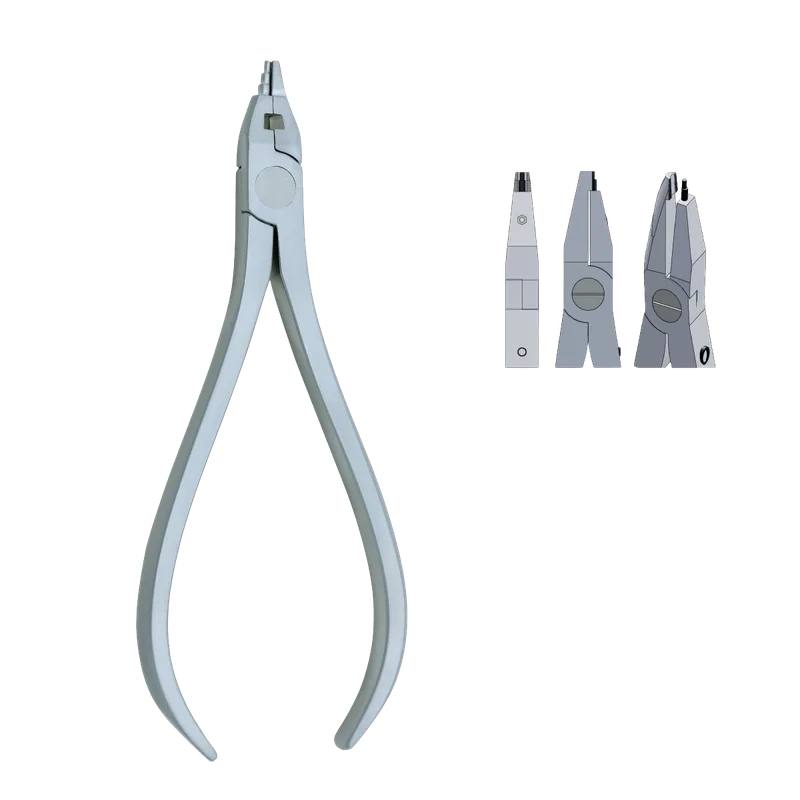
Tweed Style Loop Forming Pliers
EI-2602
Frequently asked questions
What pliers are used for archwire bending?
Bird beak and Tweed loop pliers for loops and curves, Tweed arch forming pliers for rectangular bends and torque, step-bend and V-bend pliers for steps and stops, a three-prong for small bends, and wire cutters to trim.
Can NiTi archwires be bent?
Superelastic NiTi generally does not hold permanent bends. Stainless steel and TMA are used for wires that need bends.
What are first, second and third-order bends?
First-order bends are in-out, second-order bends tip the tooth mesiodistally, and third-order bends add torque by twisting rectangular wire.
How do I add torque to a rectangular archwire?
Hold the wire with two Tweed arch forming pliers or a torquing plier either side of the tooth and twist the wire between them by the required amount.
Why do my archwires break at bends?
Usually because of nicks from worn pliers, sharp bends beyond the wire's limit or repeated bending at the same point.
References
- Classification and uses of orthodontic pliers — Dentaltix clinical blog (supplier reference, used for terminology only)
- ISO 13485:2016 — Medical devices: quality management systems for regulatory purposes
I am a…