Three-Prong Plier
Written & reviewed by the Equate Technical Team · Updated
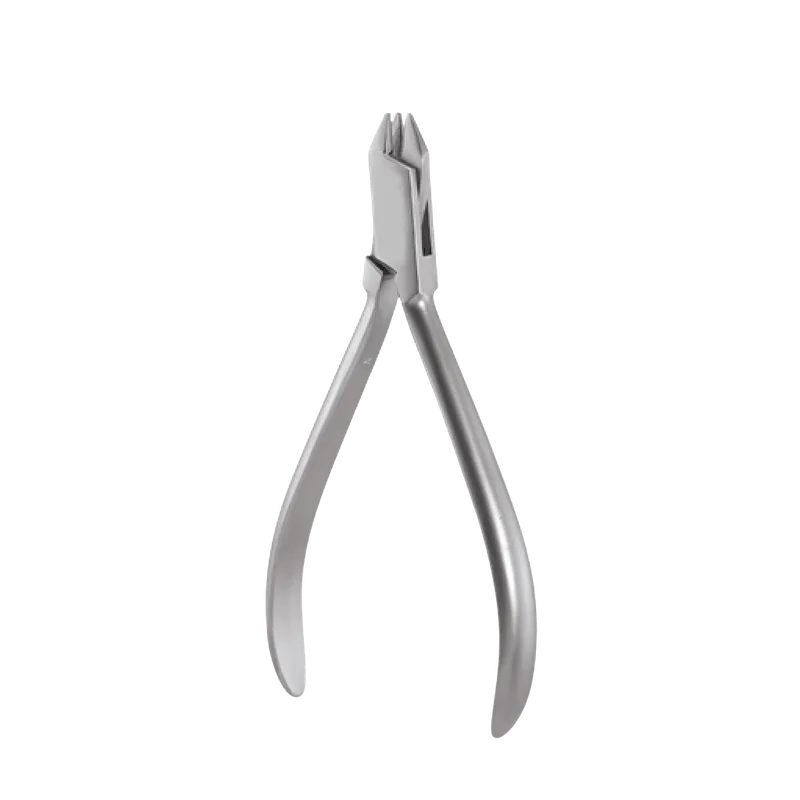
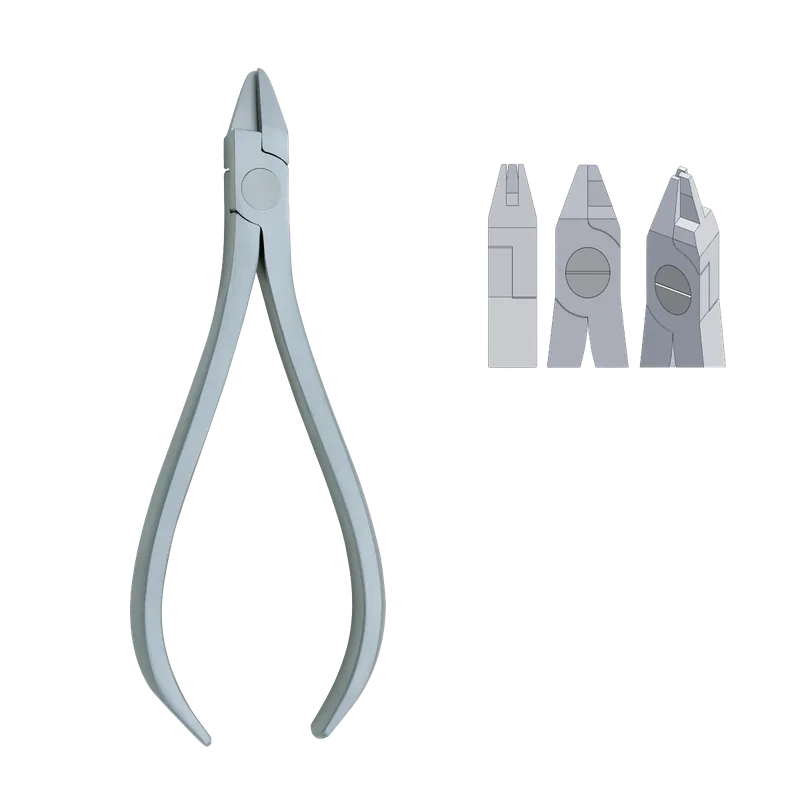
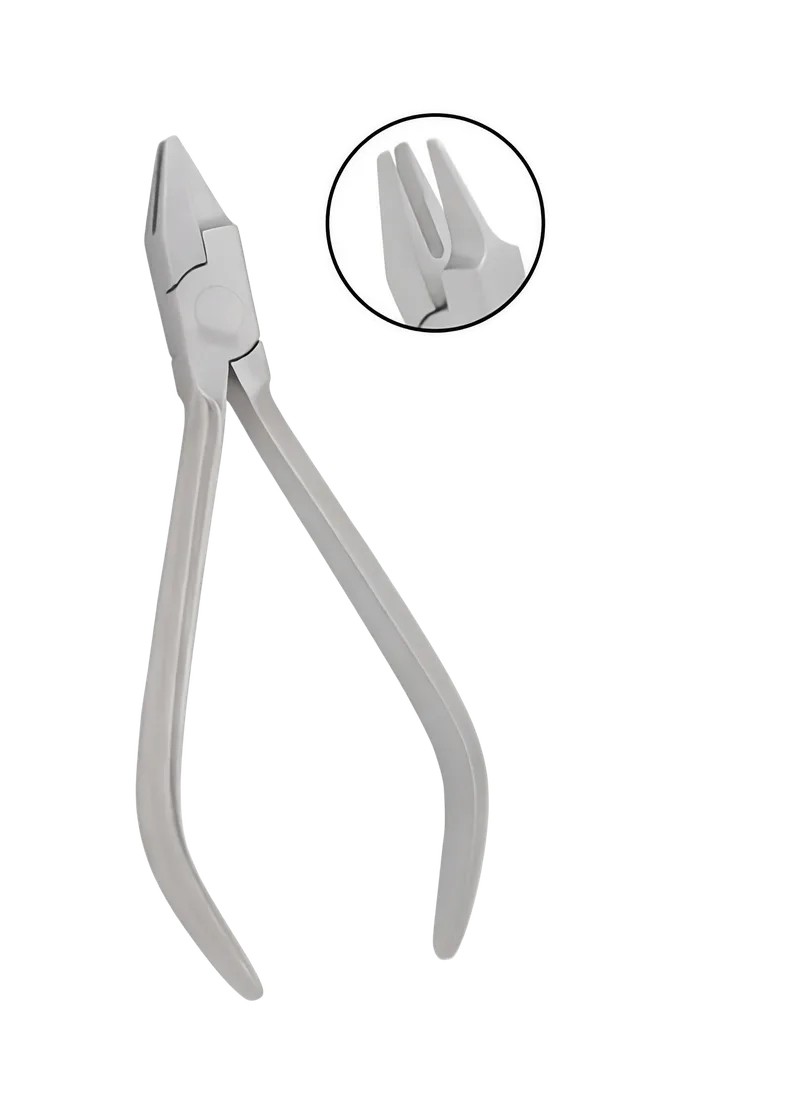
A three-prong plier is an orthodontic wire-bending plier whose one beak has two prongs and the other a single prong that closes between them. Squeezing wire between the three points makes a controlled bend at a precise spot. It is mainly used to adjust clasps, springs and labial bows on removable appliances and retainers, and to make small bends in round wire.
What it is used for
Removable appliances and retainers rely on clasps, springs and bows that need fine adjustment chairside: tightening an Adams clasp, activating a finger spring, or adjusting a Hawley labial bow. The three-prong plier makes these adjustments in one squeeze without needing to grip and bend the wire with two instruments. The bend happens exactly where the single prong meets the wire, giving precise control.
In fixed appliance work, it is also used for small first-order bends and for adjusting auxiliary wires.
Laboratories often keep a separate three-prong for each wire gauge they use most, so tips stay calibrated.
Variants
| Variant | Typical wire | Use |
|---|---|---|
| Standard three-prong | Round SS up to about 0.5 mm | Clasps, springs, bows |
| Aderer long plier | Up to about 0.6 mm | Precise clasp tightening with extra reach |
| NiTi three-jaw plier | NiTi up to .020 in | Placing bends in NiTi (with appropriate technique) |
| Heavy lab three-prong | Heavier clasp wire | Laboratory appliance work |
How to choose
Check that the single prong closes centrally between the two prongs with no side play, otherwise bends will be uneven. The contact points should be smooth so they don't nick the wire. Choose a length and handle that suit your hand; longer versions give more leverage for heavier clasp wire. Practices that make or adjust many removable appliances often keep a standard and a heavy version.
Respect the wire rating: overloading a three-prong plier spreads the prongs and ruins its precision.
Care
Three-prong pliers are among the instruments that most benefit from periodic realignment, because even slight misalignment changes where the bend lands. Lubricate the joint, autoclave open, and check alignment by closing the plier against a light: the single prong should sit centrally with an even gap on both sides.
Published work on orthodontic pliers suggests steam autoclaving is generally gentler on stainless steel pliers than prolonged chemical immersion: a small in-vitro pilot study in the Dental Press Journal of Orthodontics found oxidation on only one of two brands after 100 autoclave cycles and more corrosion after 2% peracetic acid, and an earlier study of ligature-cutting pliers found no significant difference in tip wear between steam and dry-heat sterilisation. Both are small studies, so follow each manufacturer's reprocessing instructions.
Clinical tip
- Make several small adjustments rather than one large bend; clasp wire work-hardens and can fracture.
- Check fit in the mouth or on the model after each adjustment.
- Avoid bending the same point repeatedly.
The Equate difference
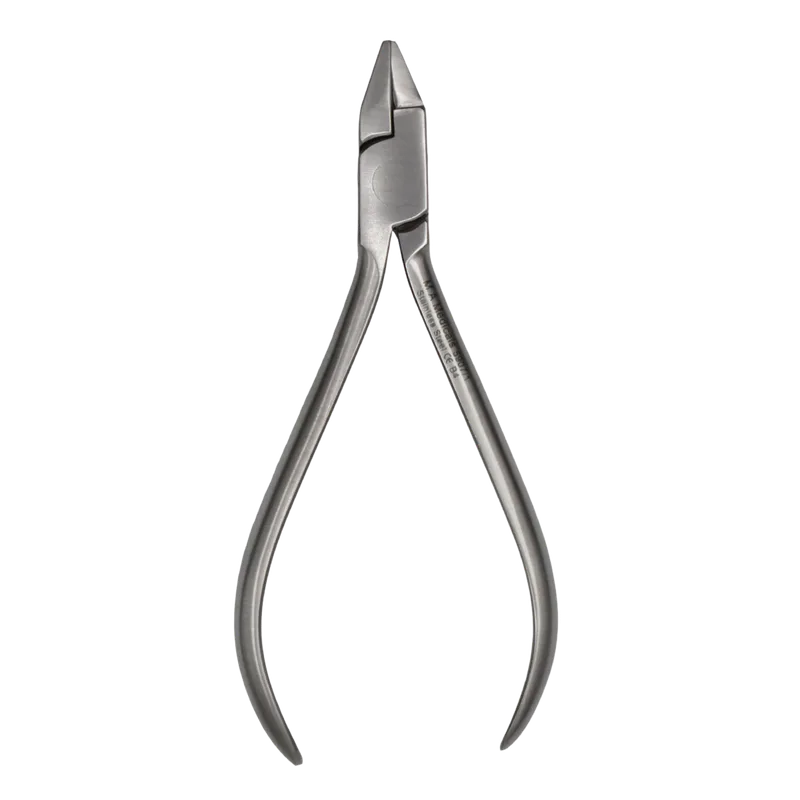
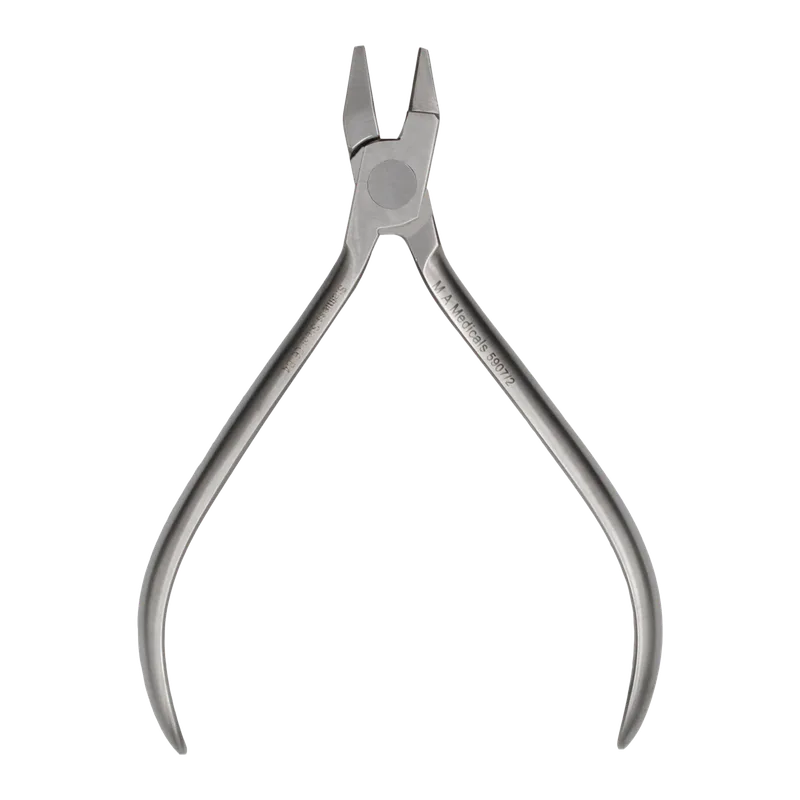
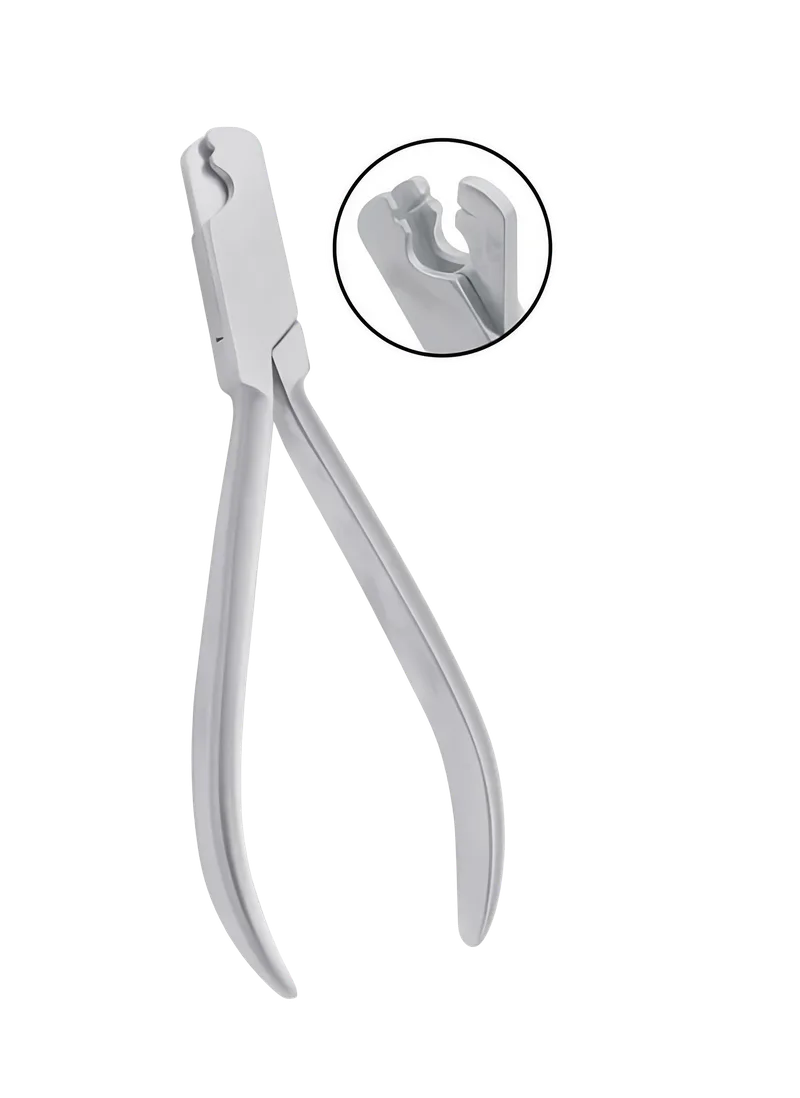
Equate offers 6 three-prong and three-jaw plier references, including an Aderer long plier rated to 0.6 mm, a NiTi-specific version rated to .020 in and a heavy lab version, all in passivated stainless steel, at a typical list price about 52% below premium European RRPs.
Equate Three-Prong Plier options
Frequently asked questions
What is a three-prong plier used for?
Adjusting clasps, springs and labial bows on removable appliances and retainers, and making small precise bends in round wire.
Is a three-prong plier the same as an Aderer plier?
The Aderer plier is a type of three-prong plier, often with longer beaks, used for precise clasp adjustment. Many catalogues list them together.
Can I use a three-prong plier on NiTi wire?
Standard versions are not intended for NiTi. Dedicated NiTi three-jaw pliers exist for placing bends in NiTi wire up to about .020 in.
What wire size can a three-prong plier bend?
Typically round stainless steel up to about 0.5–0.6 mm. Heavier clasp wire needs a heavy lab version.
Why do my bends come out uneven?
The single prong is probably no longer centred between the two prongs. Have the plier realigned or replace it.
References
- In vitro comparison of peracetic acid and autoclave sterilization in the corrosion of orthodontic pliers: a pilot study — Dental Press Journal of Orthodontics
- The effect of routine steam autoclaving on orthodontic pliers — PubMed
- Classification and uses of orthodontic pliers — Dentaltix clinical blog (supplier reference, used for terminology only)
I am a…