Best Wire Bending Pliers: Pick by the Bend You Make
Written & reviewed by the Equate Technical Team · Updated
The best all-round wire bending plier is the bird beak plier: a conical beak and a flat beak that make round loops, springs and radius bends in round wire. Add loop-forming pliers for repeated loops, arch forming pliers for archform, and step or torquing pliers only when you finish wires in rectangular sizes.
Our ranked picks
1. Bird beak plier
One conical and one flat beak give a continuous range of loop and arc diameters in round wire, so one instrument covers springs, hooks and finishing bends. Not the right choice for sharp repeatable offsets in rectangular wire, where the round beak can mark the surface.
See Bird-Beak Plier2. Loop forming plier (Tweed, Nance, optical)
Stepped or grooved beaks produce identical loops each time, which matters when you make a series of closing loops. Choose by loop size and wire section; a plier built for .020 in round is the wrong choice for rectangular wire.
See Tweed Loop Forming Pliers 0.55 x 0.64 mm (.021″ x .025″ Wire)3. Round arch forming plier
A grooved jaw or stepped mandrel to curve round archwires and lingual arches without kinking. Use it for custom arch shapes; it is not a replacement for a bird beak when you need a tight radius.
See Dela Rosa Arch Forming Pliers with Groove 0.41/0.46/0.56 mm (.016″/.018″/.022″ Wire)4. Three-prong plier
Three-point contact bends round wire to precise angles with a consistent offset, useful for first-, second- and third-order bends. It needs practice to place correctly, so it is a second-tier purchase.
See Three-Prong Wire Bending Pliers5. Rectangular arch forming plier
Flat blades and slim 1.3 mm versions that bend rectangular wire without twisting it. Buy these when you finish in steel rectangular wire; skip them for round-wire-only practices.
See Ribbon/Tweed Arch Forming Pliers - Long6. Step bend and torquing pliers
Detailing step pliers (1/4, 1/2, 3/4 and 1 mm) place precise step offsets, and torquing pliers or keys apply torque to rectangular wire. Both are specialist finishing tools, wrong for general bending.
See Torquing Pliers Wide
Start from the bend, not the plier
Wire bending is a family of distinct operations, and each plier is designed around one geometry. The conical beak of a bird beak plier produces a changing radius along its length. Loop-forming pliers fix the radius. Three-point pliers fix an offset. Arch-forming pliers distribute curvature across a long arc. Matching the plier to the geometry matters more than the number of pliers you own.
Textbooks such as Contemporary Orthodontics describe archwire bending as first-, second- and third-order bends; each of these has a plier family that suits it, which is the logic of the table below.
The bend-to-plier map
| Bend or task | Wire | Plier | Equate range |
|---|---|---|---|
| Round loop, spring, hook | Round | Bird beak | 12 models |
| Repeated closing loop | Round or rectangular by plier | Loop forming | 14 Tweed-style, 9 optical |
| Archform shaping | Round | Round arch forming | 10 models |
| Offset or angled bend, first and second order | Round | Three-prong, Jarabak | 6 and 9 models |
| Archform in rectangular wire | Rectangular | Rectangular arch forming | 13 models |
| Step offset | Round or rectangular | Step bend | 4 models, 1/4 to 1 mm |
| Third-order torque | Rectangular | Torquing pliers and keys | 4 pliers |
How we evaluated these picks
Dated 21 October 2026. This is an editorial ranking by Equate, which manufactures the pliers named, based on instrument geometry, how many different bends each one handles, and standard orthodontic teaching on bend types. We did not run bend-accuracy testing, and we found no controlled study ranking wire bending pliers against each other, so no claim here is a measured result. Clinicians' preferences differ by technique.
What separates a good bending plier
- Beak finish: smooth, burr-free beaks that do not score the wire surface.
- Wire rating: use the plier marked for the wire size, and do not force heavier wire through a light plier.
- Joint: a box joint without play so beak tips meet exactly.
- Tip material: carbide-tip models add wear resistance but are more brittle than stainless steel according to supplier technical guides, so keep them away from heavy wire.
- Added cutters: bird beak and Jarabak variants with cutters save an instrument change but are rated for soft wire only.
Maintenance for bending pliers
Wipe wire residue off the beaks, lubricate the joint and heat-sterilise to the manufacturer's instructions; the CDC dental infection control guideline of 2003 advises heat sterilisation for heat-tolerant instruments. Never use a bending plier to cut wire or grip pins, which spreads the beaks. Check beak alignment against a flat reference when a plier starts to twist wire.
The Equate difference
Equate lists 12 bird-beak pliers (plain, serrated and with-cutter versions, including carbide-tip models), 14 Tweed-style loop forming pliers, 10 round and 13 rectangular arch forming pliers, 6 three-prong pliers, 4 step bend pliers and 4 torquing pliers.
Equate Best Wire Bending Pliers: Pick by the Bend You Make options
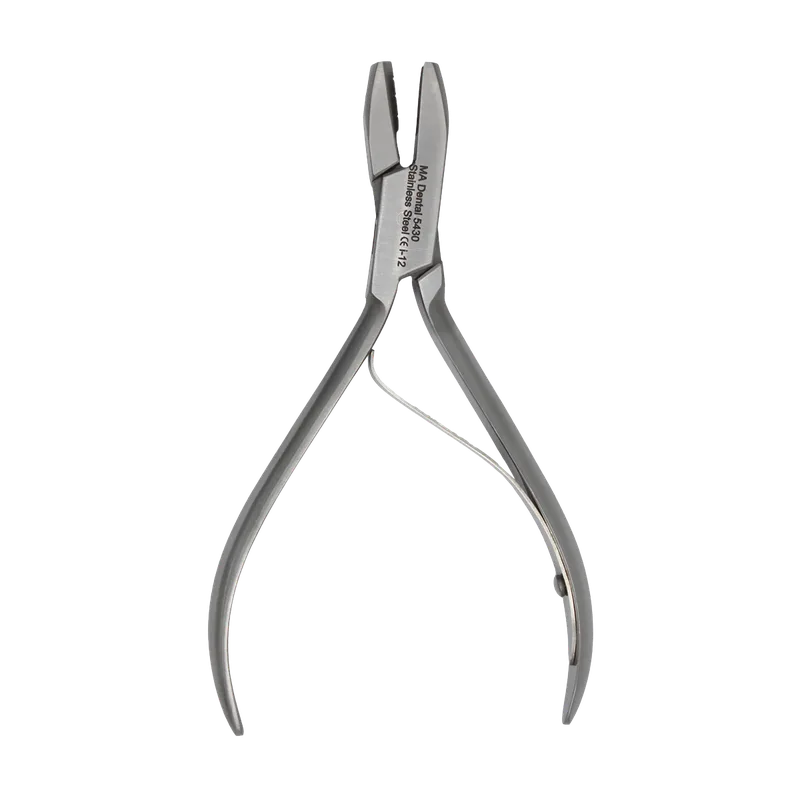
Dela Rosa Arch Forming Pliers with Groove 0.41/0.46/0.56 mm (.016″/.018″/.022″ Wire)
EI-0688
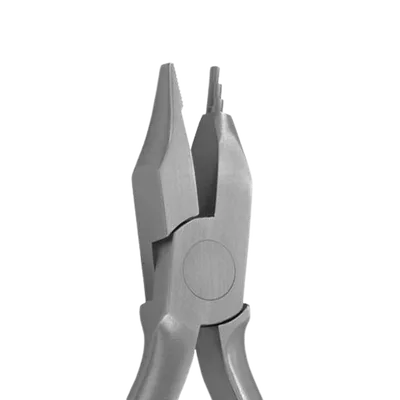
Tweed Loop Forming Pliers 0.55 x 0.64 mm (.021″ x .025″ Wire)
EI-0691
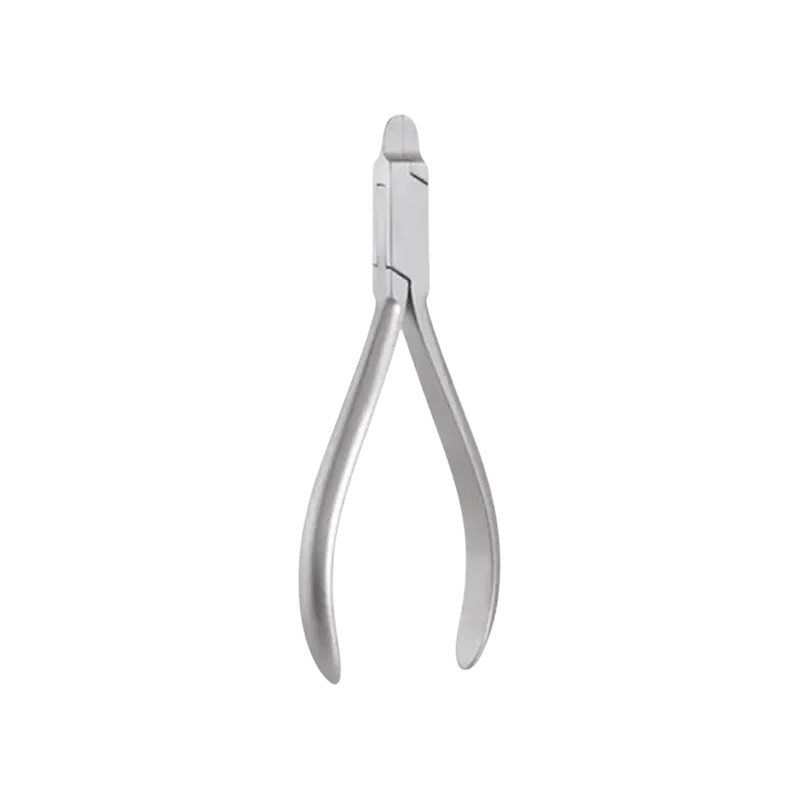
Ribbon/Tweed Arch Forming Pliers - Long
EI-0698
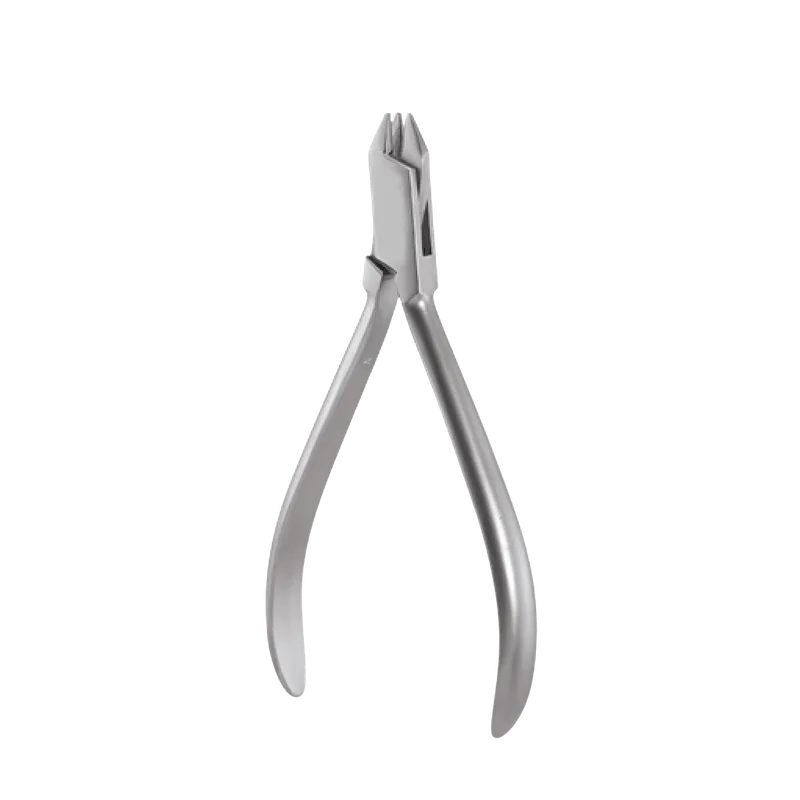
Three-Prong Wire Bending Pliers
EI-0702
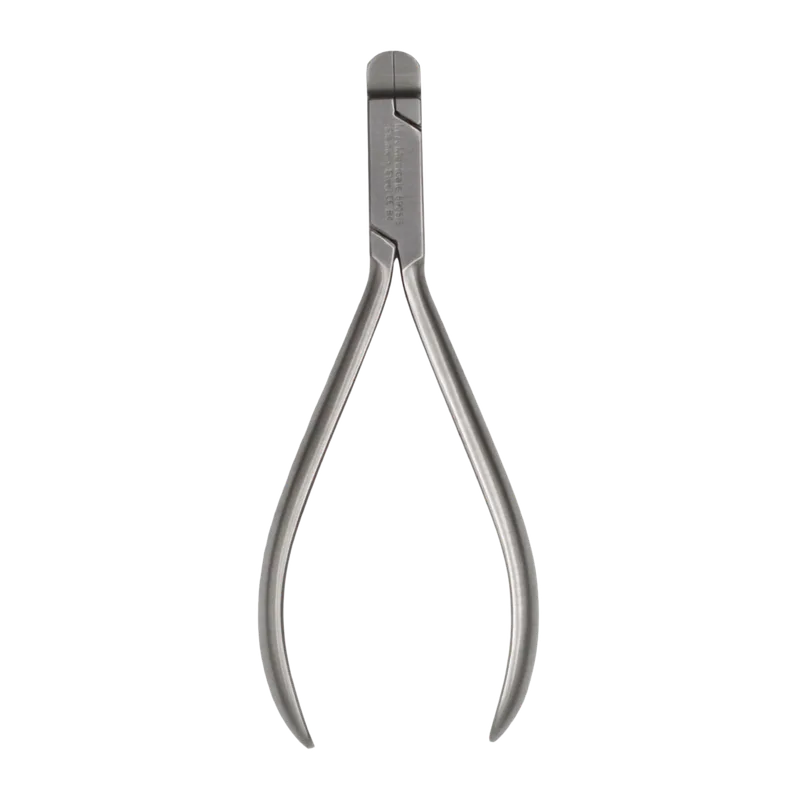
Rectangular Arch Forming Plier - Max 0.7mm (.028") Wire
EI-0797
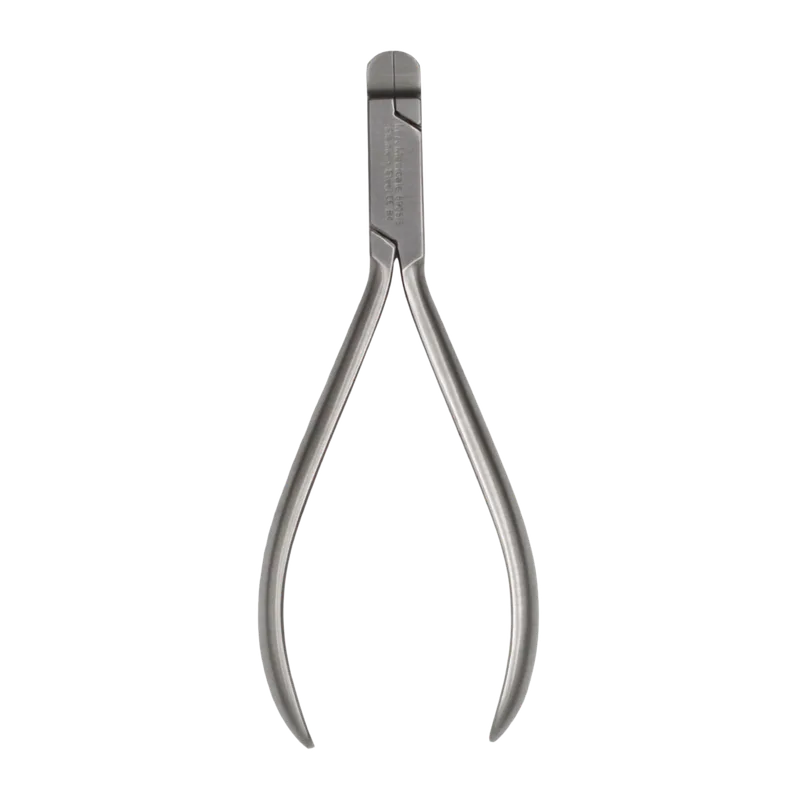
Slim Rectangular Arch Forming Pliers 1.3mm Blade - Max 0.7mm (.028") Wire
EI-0798
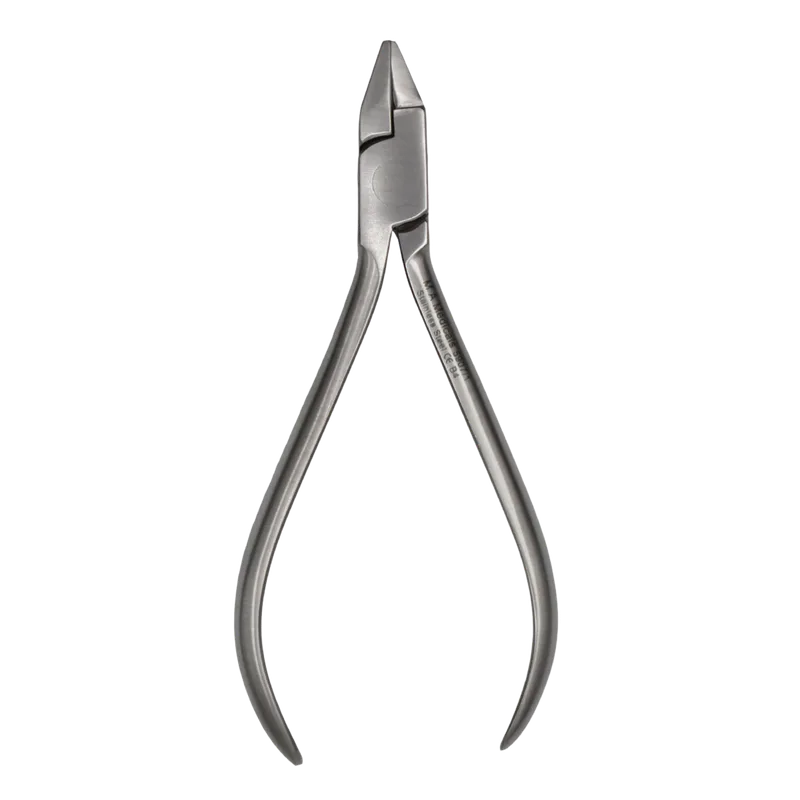
Three-Jaw Wire Bending Plier - Max 0.5 mm
EI-0801
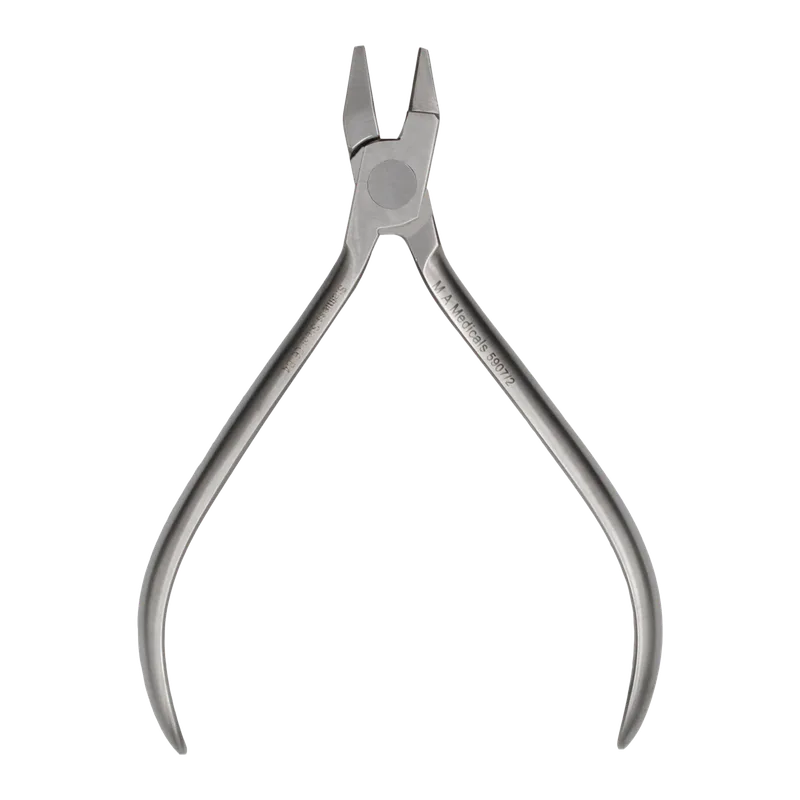
Aderer Long Wire Bending Plier - Max 0.6 mm, 13 cm
EI-0802
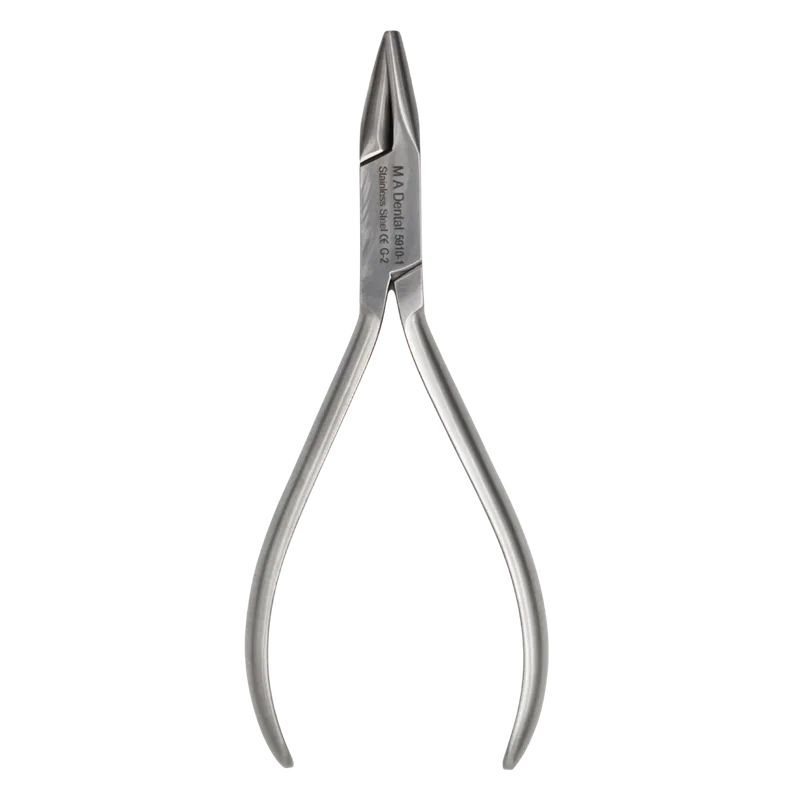
Schwarz Loop Forming Plier - Max 0.51 mm
EI-0803
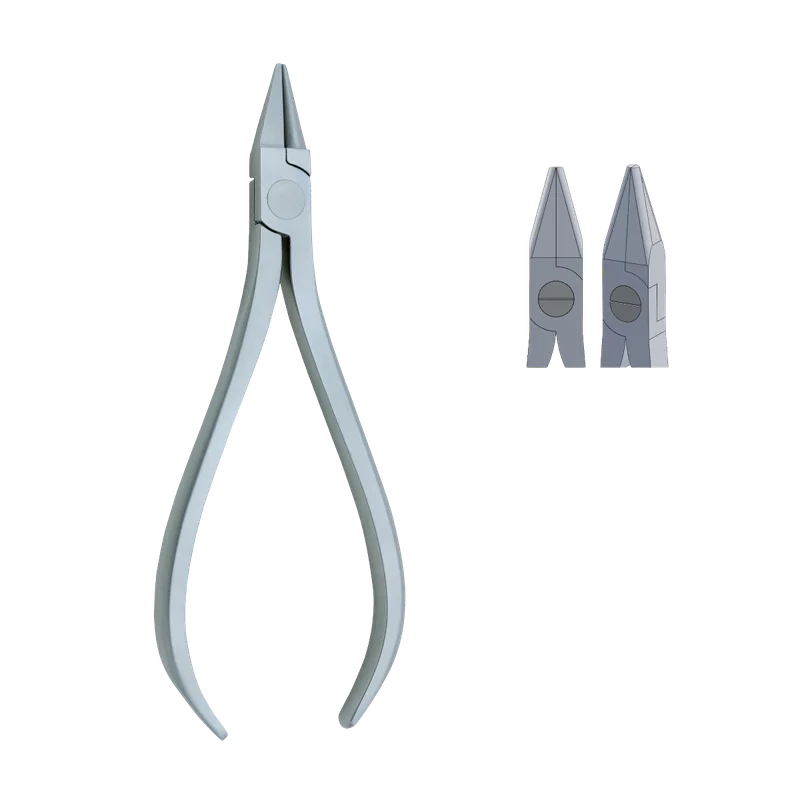
Schwarz Medium Forming and Bending Plier
EI-0806
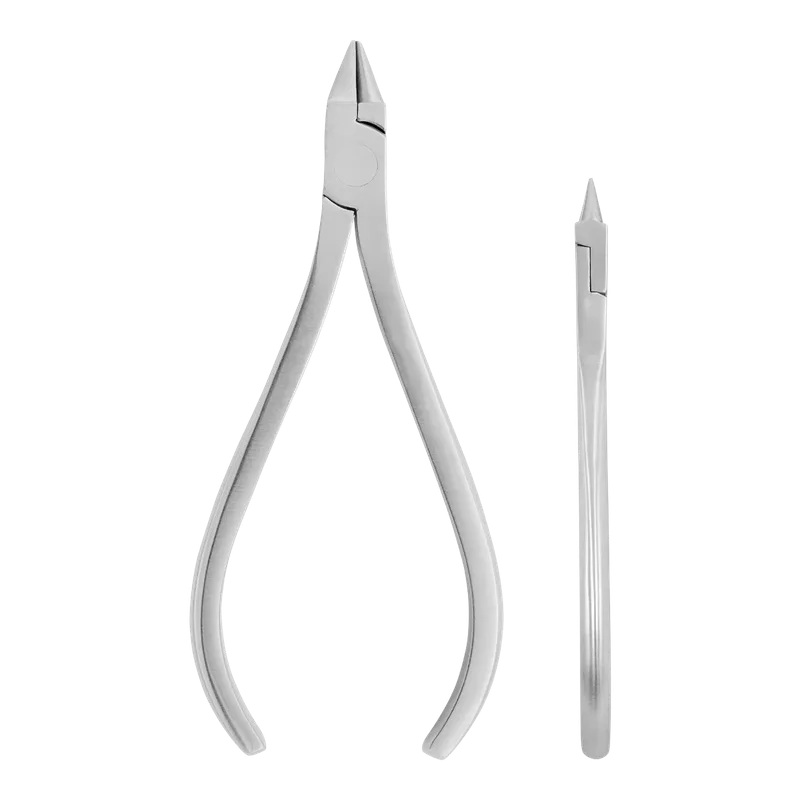
Bird-Beak Plier
EI-2592
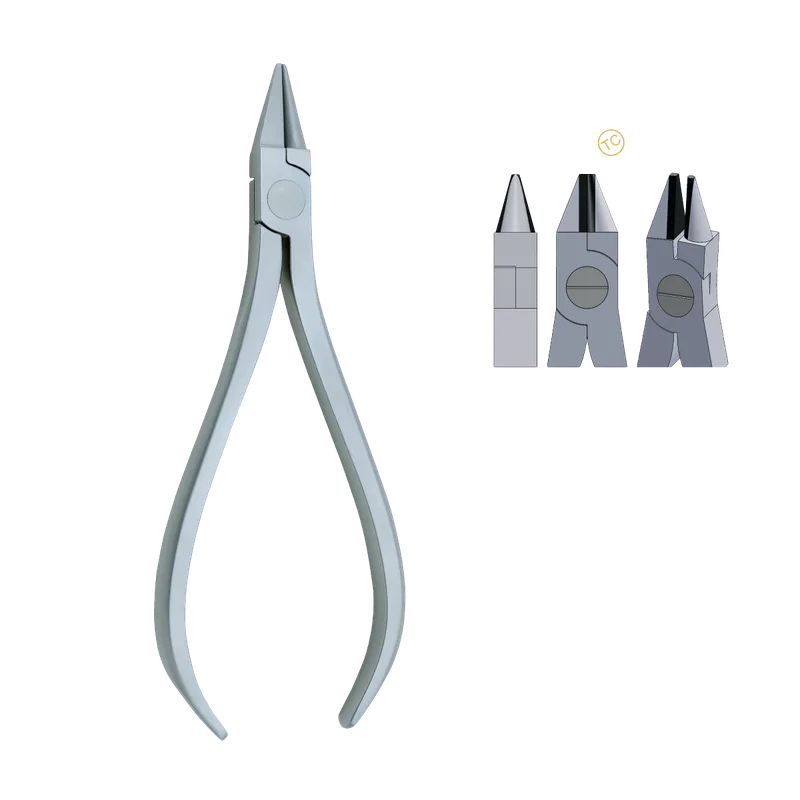
Bird-Beak Plier - Plain Tip, Tungsten Carbide
EI-2593
Frequently asked questions
What pliers do you need to bend orthodontic wire?
A bird beak plier covers most round-wire bends. Add loop forming, arch forming and three-prong pliers depending on the bends you make.
What is a bird beak plier used for?
It forms loops, springs, hooks and curved bends in round wire using one conical and one flat beak.
What is the difference between a Tweed loop plier and a bird beak plier?
A bird beak makes variable radii along its cone. A Tweed-type plier makes a loop of fixed size each time.
What is a three-prong plier used for?
It bends round wire to an angle with three points of contact for repeatable offsets and bends.
Do I need torquing pliers?
Only when you place third-order torque in rectangular wire by hand.
Can I bend NiTi wire with orthodontic pliers?
Stainless steel is the usual chairside bending wire. NiTi has shape memory and springs back, as supplier technical guides note, so it is rarely hand-bent; check the wire maker instructions.
Can wire bending pliers cut wire?
Only models sold with cutters, and then only soft wire up to the stated size.
References
- Proffit, Fields and Sarver, Contemporary Orthodontics, archwire bending chapters
- Orthodontic wire cutting and bending supplier technical guide, Rhein Dental, 2025
- CDC, Guidelines for Infection Control in Dental Health-Care Settings, 2003 (MMWR 52 RR-17)
- ISO 13485:2016 Medical devices quality management systems
I am a…