Round Arch Forming Plier
Written & reviewed by the Equate Technical Team · Updated
A round arch forming plier shapes round orthodontic wire into smooth curves using a round or grooved jaw against a flat or cylindrical counter-jaw. Grooved designs such as the Dela Rosa seat the wire in a channel sized to its diameter, so progressive squeezing builds a symmetrical arch without kinking the wire.
How round arch forming works
Round wire has the same section in every direction, so it can be bent with a round post against a flat or grooved face. In a grooved plier the wire sits in a channel on one jaw and the opposing jaw presses it into a curve. Working along the wire in short steps with a little overlap creates a continuous curve rather than a series of angles.
Round-wire forming pliers are used for appliance and arch wires such as lingual arches, retainers and custom arch forms. Always follow the wire manufacturer instructions on whether a given alloy may be bent chairside.
Design variants
- Dela Rosa grooved pliers with three grooves for .016, .018 and .022 in round wire.
- Schwarz medium forming and bending pliers.
- Young pliers with a rated wire limit of 0.7 mm (.028 in).
- Round-jaw pliers for 0.51 mm (.020 in) wire.
- Lingual arch forming pliers, listed as a dedicated pattern.
- Arch forming pliers with three holes in the jaw (12 cm) or without (12 cm).
- Arch forming turret, a separate former listed in its own subcategory.
Comparing variants
| Variant | Equate example | Best for |
|---|---|---|
| Grooved (Dela Rosa) | Dela Rosa Arch Forming Pliers with groove, .016/.018/.022 in | Wire-diameter-specific arch forms |
| Medium former | Schwarz Medium Forming and Bending Plier | General bending and forming |
| Round jaw | Round Jaw Wire Bending Pliers .020 in | Small curves in fine wire |
| Young | Young Pliers .028 in | Heavier round wire |
| Lingual | Lingual Arch Forming Plier | Lingual arch fabrication |
| Multi-hole | Arch Forming Pliers with 3 Holes, 12 cm | Controlled curve radii |
| Turret | Arch Forming Turret | Forming arches with a turret |
Round versus rectangular forming
A round arch forming plier is the wrong tool for edgewise rectangular wire, because round jaws touch a rectangular wire along a line and can roll it, altering torque. For rectangular wire, use a flat-jaw rectangular arch forming plier; for loops and fine detail, a Tweed loop forming plier or bird beak plier is the usual choice.
Select the groove size to match the wire. A wire sitting loose in an oversized groove can kink, and a wire forced into an undersized groove can be scored.
Care and specifications
Equate round arch forming pliers are forged stainless steel, passivated, ultrasonically cleaned, latex free, reusable and supplied non-sterile. Clean grooves with a small brush so debris and wire fragments do not mark the next wire, lubricate the joint, and replace pliers whose grooves have flattened or whose jaws close unevenly.
The Equate difference
Equate lists 10 round arch forming pliers, including Dela Rosa pliers with grooves for 0.41, 0.46 and 0.56 mm (.016, .018 and .022 in) wire, a Schwarz medium forming plier, Young pliers and a lingual arch forming plier, plus one arch forming turret.
Equate Round Arch Forming Plier options
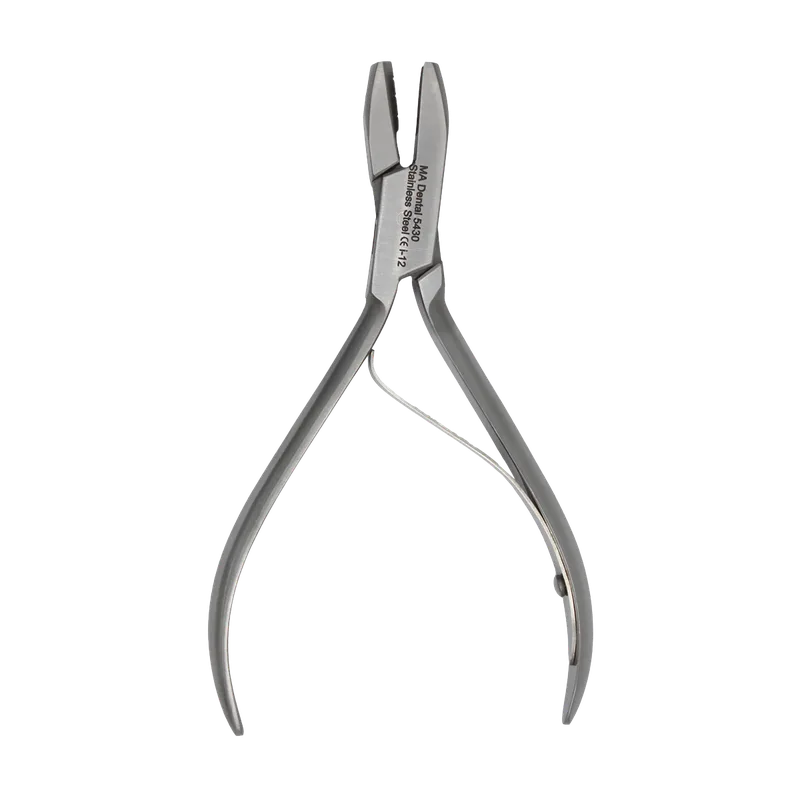
Dela Rosa Arch Forming Pliers with Groove 0.41/0.46/0.56 mm (.016″/.018″/.022″ Wire)
EI-0688
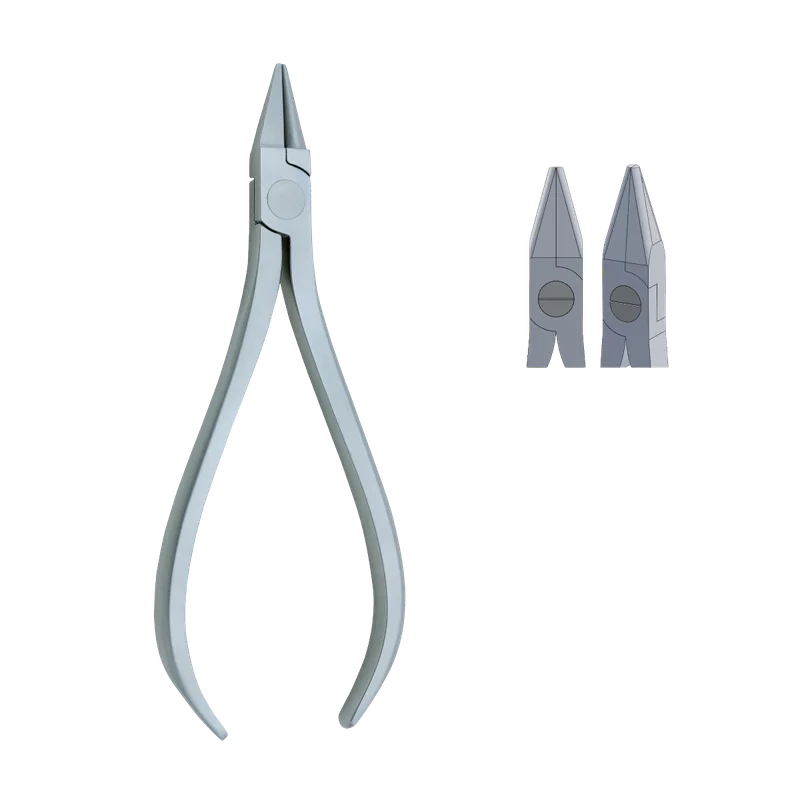
Schwarz Medium Forming and Bending Plier
EI-0806
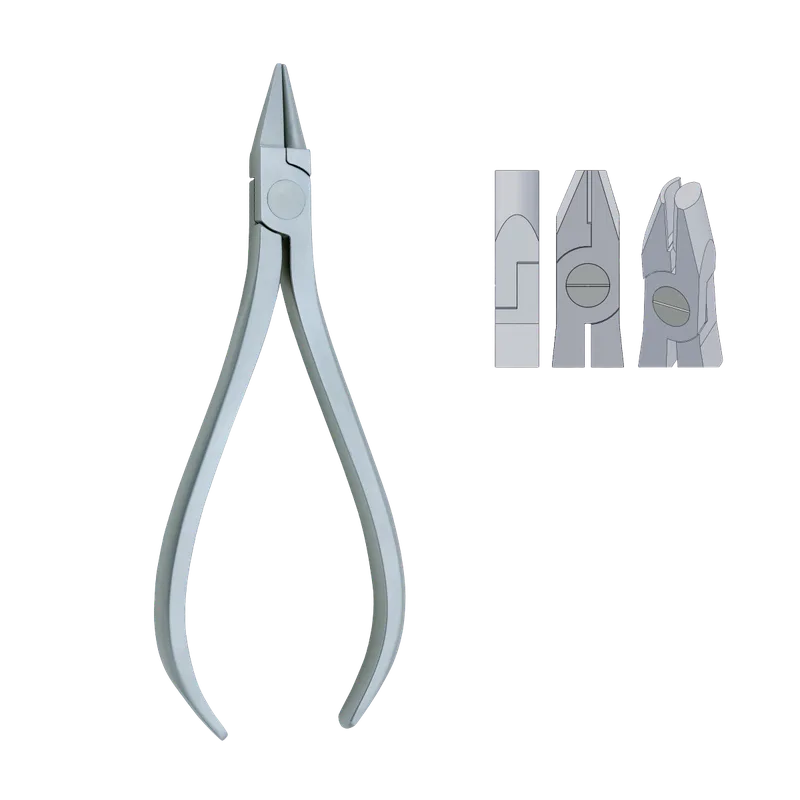
Dela Rosa Arch Forming Plier
EI-2604
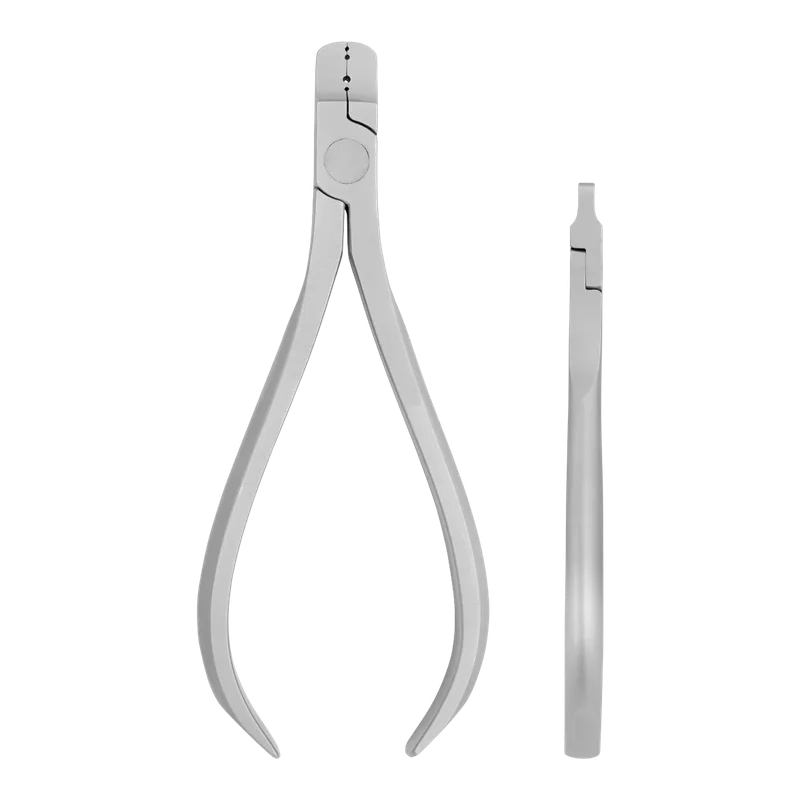
Lingual Arch Forming Plier
EI-2605
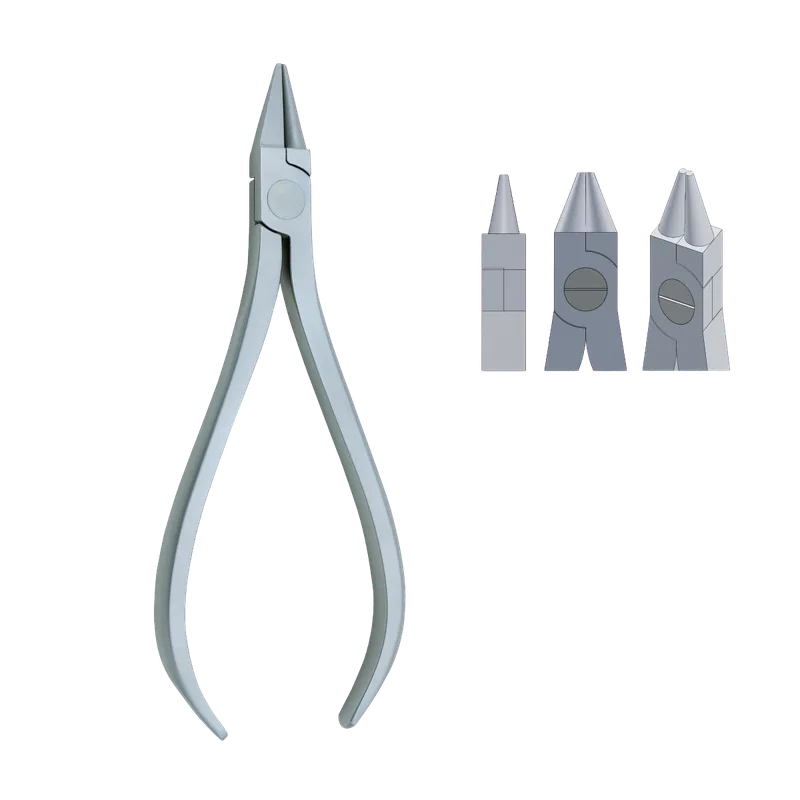
Round Jaw Wire Bending Pliers - 0.51 mm (.020 in) Wire
EI-2637
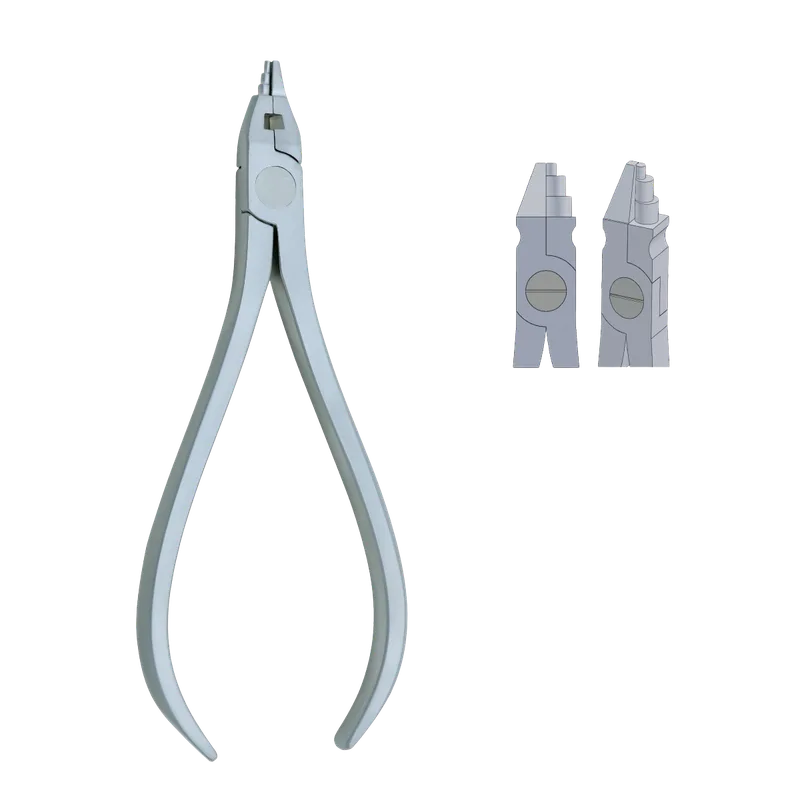
Young Pliers - 0.7 mm (.028 in) Wire
EI-2638
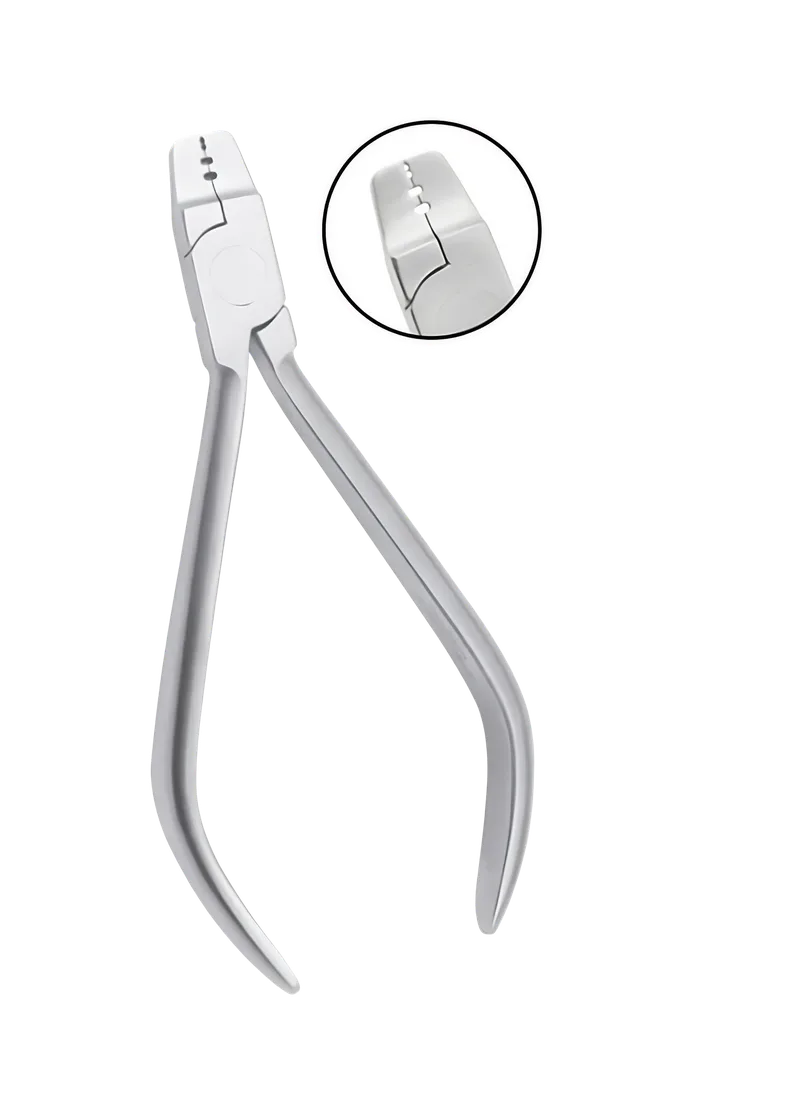
Arch Forming Pliers with 3 Holes - 12 cm
EI-3206
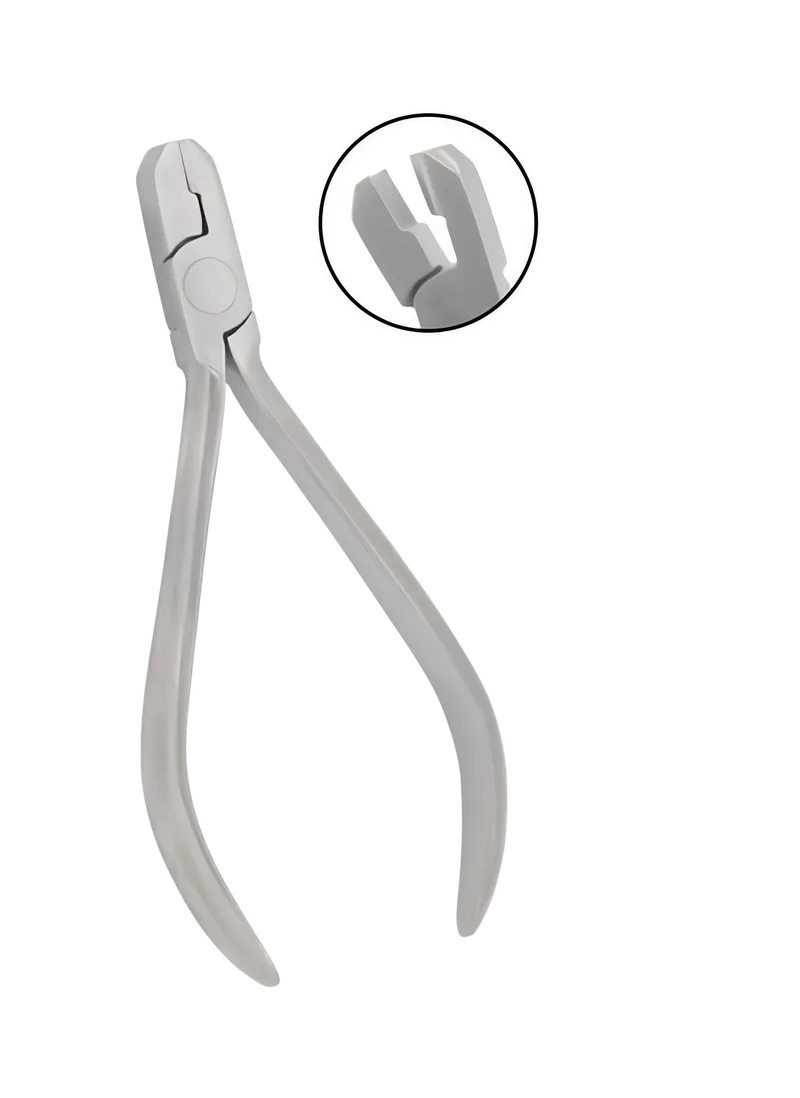
Arch Forming Pliers - 12 cm
EI-3207
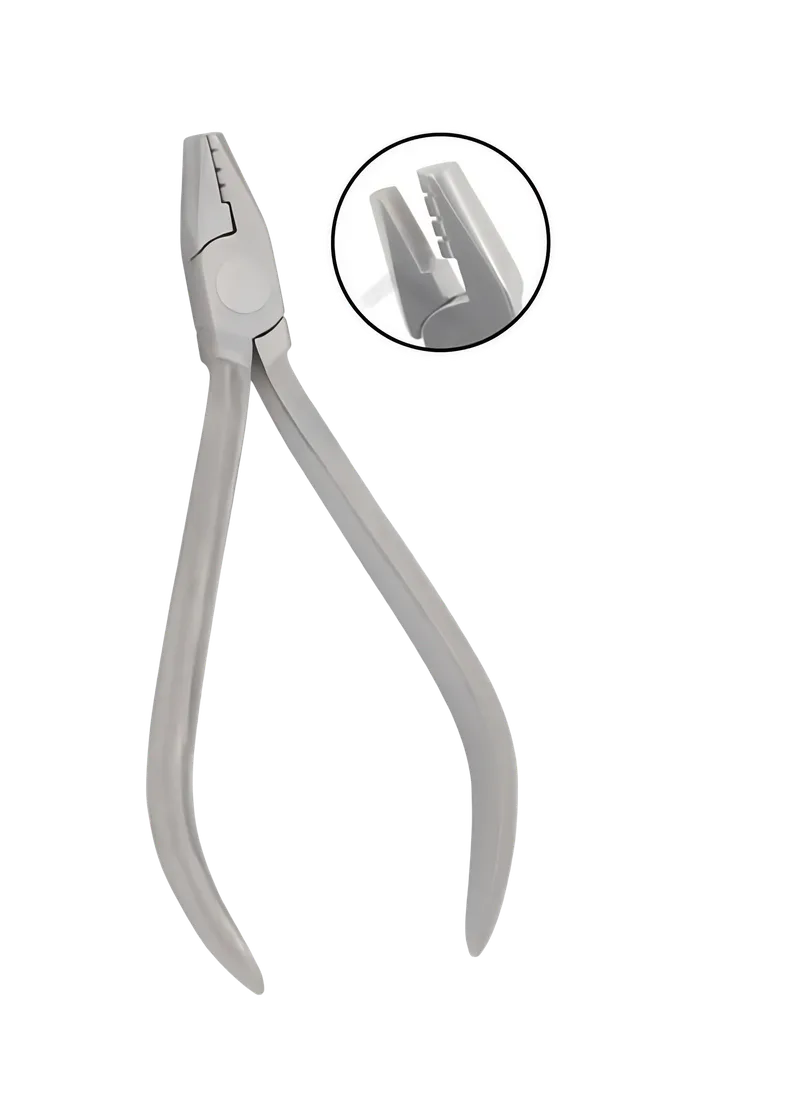
Hollow Chop Arch Forming Pliers with 3 Grooves - 12 cm
EI-3208
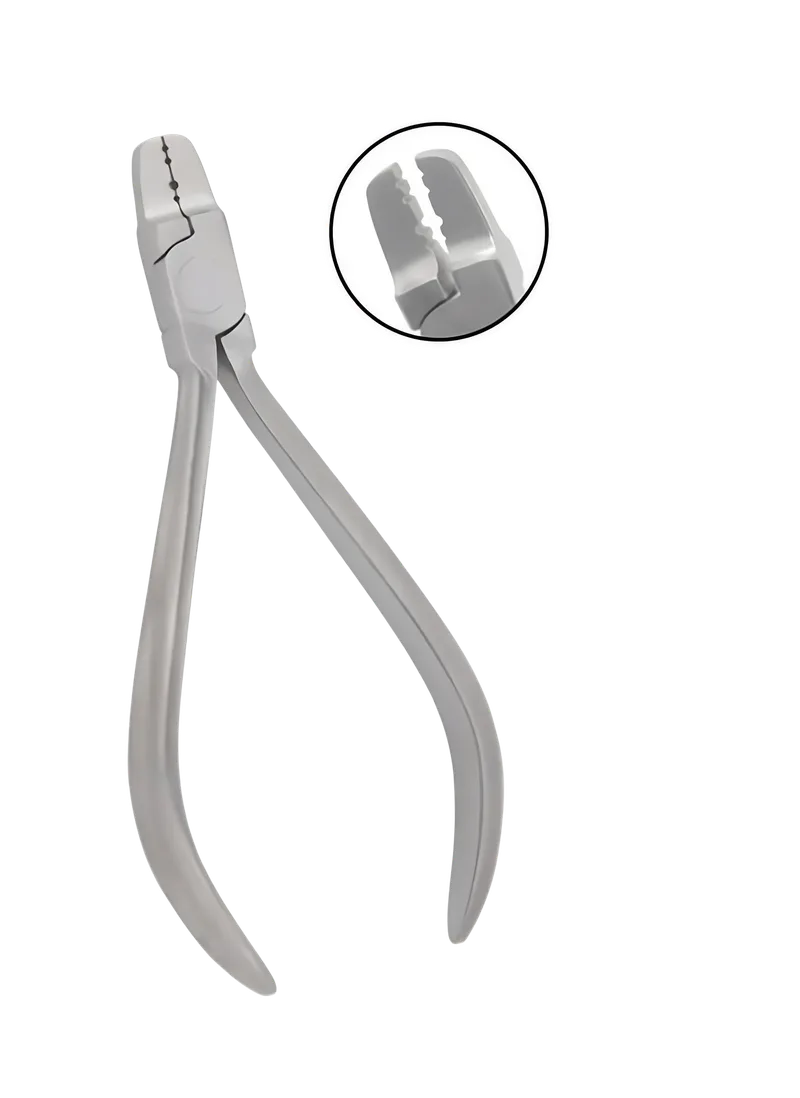
Lingual Arch Forming Pliers - 12 cm
EI-3209
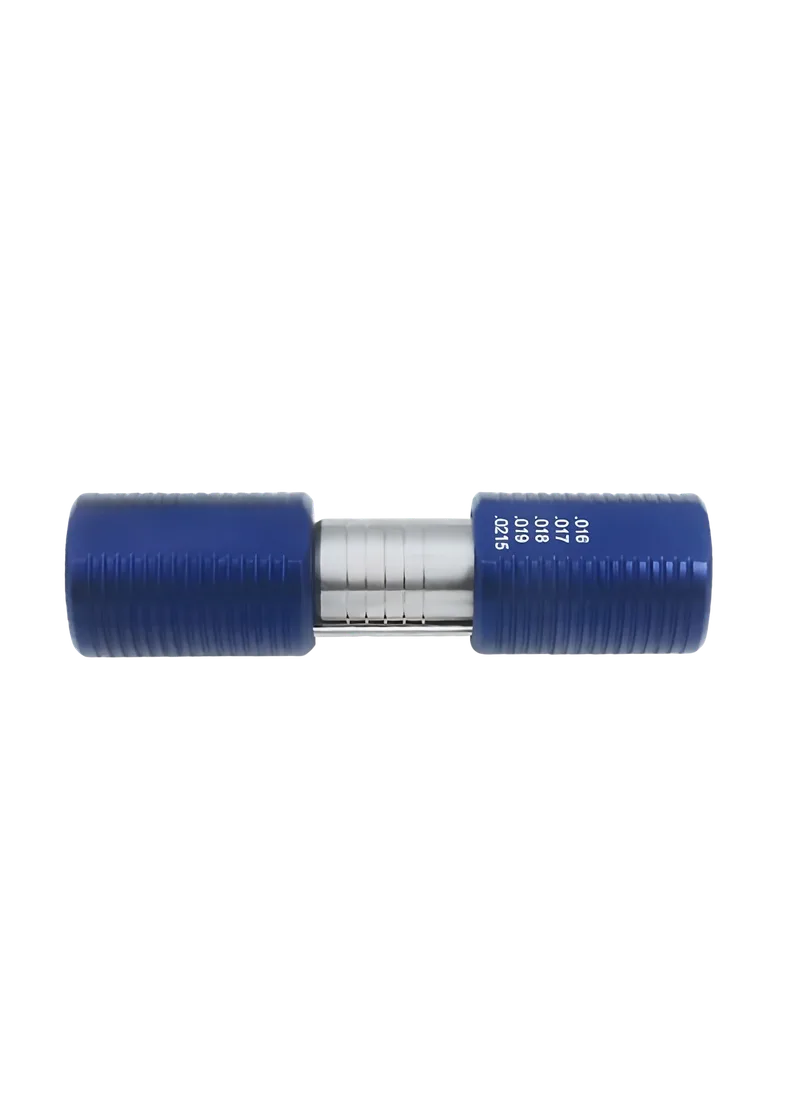
Arch Forming Turret
EI-3333
Frequently asked questions
What is a Dela Rosa plier used for?
Forming round orthodontic wire into arch shapes. Its graduated grooves for .016, .018 and .022 in wire seat the wire while the opposing jaw bends it.
What is the difference between a round and a rectangular arch forming plier?
Round pliers bend round wire with round or grooved jaws. Rectangular pliers support flat wire between a platform and flat jaw so the wire is not twisted.
Can I bend rectangular wire in a round forming plier?
It is not recommended. Round jaws contact rectangular wire along a line and can roll it; use a flat-jaw rectangular arch forming plier.
What is a lingual arch forming plier?
A dedicated pattern in the Equate range intended for forming lingual arch wire.
How do I choose the right groove size?
Match the groove to the wire diameter, such as .016, .018 or .022 in, so the wire is seated without sliding loose.
References
- Orthodontic pliers types and characteristics, Dentaltix
- Wirebending arch forming orthodontic pliers listing, Dentalcompare
- Pliers for forming orthodontic wires, US7967602B2 patent
- ISO 13485:2016 medical devices quality management systems
I am a…