Torquing Plier
Written & reviewed by the Equate Technical Team · Updated
A torquing plier is an orthodontic wire-forming plier that twists a rectangular archwire about its long axis to create a third-order (torque) bend, which tips tooth roots labially or lingually once the wire engages the bracket slot. Wide patterns torque a segment of several teeth; narrow patterns torque a single tooth.
What third-order torque means
Torque is a twist in the archwire that rotates the root of a tooth in the buccolingual direction. It only reaches the tooth after the wire has used up the clearance in the slot. A PMC-indexed 2014 study of 0.018 and 0.022 slots, and a 2024 in vitro study in Materials, both report that no movement occurs within this play and that measured play was larger than ideal, which is attributed to slots being oversized relative to nominal dimensions. Burstone's clinically useful range is cited in secondary sources as about 5 to 20 Nmm, with higher values associated with root resorption. These are laboratory results, so clinical torque differs in the mouth.
Wide, narrow, male and female patterns
The wide plier grips a longer section of wire so the twist is spread across several teeth, which reduces localised deformation during anterior torque adjustments. The narrow plier concentrates the twist on one tooth width. Male and female pliers, sold as a pair, hold the wire either side of the bend so a single tooth position can be torqued. Practical guides describe pliers for square and rectangular wire up to .022 x .028 inch and torquing keys with separate slots for .018 and .022 wire; fit to the wire is what keeps the twist from rounding the wire's corners.
Torquing pliers at a glance
| Pattern | Equate references | Best for | Note |
|---|---|---|---|
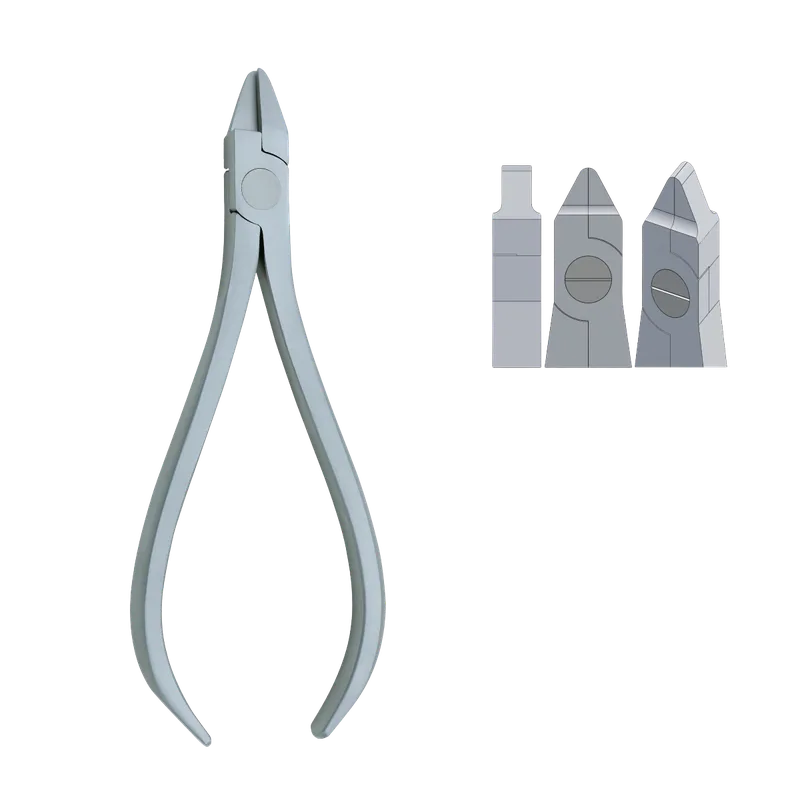
| Torquing pliers wide | 1 | Torque across multiple anterior teeth | Even distribution, less local twist |
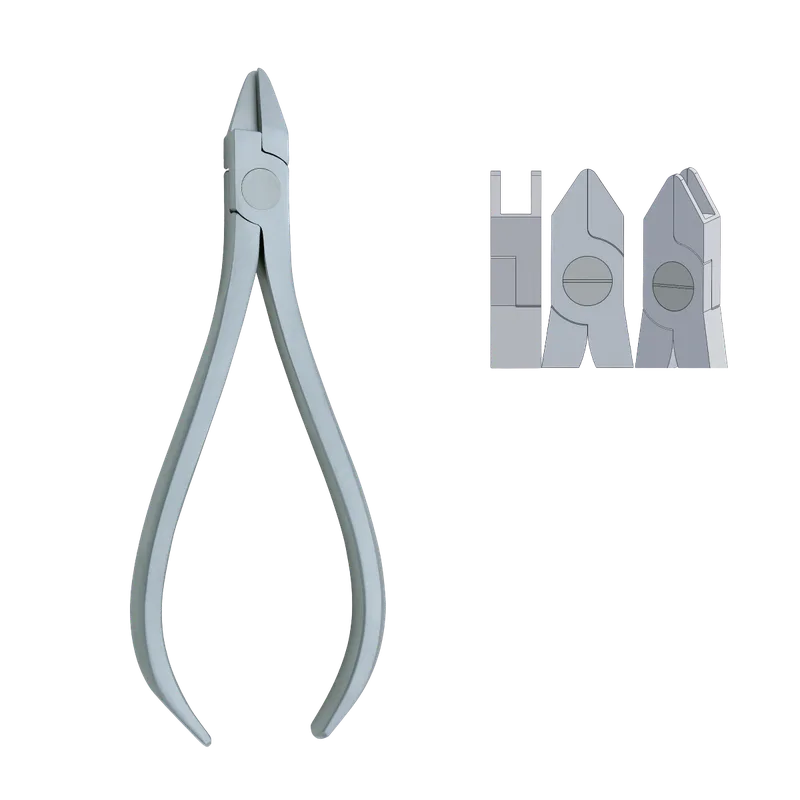
| Torquing pliers narrow | 1 | Torque on a limited span | Pivot screw, plain round handles |
| Torquing plier male .022 x .028 | 1 | Single tooth torque with female partner | Used as a pair |
| Torquing plier female .022 x .028 | 1 | Single tooth torque with male partner | Used as a pair |
Choosing and using one
- Match the wire: pliers are sized for a given slot or wire section, such as .022 x .028 inch.
- Check the alignment: jaws must meet without offset, or the wire will twist unevenly.
- Work gradually: apply small increments and check against the bracket, since measured play makes the delivered torque hard to predict.
- Use for rectangular wire only: round wire has no third-order position to hold.
- Care: wipe wire residue, lubricate the pivot, autoclave open.
Price position and handling
Equate torquing pliers list at €64.90 (indicative, EUR ex-VAT), about 52% below the €134.80 median premium European RRP for orthodontic wire-forming pliers. They are passivated stainless steel, ultrasonically cleaned, reusable, supplied non-sterile and individually packed. Torquing hardens stainless wire, so avoid repeated bend and unbend cycles at the same point.
The Equate difference
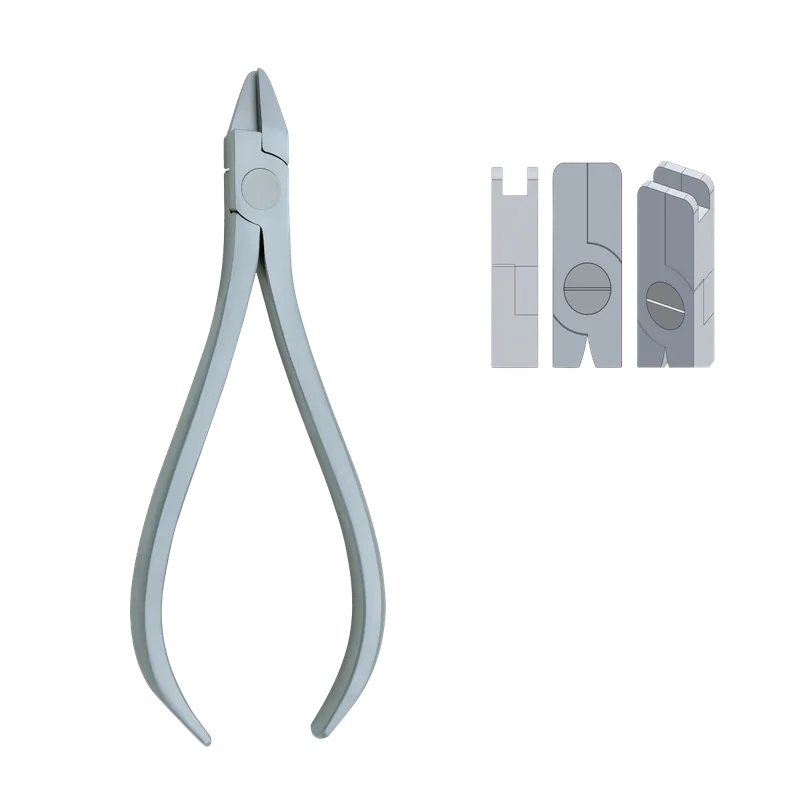
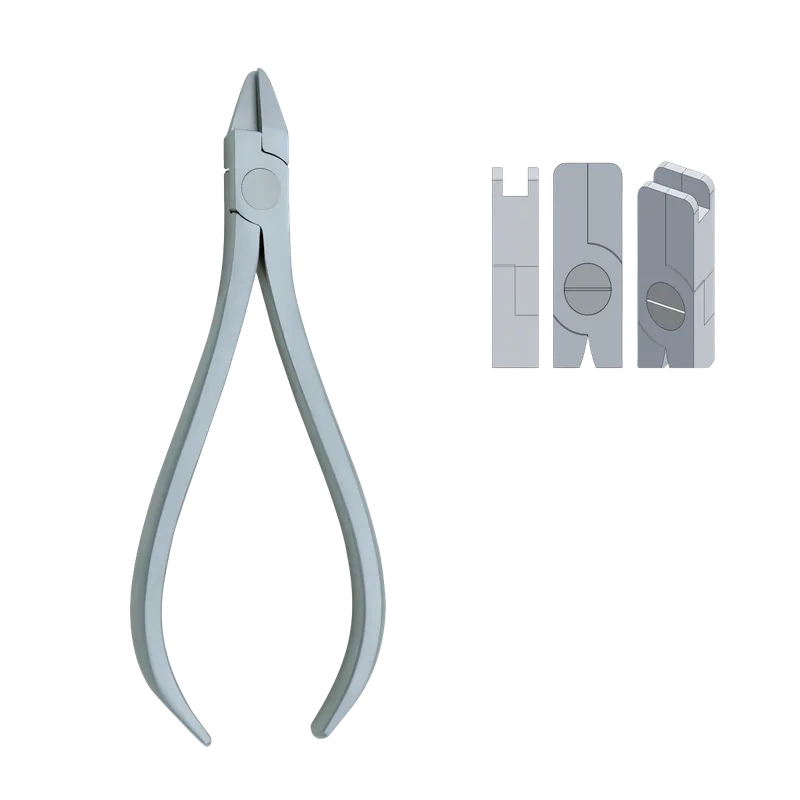
Equate lists 4 torquing pliers: a wide pattern, a narrow pattern, and male and female .022 x .028 inch single-tooth torquing pliers, all stainless steel and forged to fit rectangular wire.
Equate Torquing Plier options
Frequently asked questions
What is a torquing plier used for?
To place third-order torque bends in rectangular archwires, adjusting the buccolingual root angulation of teeth.
What is the difference between wide and narrow torquing pliers?
Wide pliers grip more wire and spread the twist over several teeth. Narrow pliers concentrate it over a smaller span.
What are male and female torquing pliers?
A matched pair, here .022 x .028 inch, that hold the wire at either side of the bend so one tooth can be torqued precisely.
Why does my torque bend not seem to move the tooth?
Slot play. The wire must rotate through its clearance in the slot before it contacts the walls, and published laboratory studies compare how much play different wire and bracket combinations allow.
How much torque is safe?
Secondary sources cite Burstone's range of about 5 to 20 Nmm as clinically useful, with higher values linked to root resorption. These are laboratory-derived figures.
Can I torque round wire?
No. Torque requires a rectangular wire section, because round wire can rotate freely in the slot.
References
- Torque expression capacity of 0.018 and 0.022 bracket slots, Progress in Orthodontics 2014
- Comparing torque transmission of different bracket systems considering play in the bracket slot, Materials 2024
- Rectangular wire and third-order torque: a new perspective, American Journal of Orthodontics and Dentofacial Orthopedics
I am a…