Jarabak Plier
Written & reviewed by the Equate Technical Team · Updated
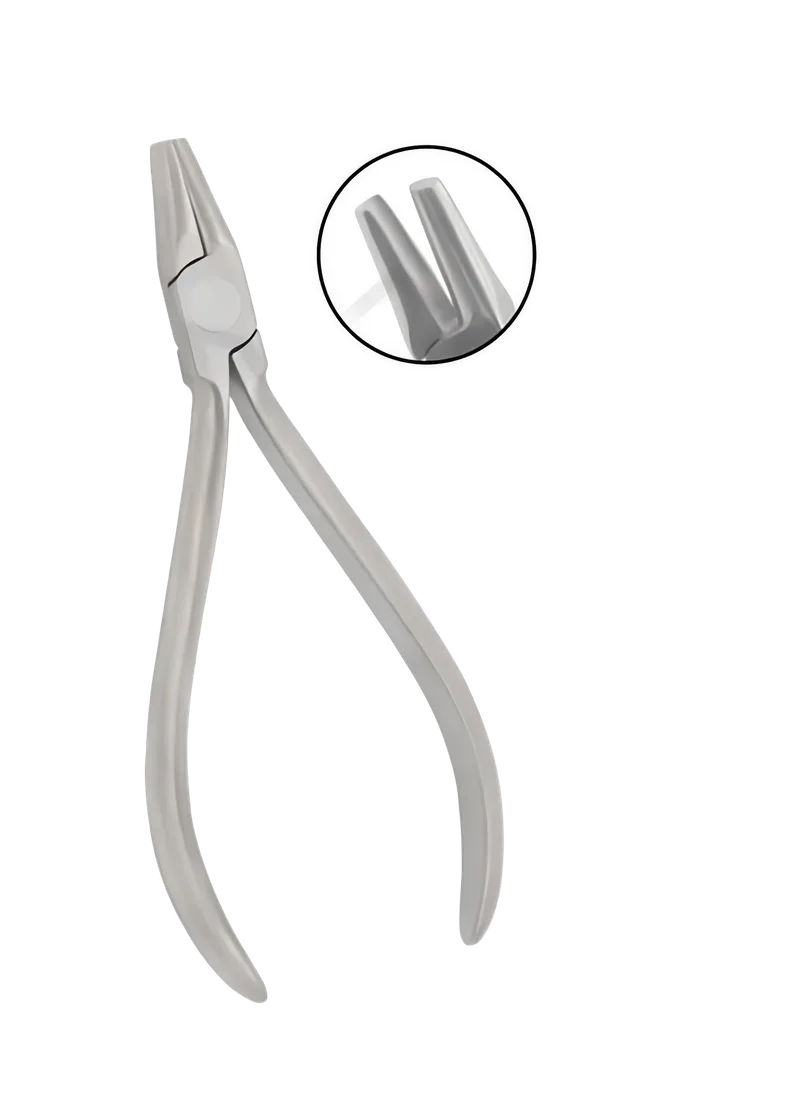
A Jarabak plier is an orthodontic wire-bending plier with fine tapered beaks, typically one conical and one flat or rounded, used to form loops, boot loops, offsets and first-order bends in light round archwires, commonly around .016 to .020 inch. It is a finishing and detailing plier, not a heavy-wire bender.
Where the name comes from
Jarabak is the name of Joseph R. Jarabak, an American orthodontist who chaired orthodontics at Loyola and co-wrote the textbook Technique and Treatment with the Light-Wire Appliances. His Loyola-Jarabak light wire technique was described in a 1966 paper listed in PubMed. The technique is built around light, differential forces, which is why the plier associated with it is designed for fine round wire. We did not find an independent historical source on who designed the plier pattern or when, so the name should be taken as an association with the technique rather than a documented invention.
What it is used for
Manufacturer descriptions, including those from Hu-Friedy, present the Jarabak as a light wire bending plier for forming and adjusting vertical loops, closing loops and boot loops on .016 to .020 inch round stainless steel archwires. Clinicians also use it for step bends, offsets and small first-order corrections during finishing, and for forming ligature or auxiliary wire.
The conical beak is the former: wire is wrapped around it to make a loop whose diameter is set by where on the cone the wire is placed. The flat beak backs the wire and keeps it from kinking. Because the beaks are slim, the plier reaches into the tight spaces around brackets, but it is not built for heavy rectangular stainless steel.
Jarabak variants in the Equate range
| Variant | Typical use | Note |
|---|---|---|
| Long beak light wire plier, 0.51 mm / .020 in | Loops, stepped bends on round wire up to .020 in | Conical beak plus flat-tipped beak, satin finish |
| Jarabak plier .020 in | Standard light wire bending | Stainless steel |
| Jarabak pliers, box joint, slim 14 cm | Fine work with strong joint alignment | Box joint, slim profile |
| Jarabak pliers with cutters | Bend and trim in one instrument | Cutter built into the beak |
| Jarabak pliers with TC cutters | Bend and trim, longer-lasting cutting edge | Tungsten carbide cutter inserts |
| Loop forming pliers, small or long beak | Dedicated loop work | Small and long beak options |
Choosing a Jarabak plier
- Wire range: plan around the .020 inch (0.51 mm) rating; forcing heavier wire opens the beaks and misaligns them.
- With or without cutters: combination versions save an instrument change, but a cutter edge adds wear points. Tungsten carbide cutter inserts last longer than stainless edges.
- Joint: a box joint keeps the beaks aligned across many cycles; check for no side play.
- Beak length: long beak versions reach distal areas and form larger loops; small beak versions give tighter, more controlled radii.
- Finish: a satin finish reduces glare under the operatory light.
Price position and care
The Equate Jarabak list price is €64.90 (indicative, EUR ex-VAT), about 52% below the €134.80 median premium European RRP for orthodontic wire-forming pliers. All are stainless steel, passivated, ultrasonically cleaned, reusable and supplied non-sterile, individually packed. Keep the beaks free of wire shavings, lubricate the joint and autoclave open. Retire the plier for fine wire work if the beaks show nicks, as marks transfer to the wire.
The Equate difference
Equate lists 9 Jarabak-pattern pliers, from a slim 14 cm box-joint Jarabak and .020 inch long beak light wire pliers (0.51 mm) to versions with built-in cutters and tungsten carbide cutters, plus small and long beak loop forming pliers.
Equate Jarabak Plier options
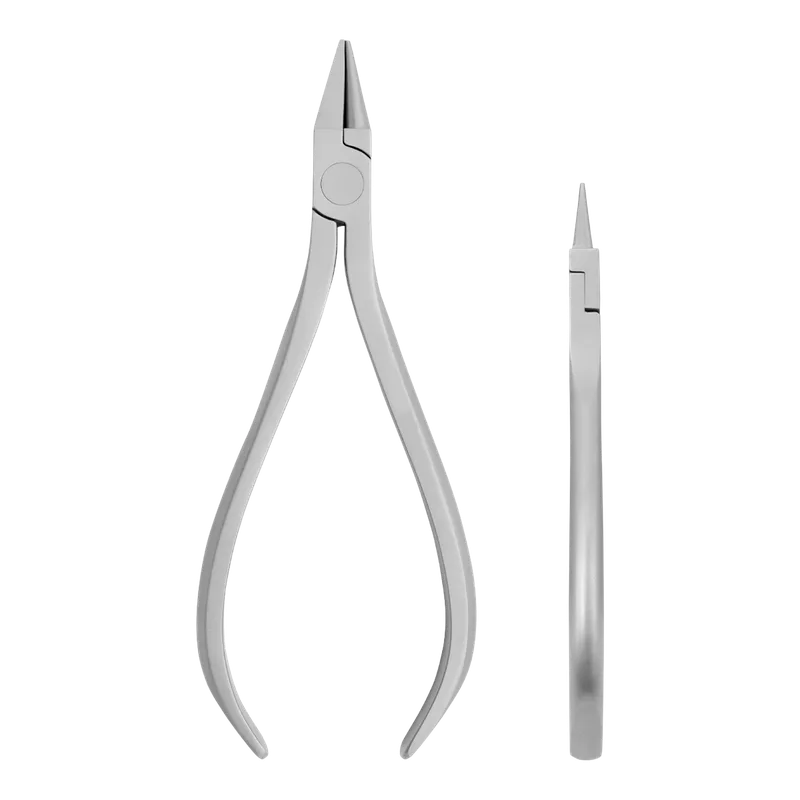
Long Beak Light Wire Plier - 0.51 mm / .020 in Wire
EI-0794
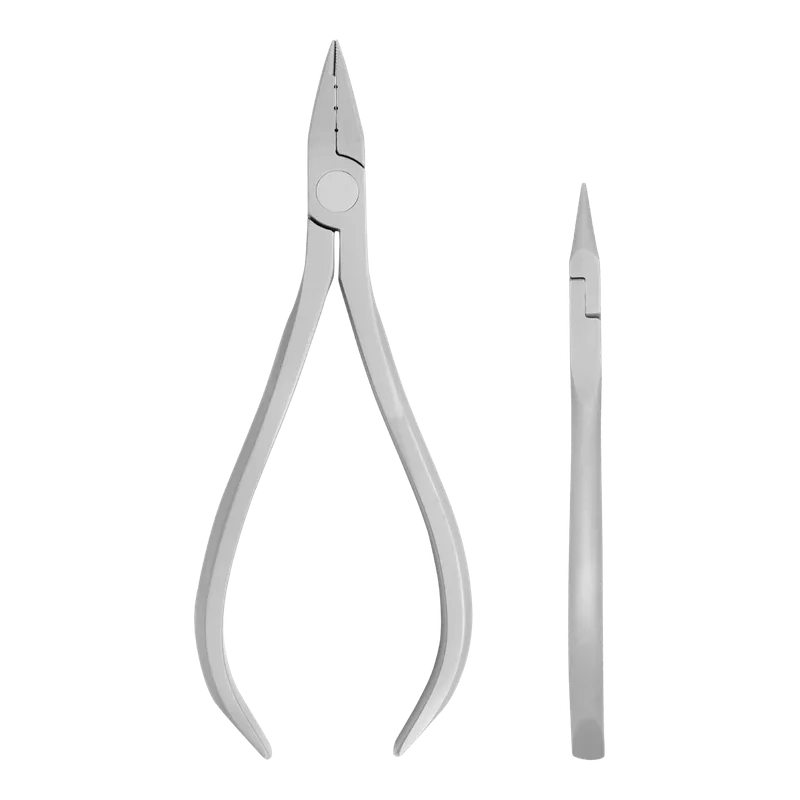
Jarabak Plier .020"
EI-2673
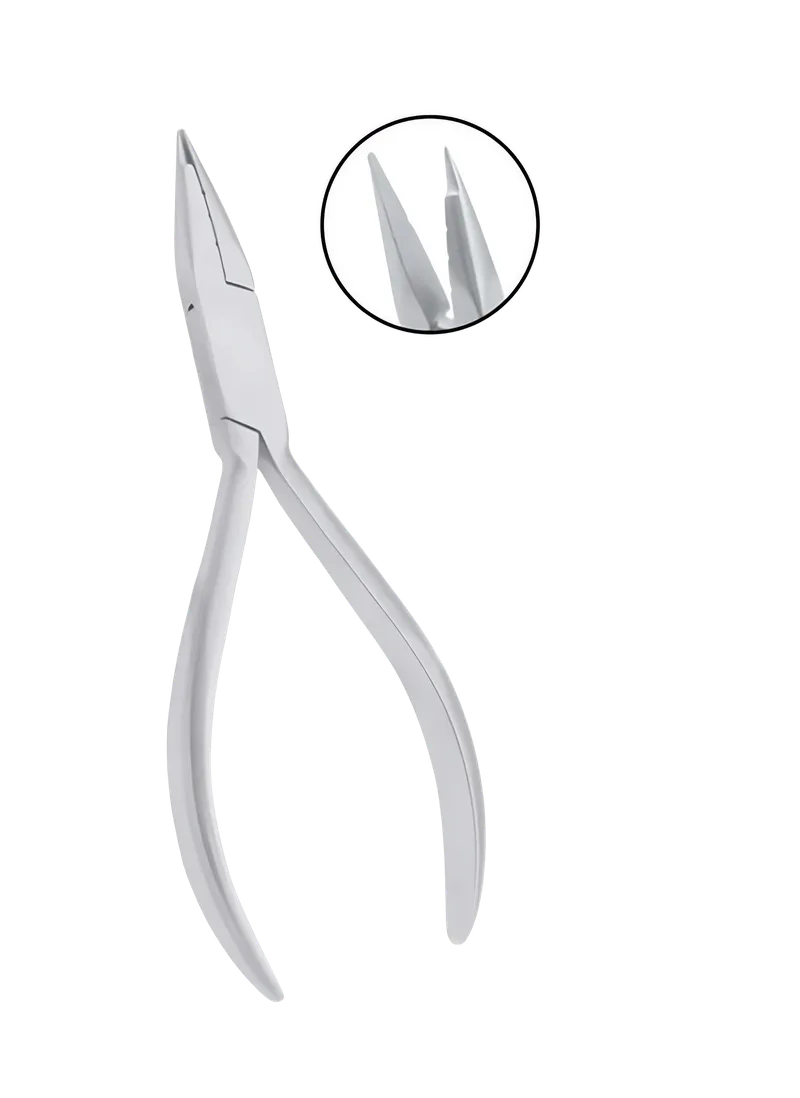
Jarabak Pliers - Box Joint, Slim 14 cm
EI-3153
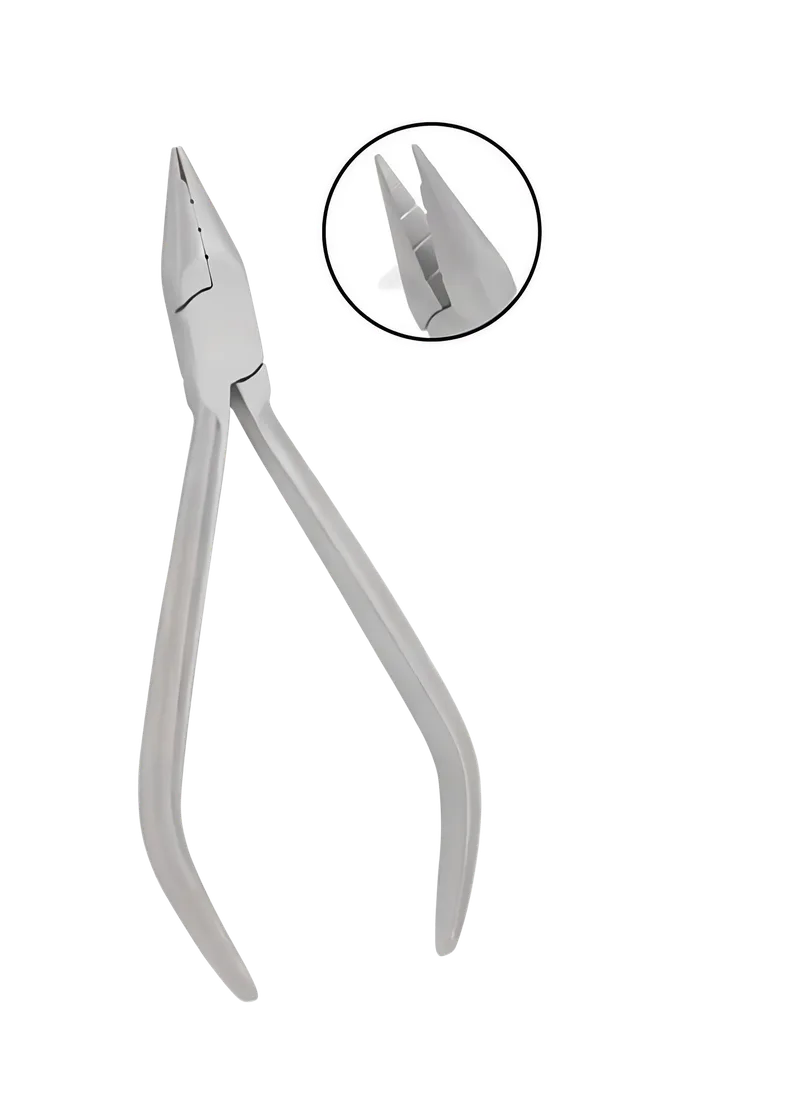
Jarabak Pliers
EI-3194
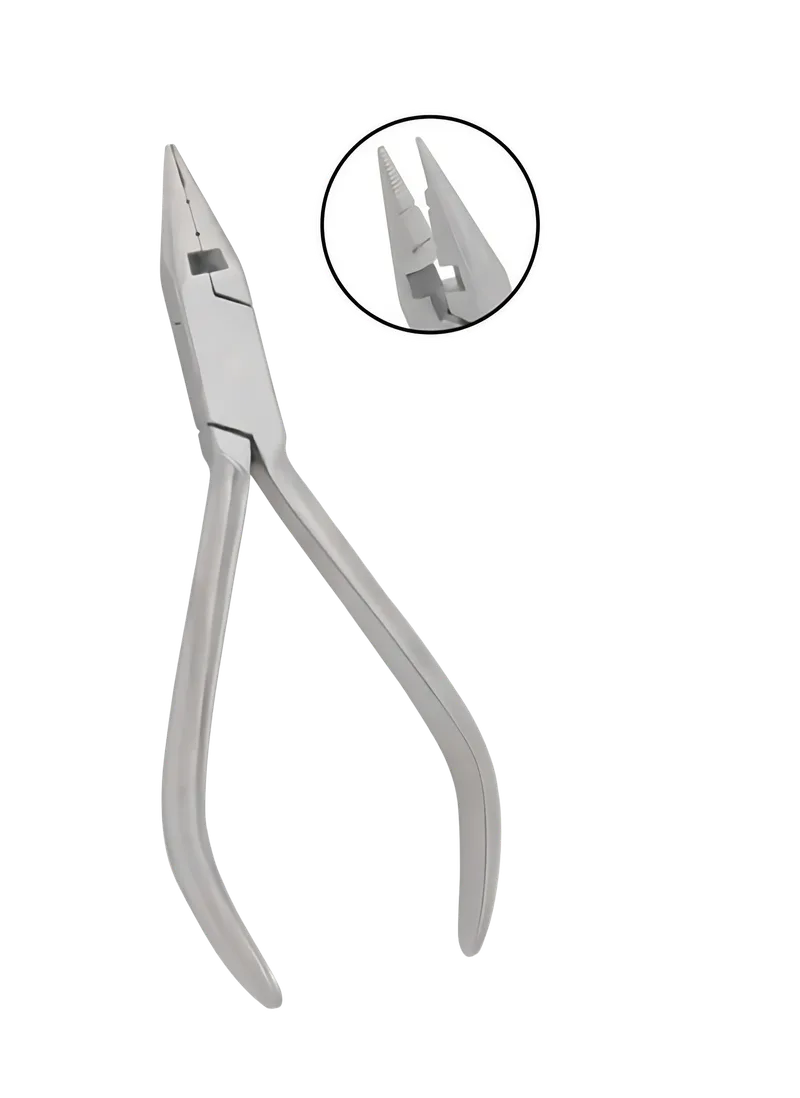
Jarabak Pliers with Cutters
EI-3195
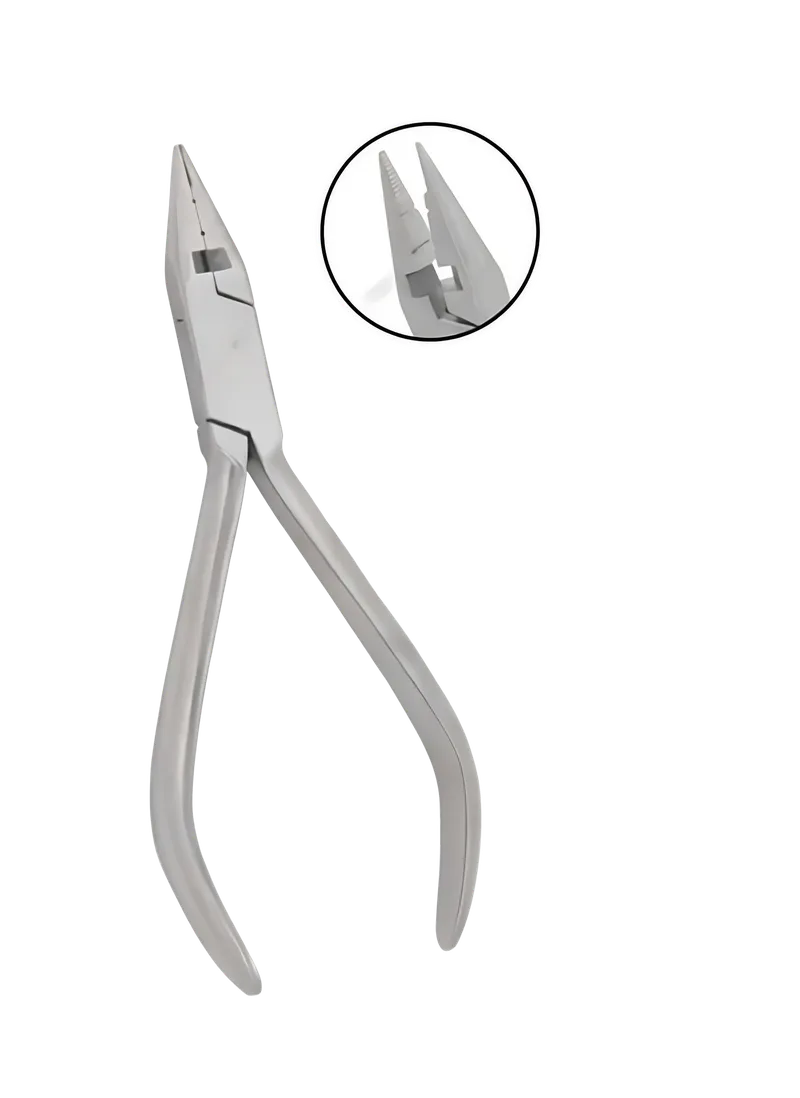
Jarabak Pliers with T/C Cutters
EI-3196
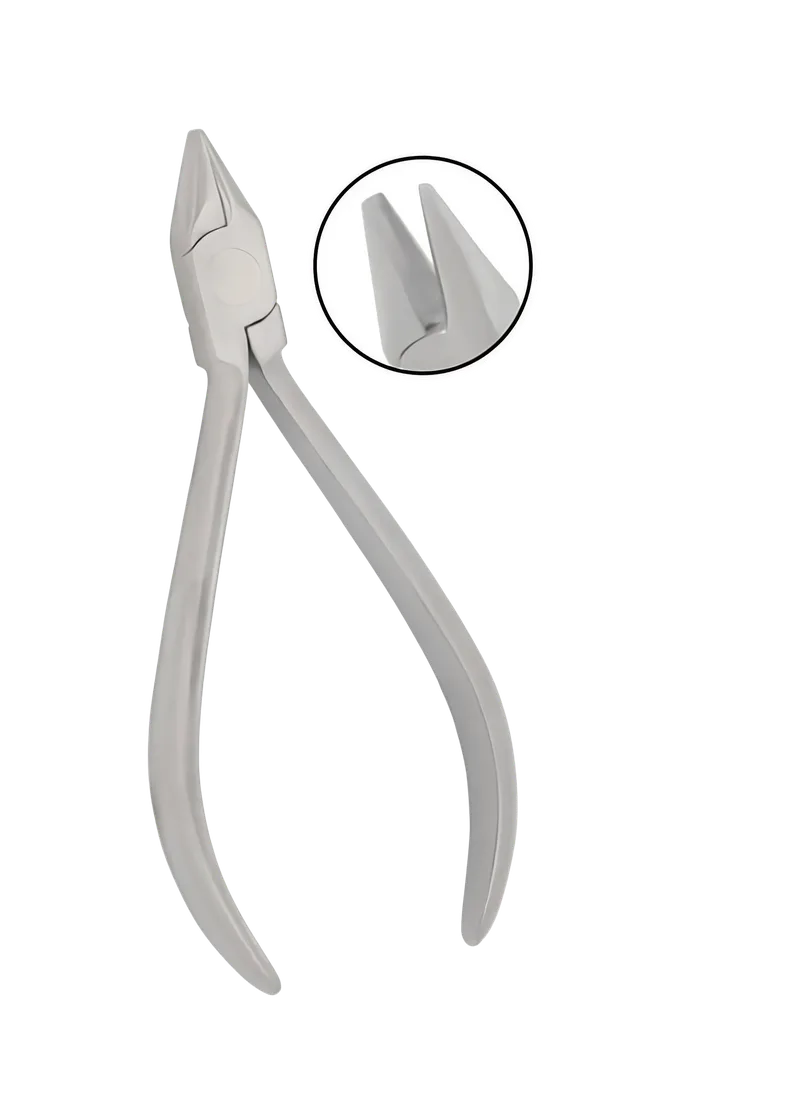
Loop Forming Pliers, Small Beak
EI-3345
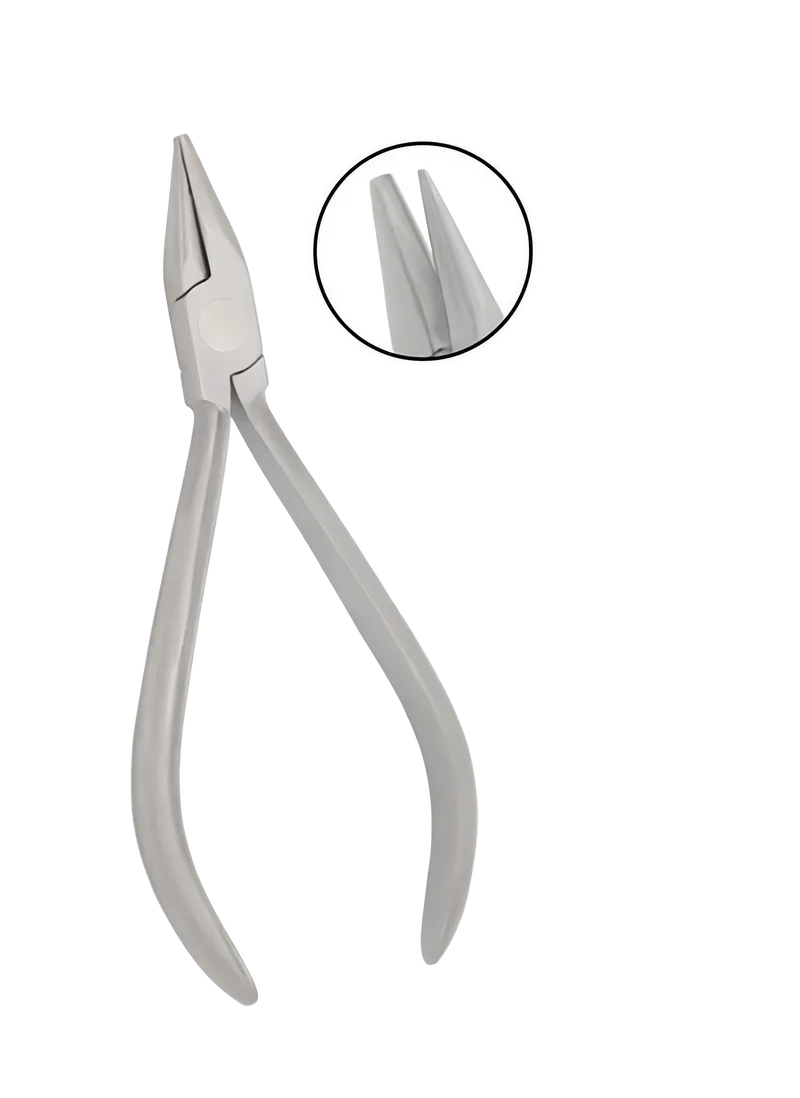
Loop Forming Pliers, Long Beak
EI-3346
Ruhland Loop Forming Pliers
EI-3351
Frequently asked questions
What is a Jarabak plier used for?
Forming loops, boot loops, step bends and small adjustments in light round archwires, generally up to about .020 inch (0.51 mm).
What is the difference between a Jarabak plier and a Tweed plier?
Jarabak pliers are slim light wire pliers with a conical and flat beak. Tweed pliers have larger, heavier beaks designed for forming loops and bends in thicker wire.
Can a Jarabak plier bend rectangular wire?
It is not designed for it. Heavier or rectangular stainless steel can spread the fine beaks; use forming pliers designed for that wire instead.
Who was Jarabak?
Joseph R. Jarabak was an American orthodontist and Loyola professor who co-authored a textbook on light-wire appliances and described the Loyola-Jarabak light wire technique.
Is a Jarabak plier with cutters worth it?
It saves swapping instruments between bending and trimming. If you cut a lot of wire, choose tungsten carbide cutter inserts, which hold an edge longer.
What wire size does the Equate long beak light wire plier take?
It is rated for round wire up to 0.51 mm (.020 in), with one conical and one flat-tipped beak.
References
- Loyola-Jarabak light wire technique, PubMed 1966 philosophy of the fixed appliance
- Hu-Friedy Jarabak pliers product description
- Jarabak and Fizzell, Technique and Treatment with the Light-Wire Appliances
I am a…