Adams Plier
Written & reviewed by the Equate Technical Team · Updated
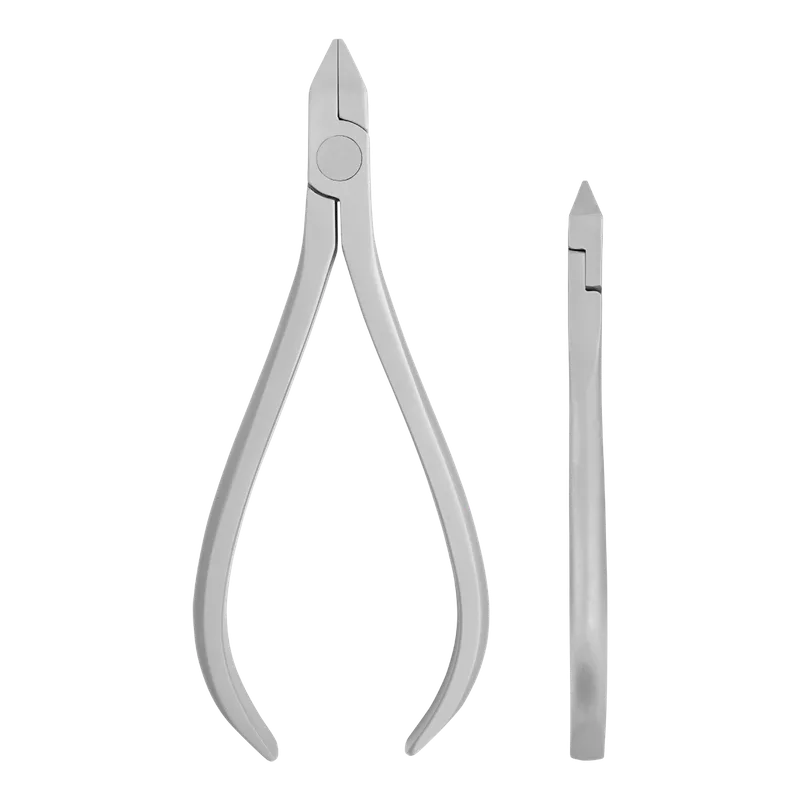
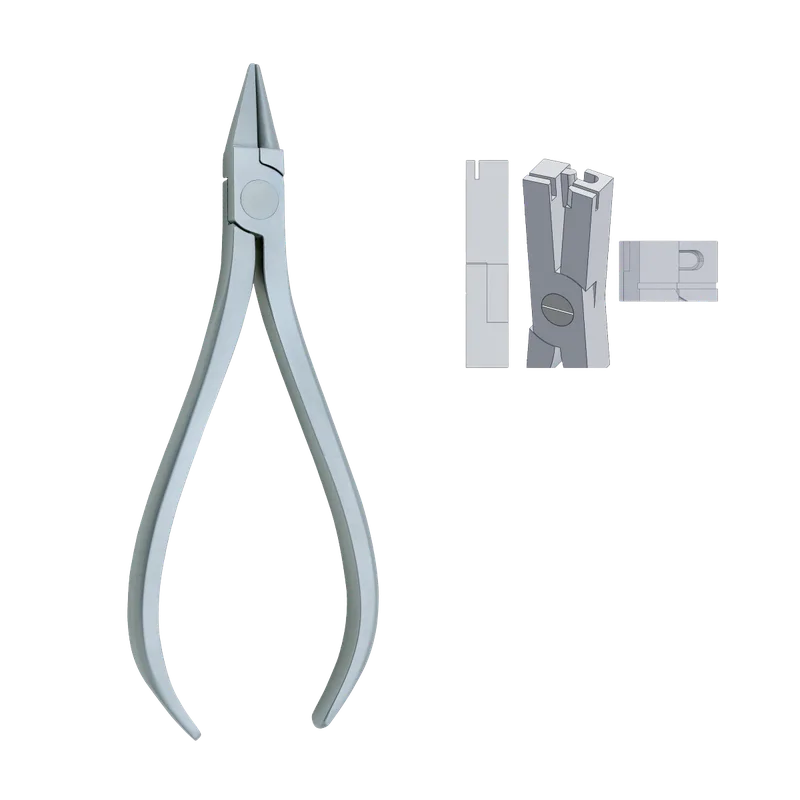
An Adams plier is an orthodontic wire-forming plier with square, tapered beaks used to fabricate Adams clasps and other fine wire components for removable appliances and retainers. It grips hard stainless wire, typically 0.7 mm, at precise points so the clinician or technician can make sharp, accurate right-angle bends.
The Adams clasp and what the plier does
The Adams clasp is the standard retentive element of removable orthodontic appliances and Hawley retainers. A BDJ Team article and BDS teaching notes describe it as made in 0.7 mm hard stainless steel wire, most commonly on first molars, with two arrowheads engaging the mesial and distal undercuts and a bridge across the occlusal surface. Notes also record 0.6 mm wire for primary teeth or canines, and some sources suggest 0.8 mm for added strength in adults.
Fabrication follows a sequence: the bridge, then the arrowheads, then the occlusal region and retentive tags. The Adams plier forms the initial right-angle bend that sets the bridge length and then the crisp bends of the arrowheads. If arrowheads sit too far gingivally they engage too much undercut, making the appliance difficult to insert or remove, so accuracy of each bend matters. Sources differ on some geometry, such as bridge position, so check against a standard text.
Beak design
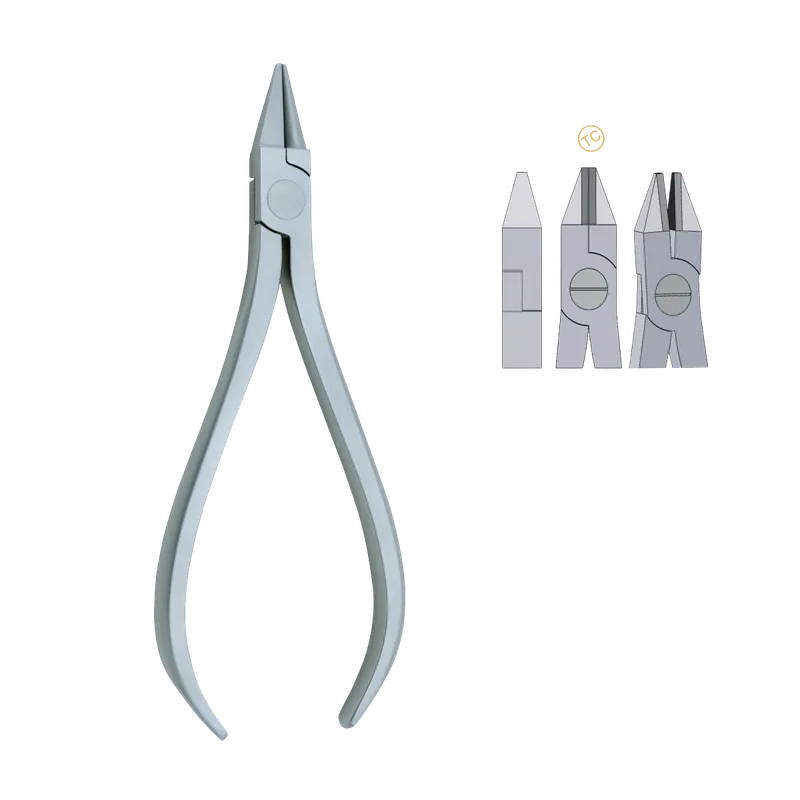
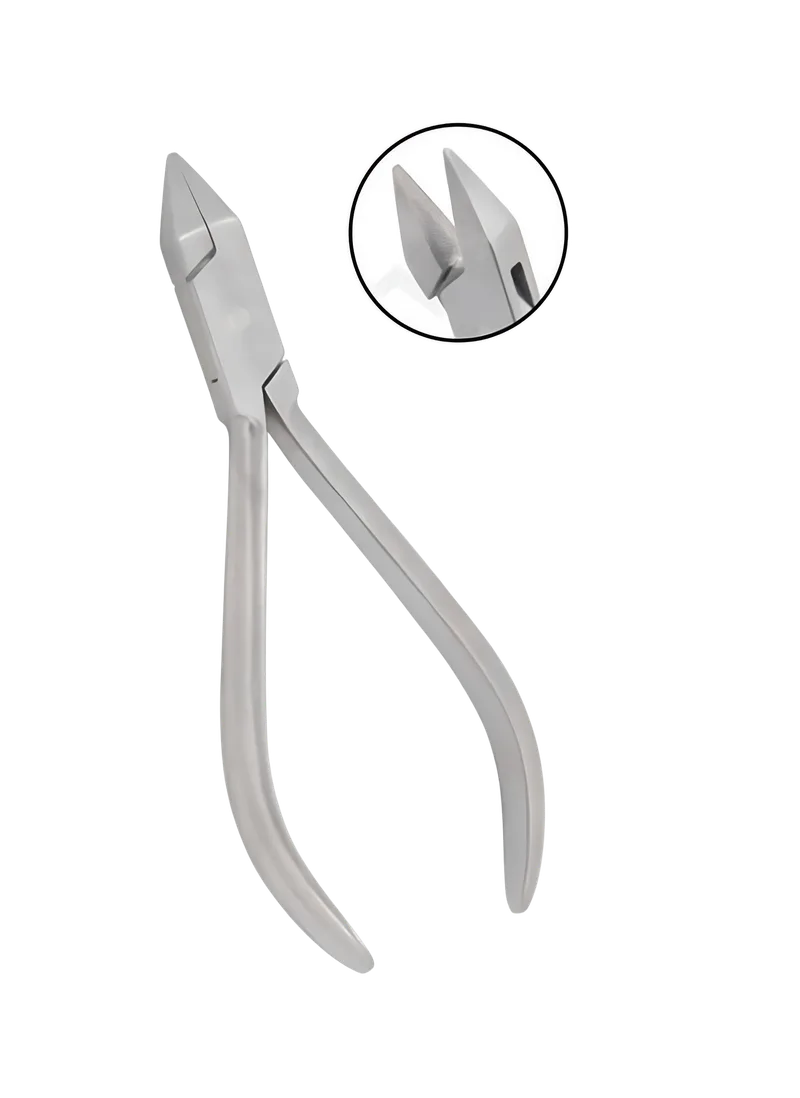
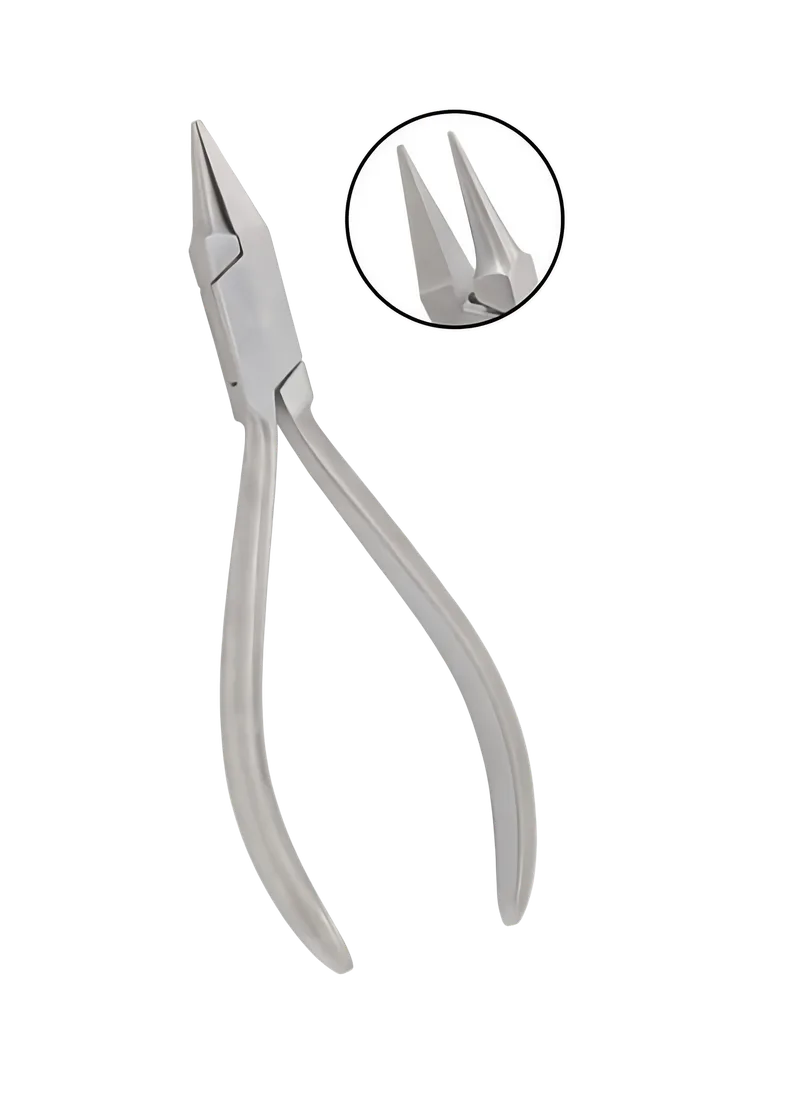
The square, sharply tapered beaks give point contact on the wire, which is what produces a sharp, unrounded corner. The same fine tips let the clinician engage and adjust an existing clasp chairside. Equate lists a pattern with a maximum wire capacity of 0.7 mm at 13 cm, Nos. 64 and 65 (two catalogue patterns), and a version with tungsten carbide inserts rated for 1.0 mm (.040 in) wire, where the harder insert surface resists marking and wear from hard wire.
Clasp-forming pliers in the Equate range
| Plier | Equate references | Wire | Use |
|---|---|---|---|
| Adams plier | 4 | 0.7 mm; TC insert version for 1.0 mm (.040 in) | Adams clasp bridges and arrowheads, retainer wire |
| Nance clasp forming plier | 1 | 0.50 mm (.020 in) | Loops and lingual arms of a Nance holding arch |
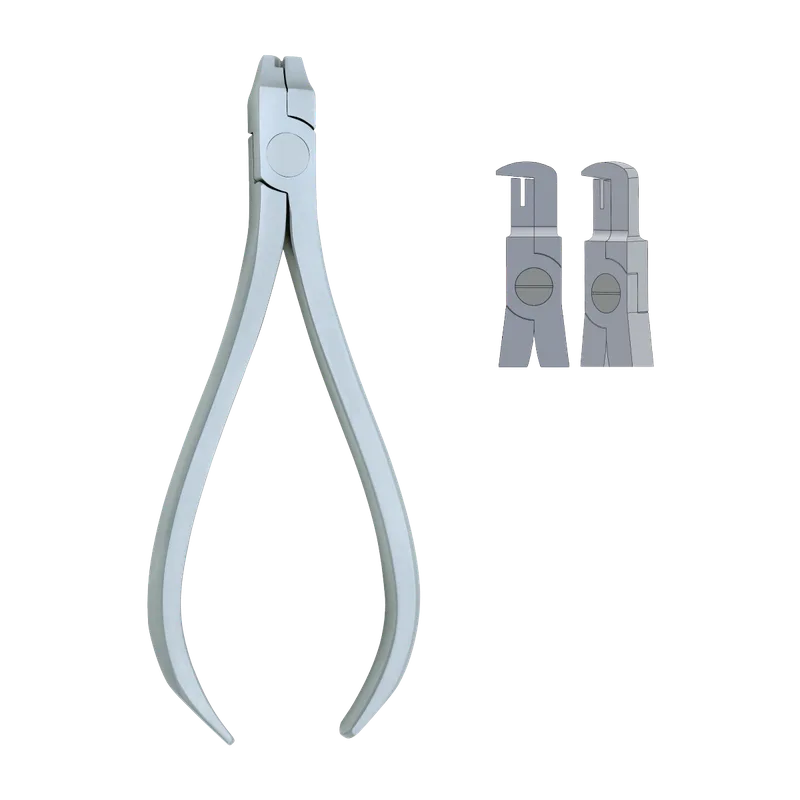
| Schwarz arrow clasp forming plier | 1 | 0.7 mm (.028 in) | Interdental arrowhead clasps for Schwarz appliances |
Choosing an Adams plier
- Wire rating: match to your clasp wire. Plain stainless beaks suit 0.7 mm; choose TC inserts if you routinely bend 1.0 mm or harder wire.
- Tip precision: the tips must meet exactly, or the bends round off.
- Joint: no side play; a loose joint ruins bend alignment.
- Laboratory or chairside: labs usually keep several beak patterns; a clinic doing occasional clasp adjustments usually needs one.
Price position and care
Equate Adams pliers list at €64.90 (indicative, EUR ex-VAT), about 52% below the €134.80 median premium European RRP for orthodontic wire-forming pliers. All are stainless steel, passivated, ultrasonically cleaned, reusable and supplied non-sterile, individually packed. Keep the tips free of wire residue, lubricate the joint and avoid bending wire above the rated diameter, which marks and spreads the beaks.
The Equate difference
Equate lists 6 clasp-forming plier references: 4 Adams pliers (including Nos. 64 and 65, a 0.7 mm 13 cm pattern and a tungsten carbide insert version for 1.0 mm wire), a Nance clasp plier for 0.50 mm wire and a Schwarz arrow clasp plier for 0.7 mm wire.
Equate Adams Plier options
Frequently asked questions
What is an Adams plier used for?
Making and adjusting Adams clasps and other fine wire components on removable orthodontic appliances and retainers, typically in 0.7 mm hard stainless steel wire.
What wire is used for an Adams clasp?
BDS teaching notes and the BDJ Team describe 0.7 mm hard stainless steel, with 0.6 mm sometimes used for primary teeth and canines.
What are Adams pliers No. 64 and No. 65?
Two catalogue patterns in the Adams plier family. Equate lists both among its four Adams plier references.
What is the difference between an Adams plier and a Nance clasp plier?
The Adams plier forms sharp right-angle bends in 0.7 mm wire. The Nance clasp plier has a conical jaw and a flat mating jaw for forming loops in 0.50 mm wire for palatal arches.
Do I need tungsten carbide inserts?
Only if you bend harder or thicker wire often, such as 1.0 mm. For 0.7 mm clasp wire, standard stainless beaks are adequate.
Can I use an Adams plier for archwires?
Small adjustments are possible, but dedicated archwire forming pliers are better suited to archwire work.
References
- Dental materials: The Adams family, BDJ Team 2014
- Adams clasp theory and fabrication, BDS Notes
- Isaacson, Muir and Reed, Removable Orthodontic Appliances (2002)
I am a…