Distal End Bender
Written & reviewed by the Equate Technical Team · Updated
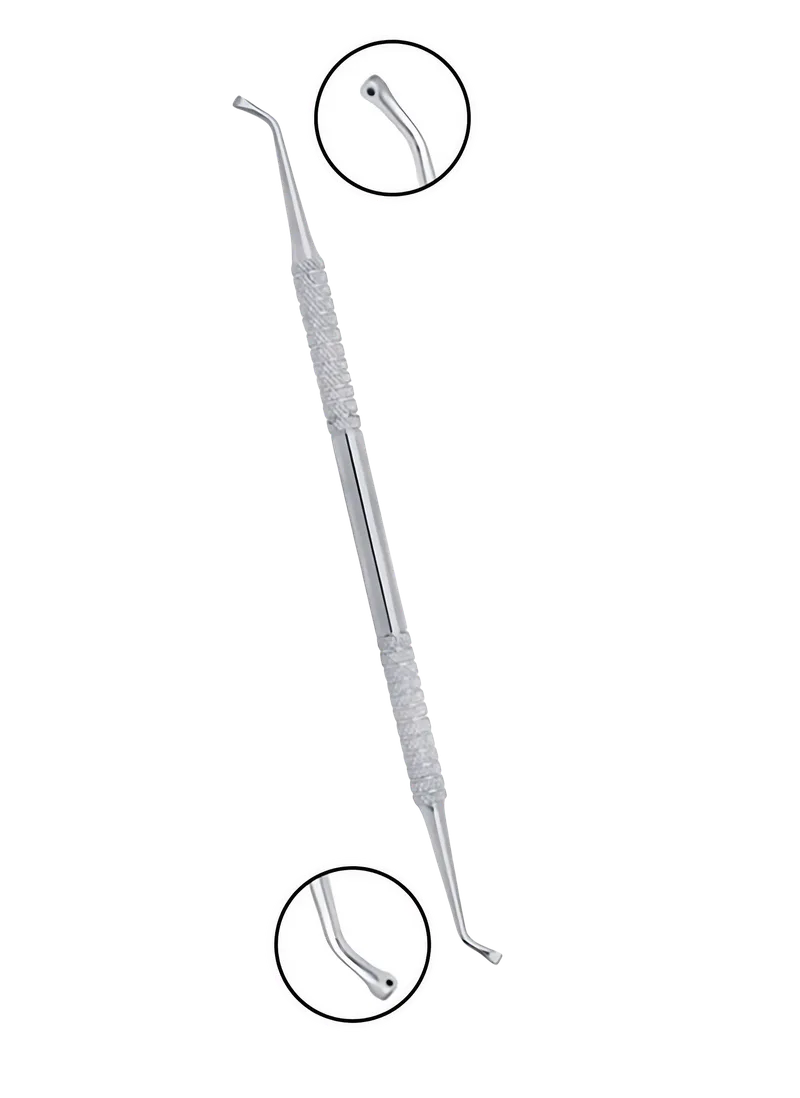
A distal end bender is a slim chairside hand instrument that hooks behind the end of an archwire as it leaves the buccal tube and folds it into a small gingival-facing bend. This stops the wire sliding and keeps the cut end away from the cheek, without needing a full plier.
How a distal end bender works
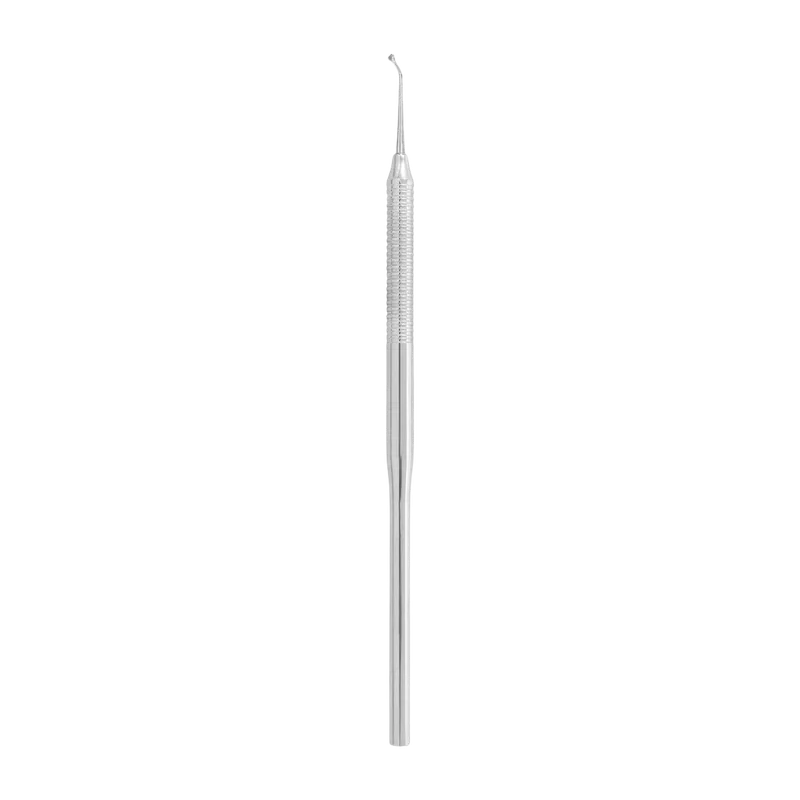
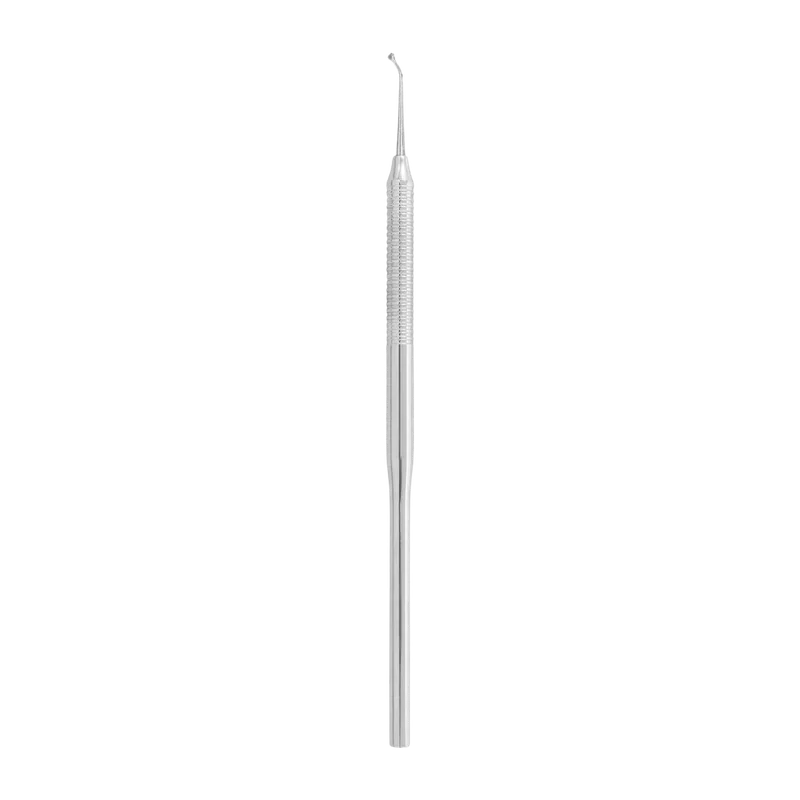
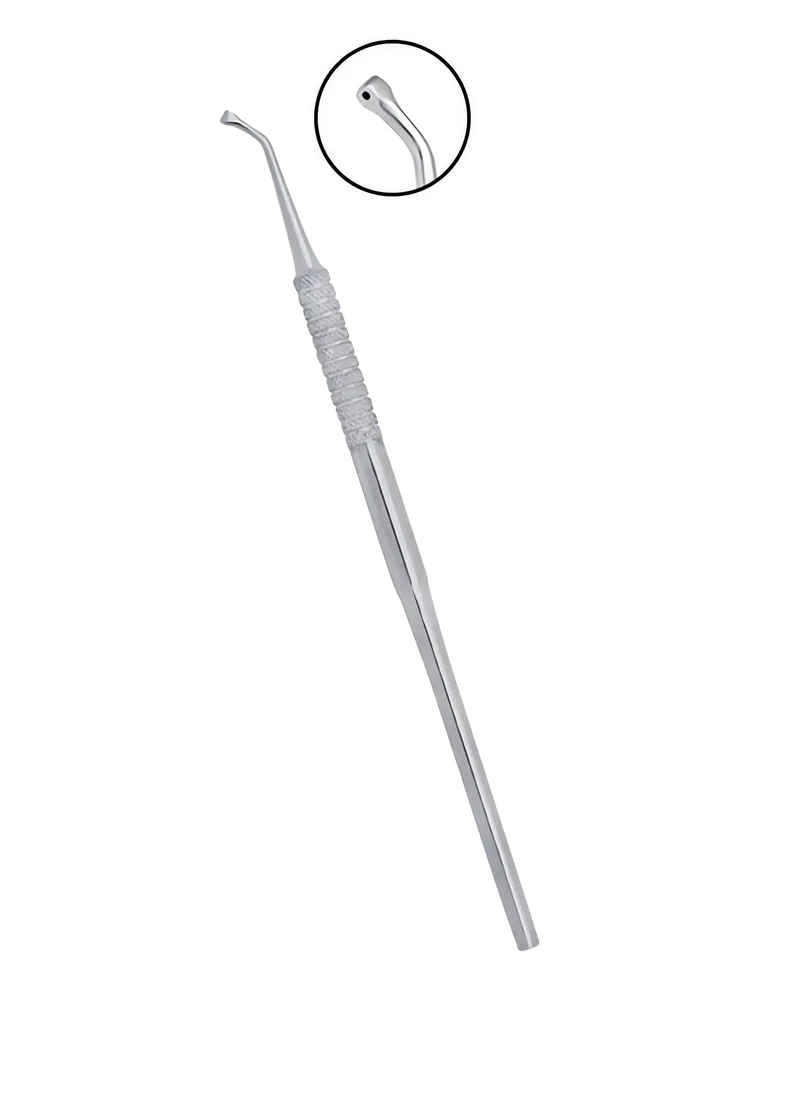
The instrument is a rigid tapered handle with a fine hooked tip. The tip engages the wire just behind the tube, and a small lever or twist folds the end into a bend. Because it is a single-handed instrument rather than a plier, it is easy to use in the posterior area and to carry in a cassette.
The purpose of the bend is the same as any cinch back: the Pocket Dentistry archwire-shift chapter states that the bend should be placed bilaterally distal to the most distal bracket or tube to secure the archwire, and that a protruding end can irritate soft tissue.
Versions in the Equate range
| Version | Intended wire | Notes |
|---|---|---|
| Distal-End Bending Instrument 0.022 in (0.55 mm) | Wire size 0.022 in | Fine tip for lighter wires |
| Distal-End Bending Instrument 0.030 in (0.75 mm) | Wire size 0.030 in | Rigid tip for stiffer wire |
| Distal Bender, Single End | General use | One working end |
| Distal Bender, Double End | General use | Two working ends in one handle |
Bender or plier?
A distal end bender trades the leverage of a plier for access and simplicity. Many clinicians use a bender for light, round wires and keep a cinch back plier for heavy or NiTi wire; the Orthodontic Products 2007 article on specialised pliers describes how plier choice depends on the wire. If you cinch stainless steel rectangular wire often, a plier may be more efficient, and the cinch back plier page compares both.
A distal end bender folds the wire; it does not cut it. If you want the free end cut and retained, use a distal end cutter instead.
Selection checklist
- Match the size to the wire you use most: 0.022 in or 0.030 in.
- Choose single end for simplicity or double end if you want two tip options.
- Look for a knurled grip so the instrument holds in a gloved hand.
- Inspect the tip for burrs; a rough tip scratches wire.
- Confirm it is autoclavable stainless steel with a passivated finish.
Care and sterilisation
Clean ultrasonically, dry, and autoclave in a cassette. Equate instruments are supplied non-sterile and reusable, so sterilisation is the user's responsibility. Manufacturers working to ISO 13485:2016, the quality management standard for medical devices, are expected to supply instructions for this.
The Equate difference
Equate lists four distal end bending instruments: 0.022 in (0.55 mm) and 0.030 in (0.75 mm) wire versions, and single-end and double-end Distal Benders, at a list price of EUR 74.90.
Equate Distal End Bender options
Frequently asked questions
What is a distal end bender used for?
It folds the end of an archwire behind the molar tube to stop sliding and protect soft tissue.
Is it the same as a distal end cutter?
No. A distal end cutter cuts and holds the cut wire; a bender bends the end instead.
What sizes are available?
Equate lists versions for 0.022 in (0.55 mm) and 0.030 in (0.75 mm) wire, plus single-end and double-end benders.
Can I bend NiTi with a distal end bender?
NiTi's superelasticity makes bends hard to hold, so sources describe special techniques or pliers; check wire compatibility first.
Where do you place the bend?
Distal to the most distal bracket or tube, on both sides.
Is a distal end bender a plier?
It is a hand instrument rather than a plier; many clinicians use it in place of a cinch back plier for lighter wires.
References
- Archwire Shift chapter on cinch-back bends, Pocket Dentistry
- Specialized Pliers for Specialized Wires, Orthodontic Products (2007)
- ISO 13485:2016 Medical devices quality management systems
I am a…