Ligature Cutter
Written & reviewed by the Equate Technical Team · Updated
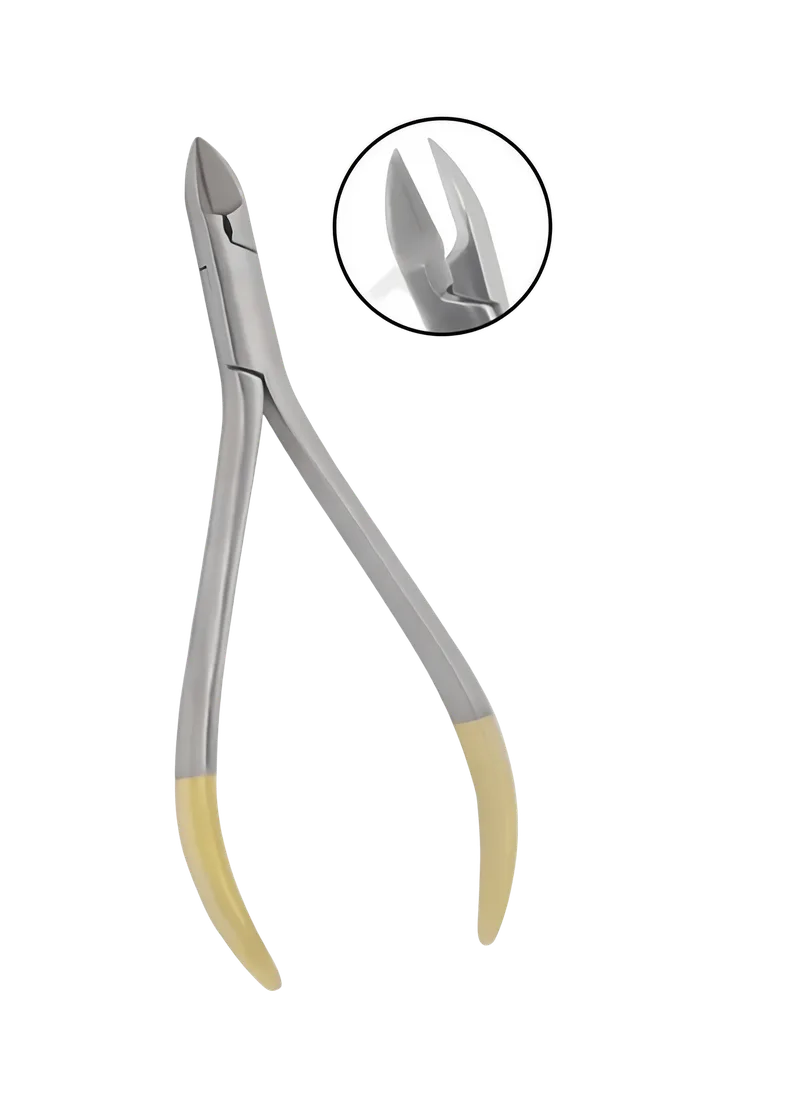
A ligature cutter is a small orthodontic cutting plier with fine, pointed beaks used to cut stainless steel ligature ties, lock pins and very light wire close to the bracket. Its delicate tips slip under a twisted ligature without touching the archwire, but it is not designed for archwires and is damaged if used on heavy wire.
What a ligature cutter is used for
Stainless steel ligatures are still widely used to tie archwires into conventional brackets, especially where tight control of rotation or torque is needed, or to tie back segments. At the next appointment, every ligature must be cut and removed before the archwire can be changed. The ligature cutter is designed for that job: its pointed tips reach under the twisted pigtail or the loop on the gingival side of the bracket and cut it cleanly.
The same instrument is used to trim the pigtail to length after tying a new ligature, and pin-and-ligature cutters also cut the lock pins used with some bracket systems.
Tip styles
- Straight fine tip — the universal design for anterior and premolar ligatures.
- Angled tip (around 15°) — better access to posterior brackets and tube ligatures.
- Mini head — very small beaks for crowded dentitions and lingual appliances.
- Tungsten carbide inserts — extend edge life in practices that cut many ligatures daily.
- Long handle versions — extra leverage and reach for operators with larger hands.
Ligature cutter vs other orthodontic cutters
| Instrument | Cuts | Do not use for |
|---|---|---|
| Ligature / pin and ligature cutter | Ligature wire .008–.012 in, lock pins, elastomeric ties | Archwires, rectangular wire |
| Distal end cutter | Archwire tails flush at the molar tube | Bench cutting of heavy wire |
| Hard wire cutter | Round and rectangular SS, TMA up to about .028 in | Ligature tails close to tissue |
How to choose a ligature cutter
Prioritise fine, well-aligned tips: they must meet exactly so that thin wire is cut rather than pinched. Check that the tips are slim enough to pass under a ligature without levering the bracket. If you work with many posterior ties or lingual appliances, add an angled or mini-head model. For high-volume practices, carbide inserts are a sensible upgrade because ligature cutters are among the most-used instruments in the tray.
Comfort matters too. Ligature removal is repetitive, so a smooth spring return and balanced handles reduce hand fatigue over a full clinic day.
Care and common failures
The fine tips are the most vulnerable part of any orthodontic cutter. The most common cause of damage is cutting archwire with a ligature cutter, closely followed by twisting the instrument while cutting. Clean the joint open, lubricate before sterilisation, and check the tips under magnification: if they no longer meet along their full length, the cutter should be sharpened or replaced.
Published work on orthodontic pliers suggests steam autoclaving is generally gentler on stainless steel pliers than prolonged chemical immersion: a small in-vitro pilot study in the Dental Press Journal of Orthodontics found oxidation on only one of two brands after 100 autoclave cycles and more corrosion after 2% peracetic acid, and an earlier study of ligature-cutting pliers found no significant difference in tip wear between steam and dry-heat sterilisation. Both are small studies, so follow each manufacturer's reprocessing instructions.
The Equate difference
Equate offers 26 ligature and pin-and-ligature cutter references with straight, angled and mini heads, including tungsten carbide insert models, at a typical list price around 47% below the median premium European RRP for orthodontic cutters.
Equate Ligature Cutter options
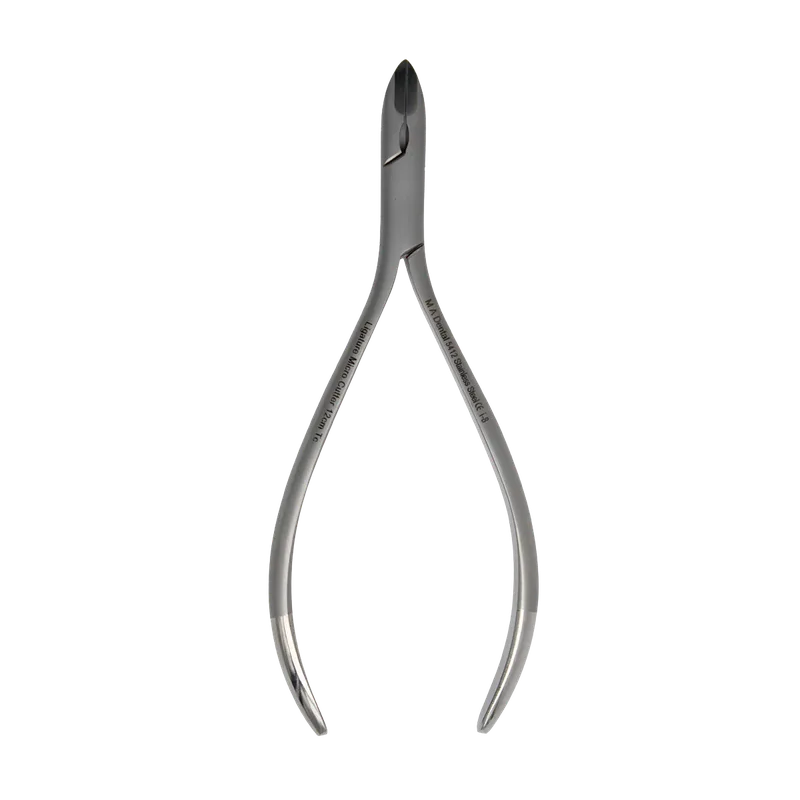
Micro Pin and Ligature Cutter Max 0.012 Inch Wire Tungsten-Carbide
EI-0683
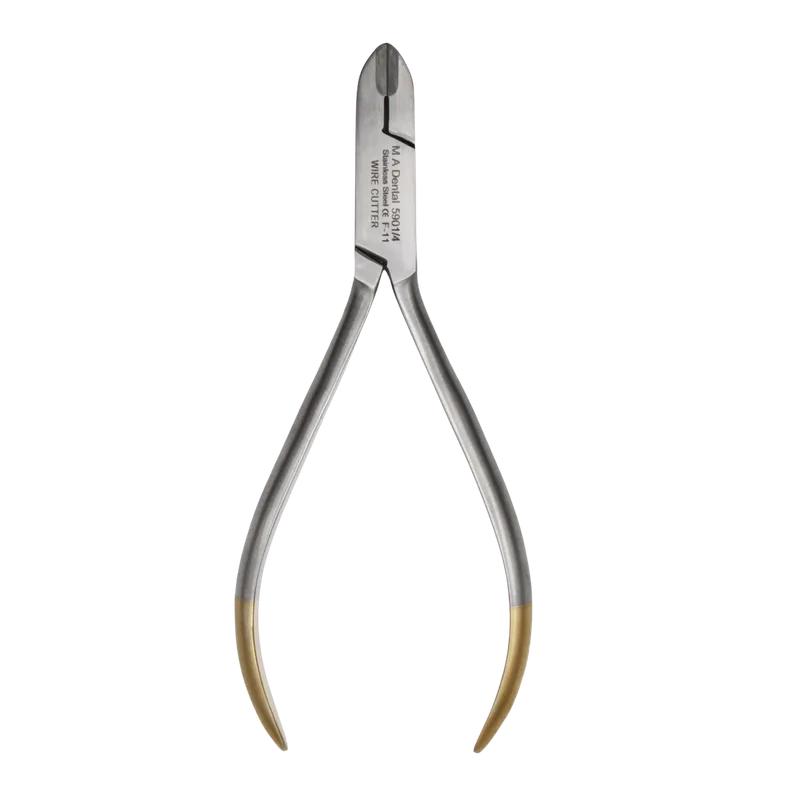
Mini Pin and Ligature Cutter - Tungsten Carbide, 0.30 mm / .012 in Wire
EI-0791
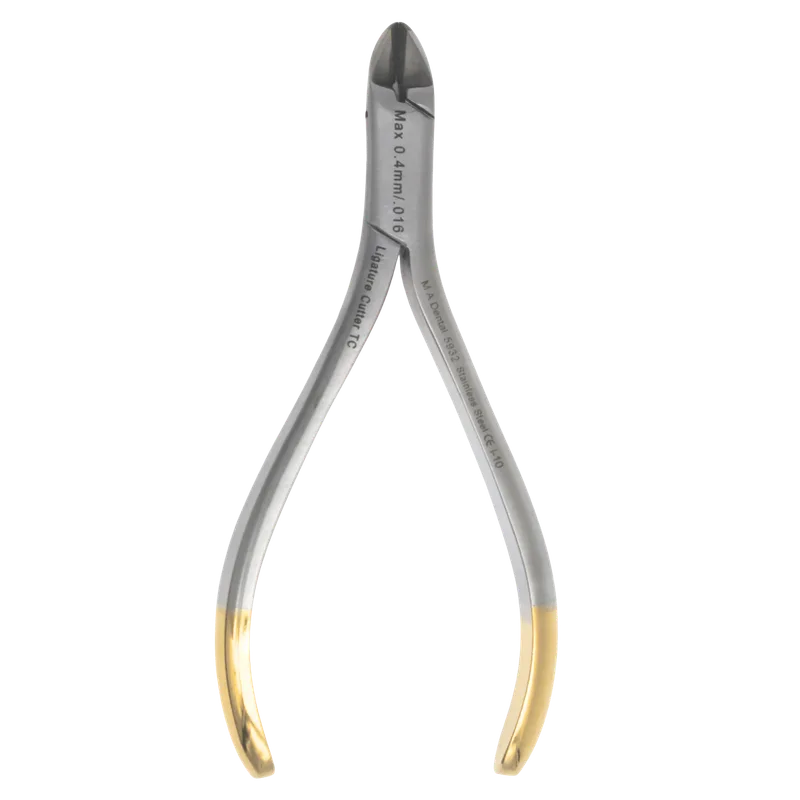
Pin and Ligature Cutter TC - Max 0.4 mm
EI-0807
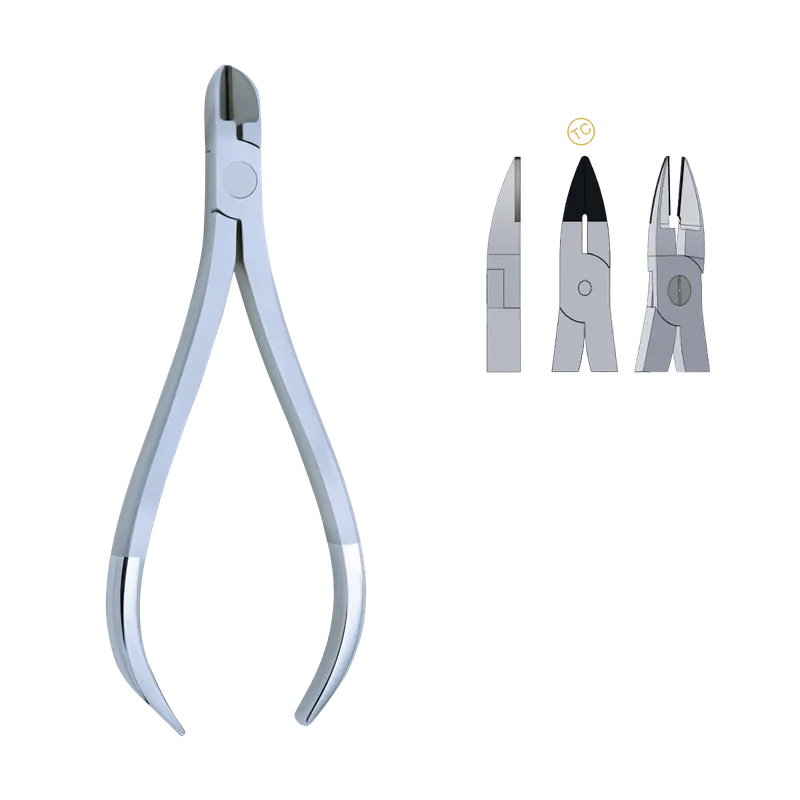
Pin and Ligature Cutter Fine Point with TC Inserts - 0.30 mm (.012 in) Wire
EI-2624
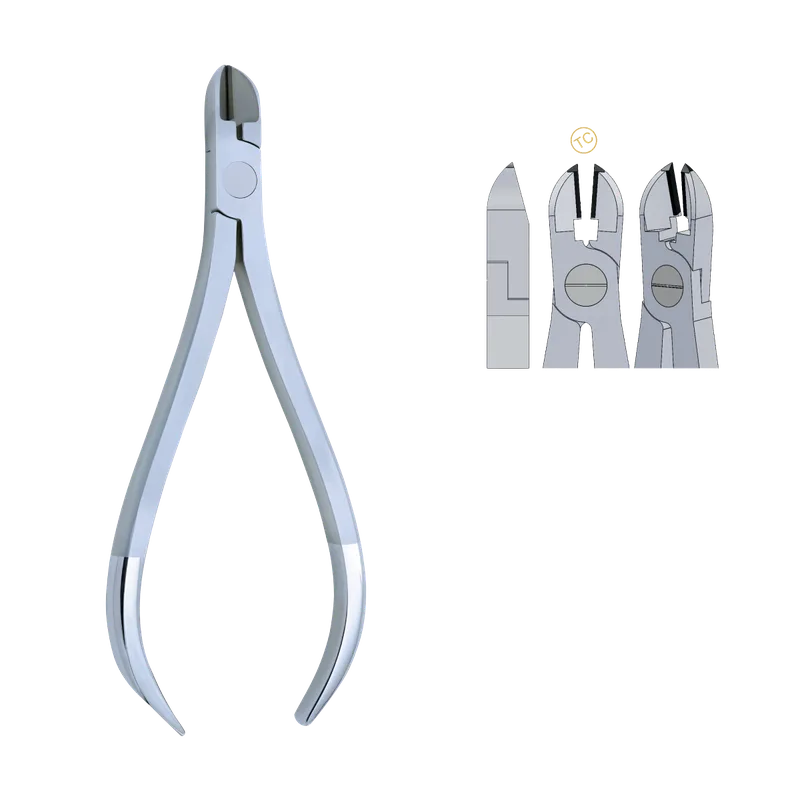
Pin & Ligature Cutter 15°, Tungsten Carbide Inserts - Wire up to 0.40 mm (.016")
EI-2625
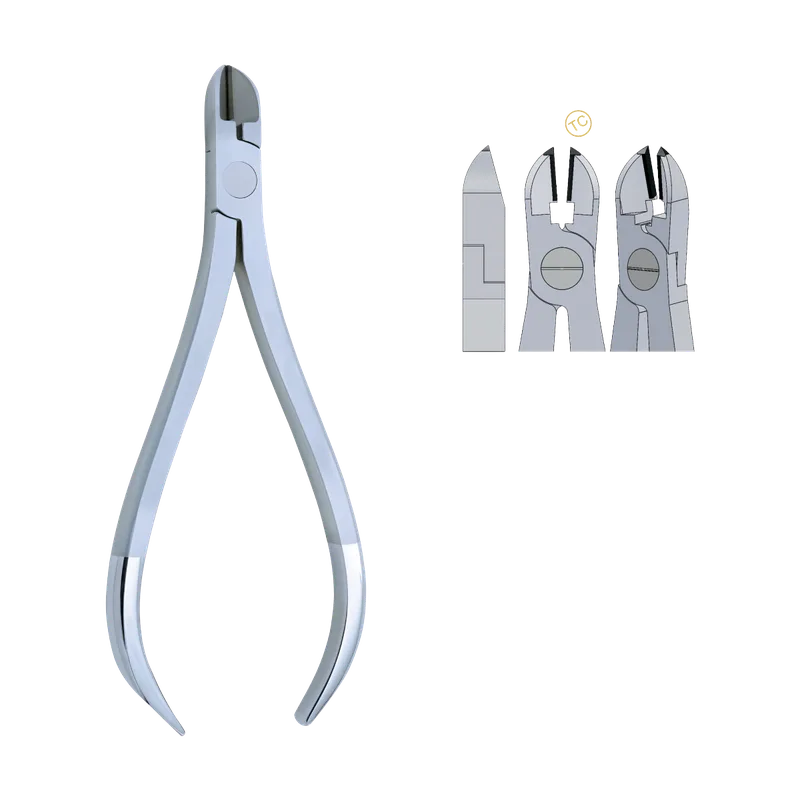
Pin & Ligature Cutter 7°, Tungsten Carbide Inserts - Wire up to 0.40 mm (.016")
EI-2627
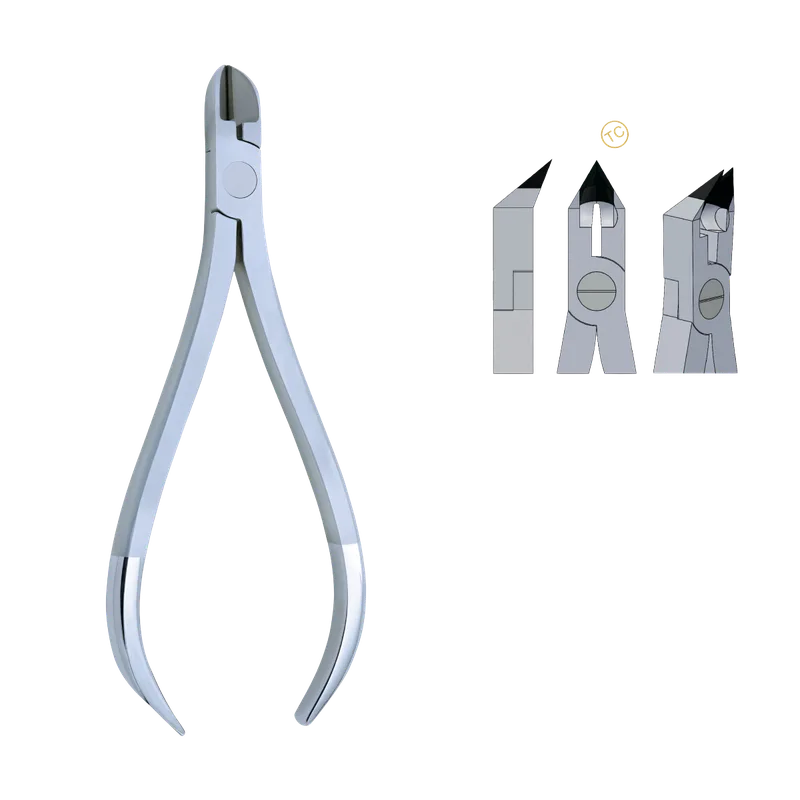
Pin & Ligature Cutter 45°, Tungsten Carbide Inserts - Wire up to 0.30 mm (.012")
EI-2628
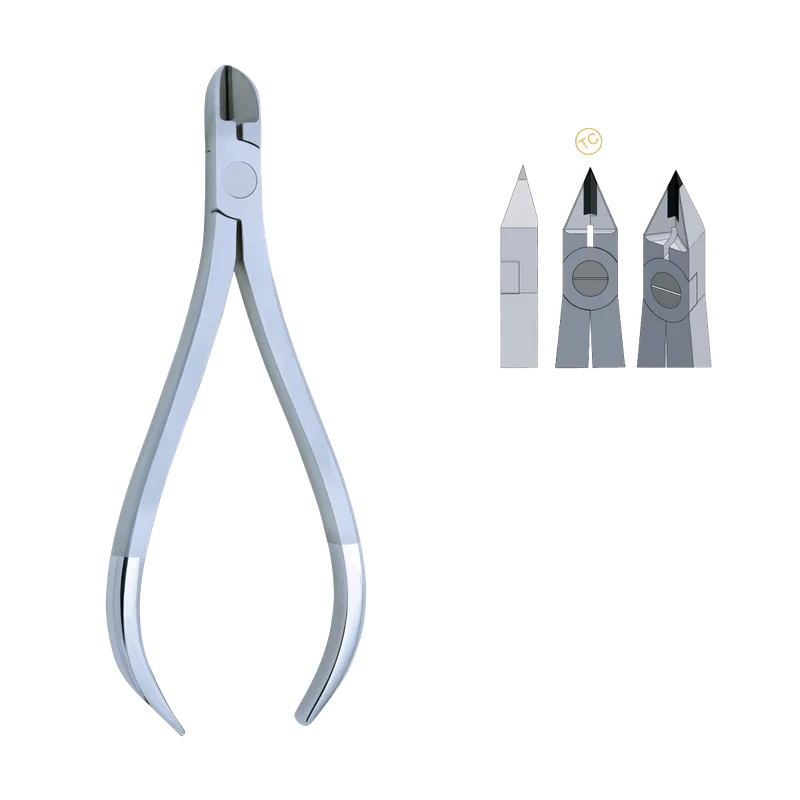
Pin and Ligature Cutter Fine Point with Spring, 15-degree Head - 0.30 mm (.012 in) Wire
EI-2629
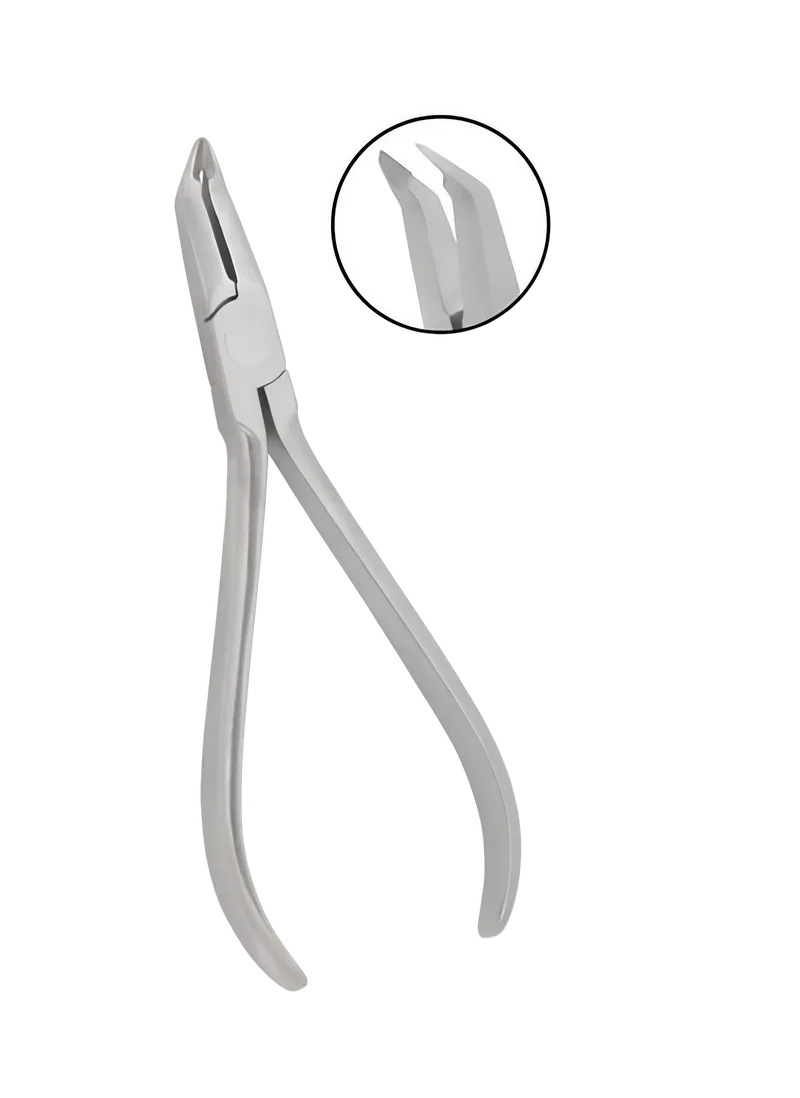
Ligature Cutter - 45 Degree Angled, Wide Handles, Very Fine Tips
EI-3144
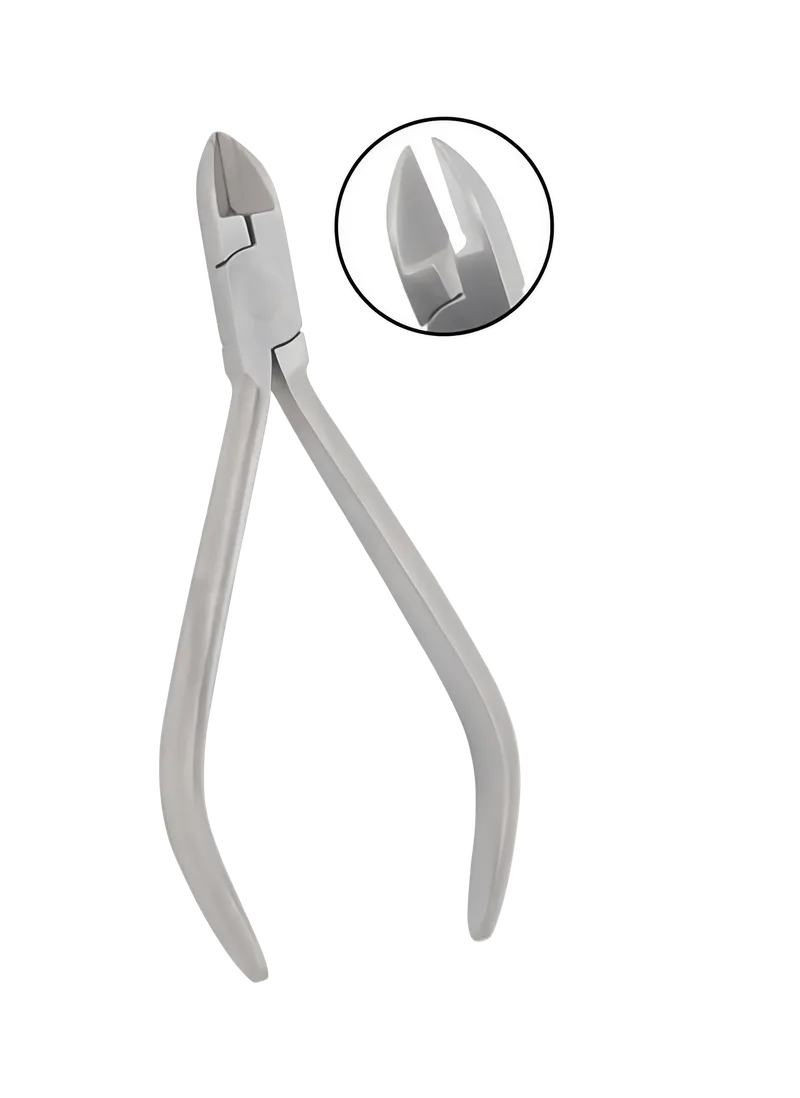
Ligature and Pin Cutter - Straight, Rivet Joint 12 cm
EI-3145
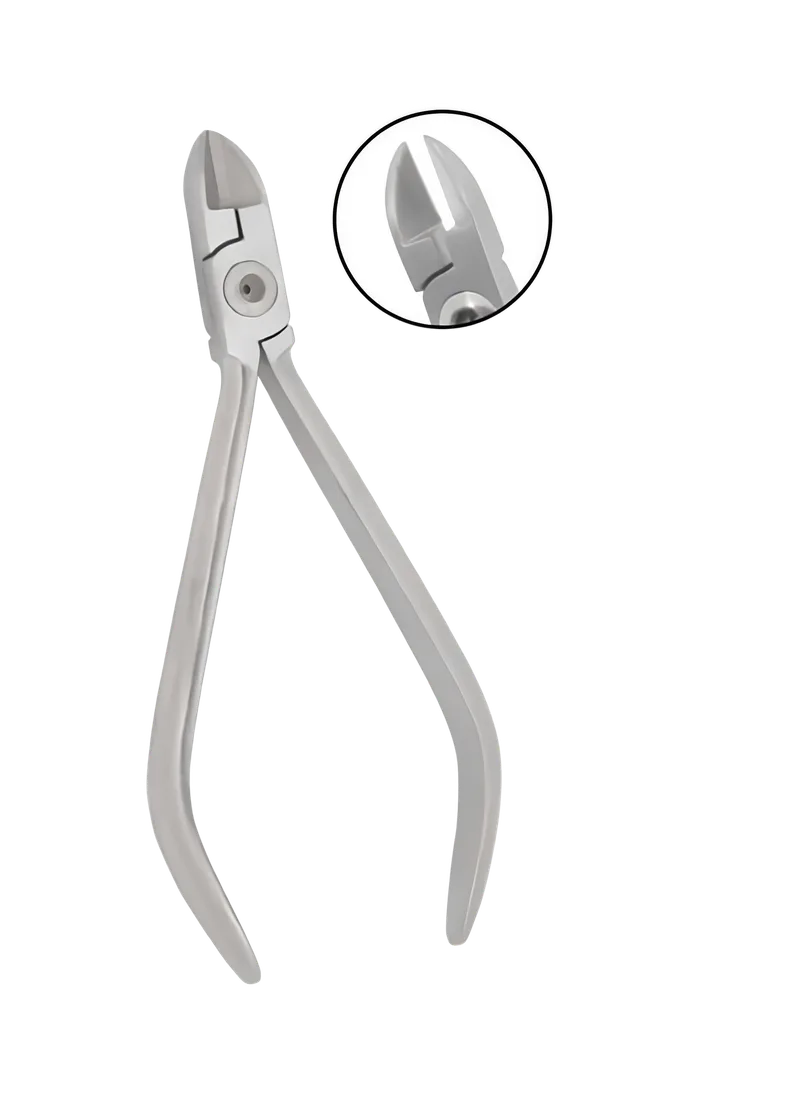
Ligature and Pin Cutter - Straight, Hex Screw Joint 12 cm
EI-3146
Mini Ligature and Pin Cutter - Straight, Slim Beak 12.5 cm
EI-3147
Frequently asked questions
Can I cut an archwire with a ligature cutter?
No. Ligature cutters are made for thin ligature wire. Cutting an archwire, especially rectangular stainless steel, can chip or spread the fine tips permanently. Use a distal end cutter or hard wire cutter instead.
What is the difference between a ligature cutter and a pin and ligature cutter?
They are very similar. A pin and ligature cutter has slightly stronger tips designed to also cut lock pins used with some bracket systems, while a basic ligature cutter is optimised for ligature wire alone.
What size ligature wire can a ligature cutter cut?
Typical stainless steel ligature wire is .008 to .012 in, which is well within the capacity of any ligature cutter. Avoid anything heavier than about .014 in.
Why won't my ligature cutter cut cleanly?
Usually the tips no longer meet along their full length because of wear, a chipped edge or a loose joint. Sharpening can restore them; badly spread tips mean the cutter should be replaced.
Is an angled ligature cutter better?
An angled tip is easier for posterior teeth and tubes, while a straight tip is more versatile anteriorly. Many orthodontic trays carry one of each.
References
- In vitro comparison of peracetic acid and autoclave sterilization in the corrosion of orthodontic pliers: a pilot study — Dental Press Journal of Orthodontics
- The effect of routine steam autoclaving on orthodontic pliers — PubMed
- Effect of steam versus dry-heat sterilization on the wear of orthodontic ligature-cutting pliers — PubMed
- Classification and uses of orthodontic pliers — Dentaltix clinical blog (supplier reference, used for terminology only)
I am a…